Less routine work at height
Move suitable cleaning passes to robotic equipment. Human responsibilities for setup, supervision, inspection and recovery remain part of the method.


Warpify delivers integrated facade cleaning robot solutions for building owners, facility teams and exterior-cleaning operators. We bring together the robot, cleaning system, deployment planning, operator training and lifecycle support around your building and cleaning requirements.
A complete facade cleaning solution combines a suitable robot with the cleaning method, access plan, trained operators and service support. Explore how different platforms fit different surfaces and operating conditions.
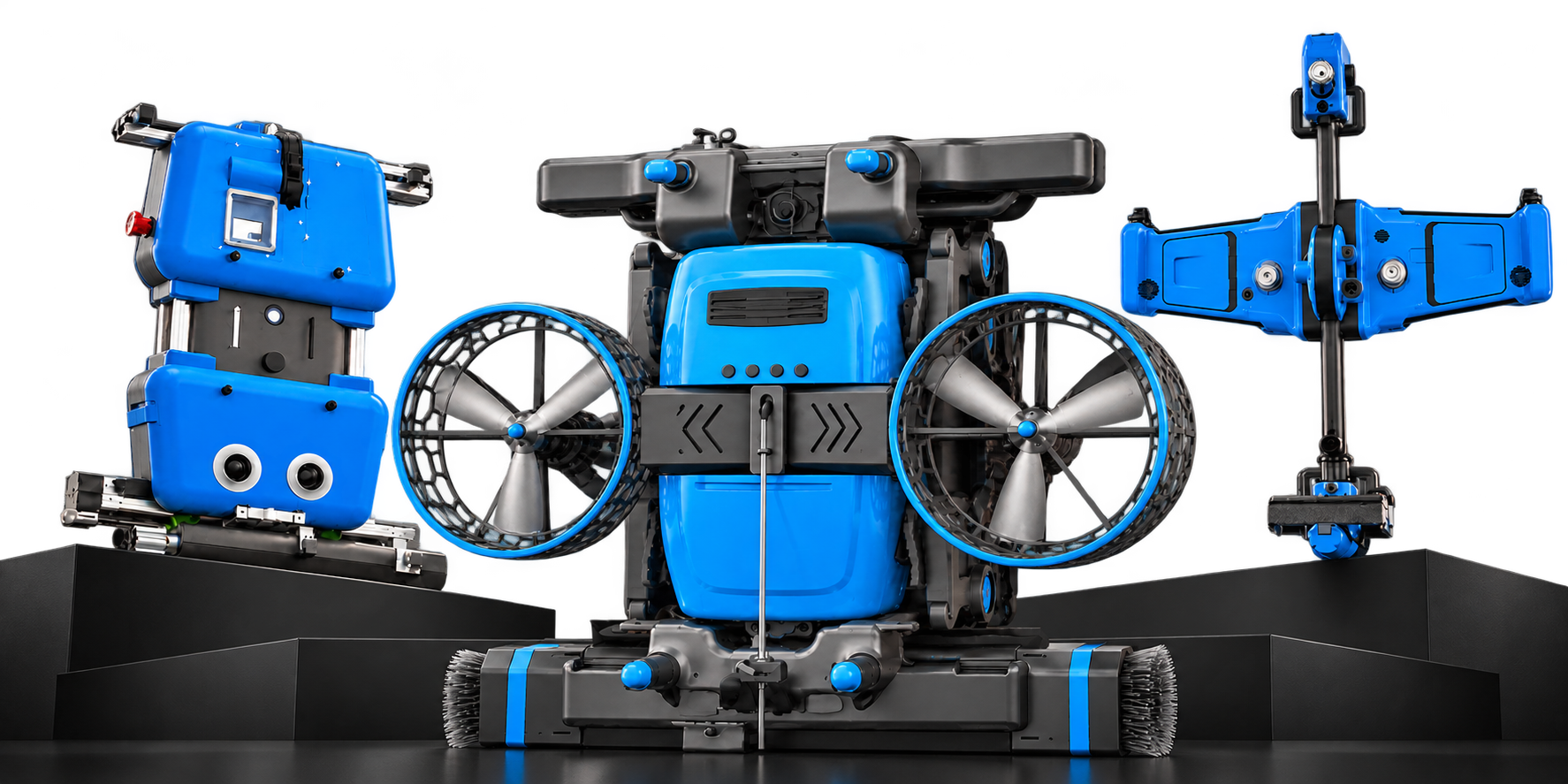
Facade cleaning robots automate suitable exterior washing and brushing tasks. Glass continuity, frames, surface finish and roof access determine which system can do useful work on your building.
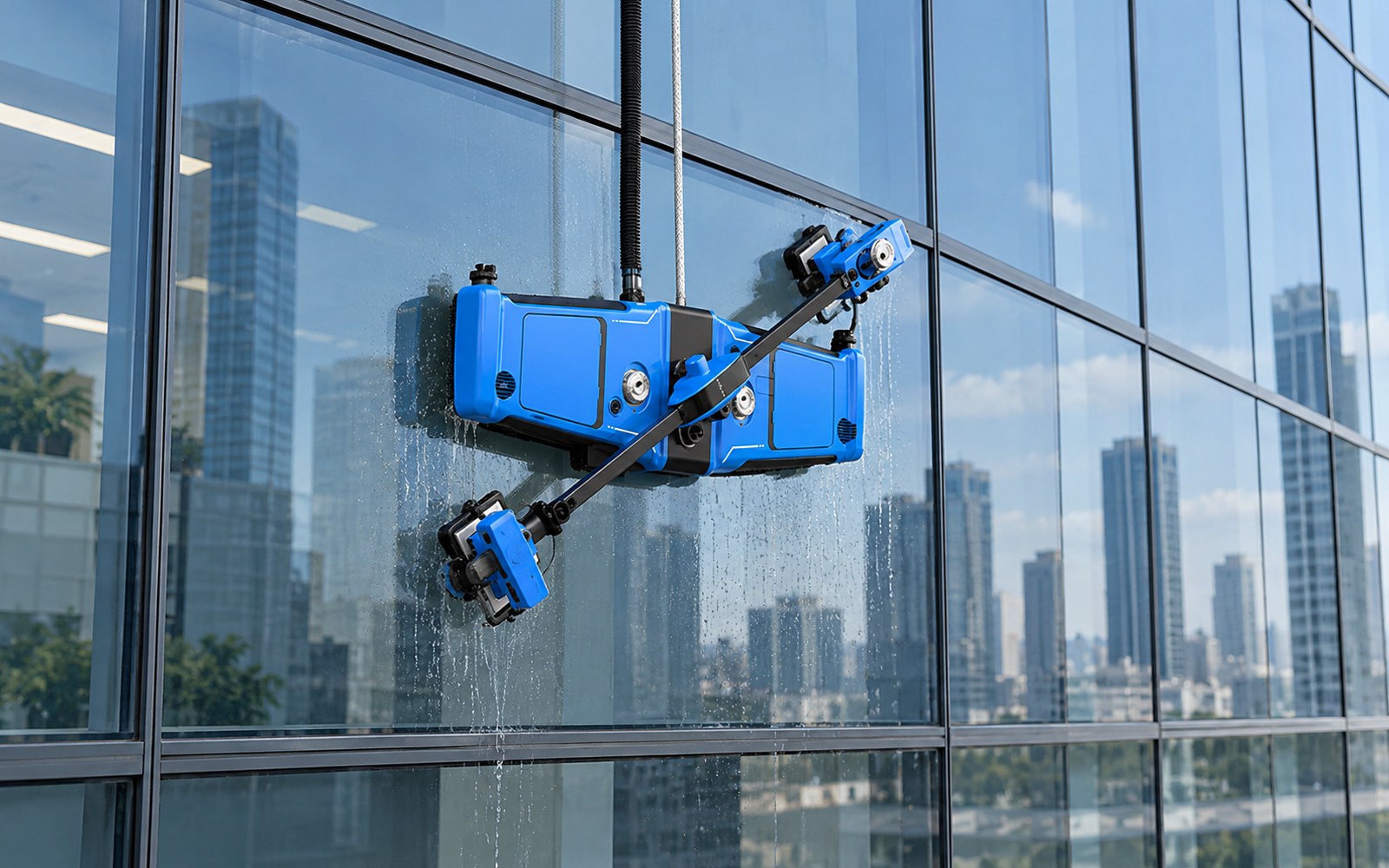
An articulated suction platform is an option for flat, non-curved glass with qualified joints or projections. Its contact assemblies support movement and cleaning along an approved route. Check first: Panel joints, obstacle dimensions, sealants, gaps, surface condition and the full cleaning path.
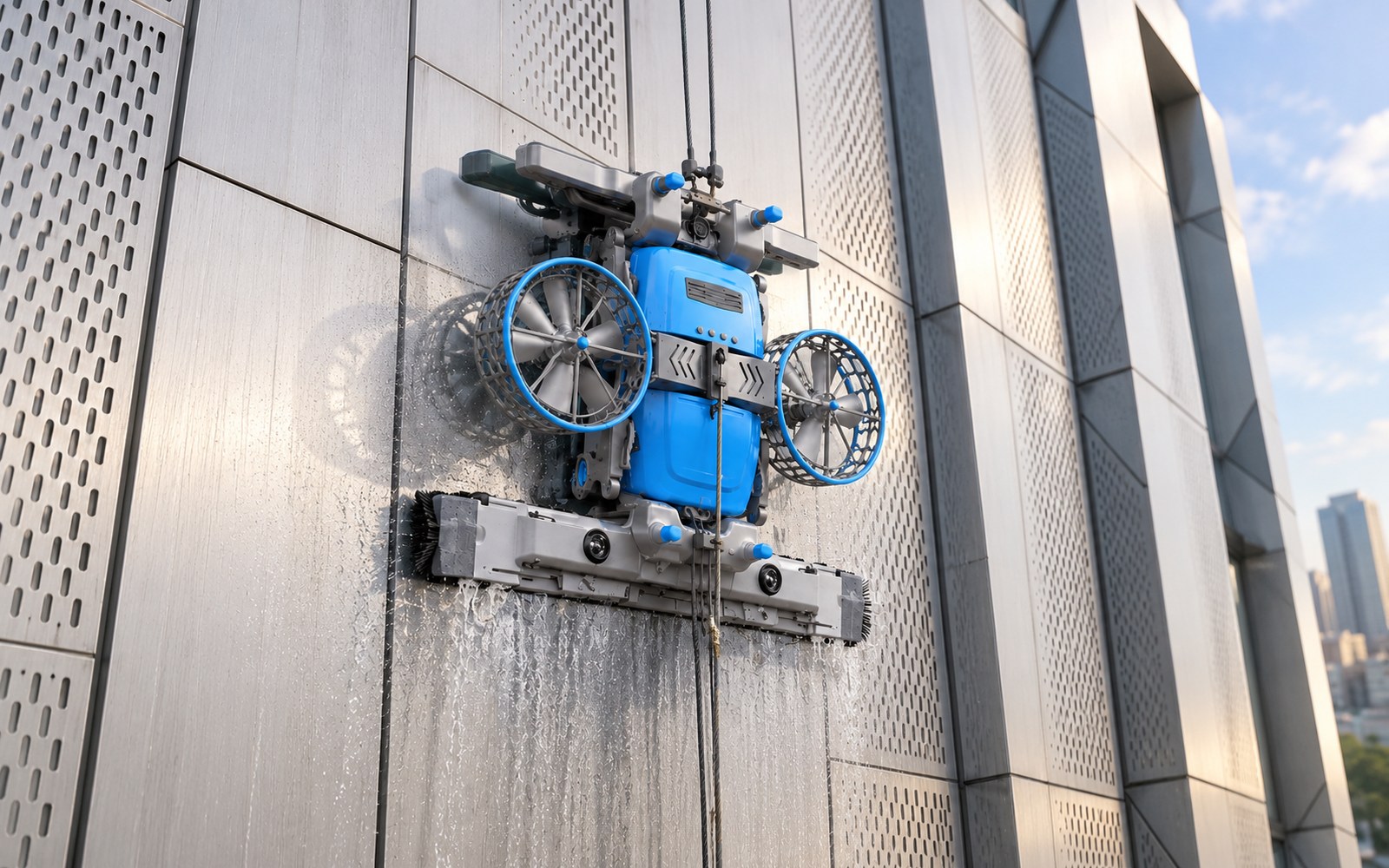
A suspended platform uses guarded fans to maintain contact while its spray-and-brush system cleans a qualified surface. Selected systems can serve glass, stone or solid metal panels. Check first: Roof support, cable paths, projections, finish compatibility and a sample-area cleaning trial.
One building can need more than one method. Review curved glass, deep setbacks, balconies, openable windows and fragile finishes separately.
A useful solution includes the work around the robot: access, preparation, supervision, cleaning-quality checks and safe recovery. The operating plan defines what is automated and what the team controls.
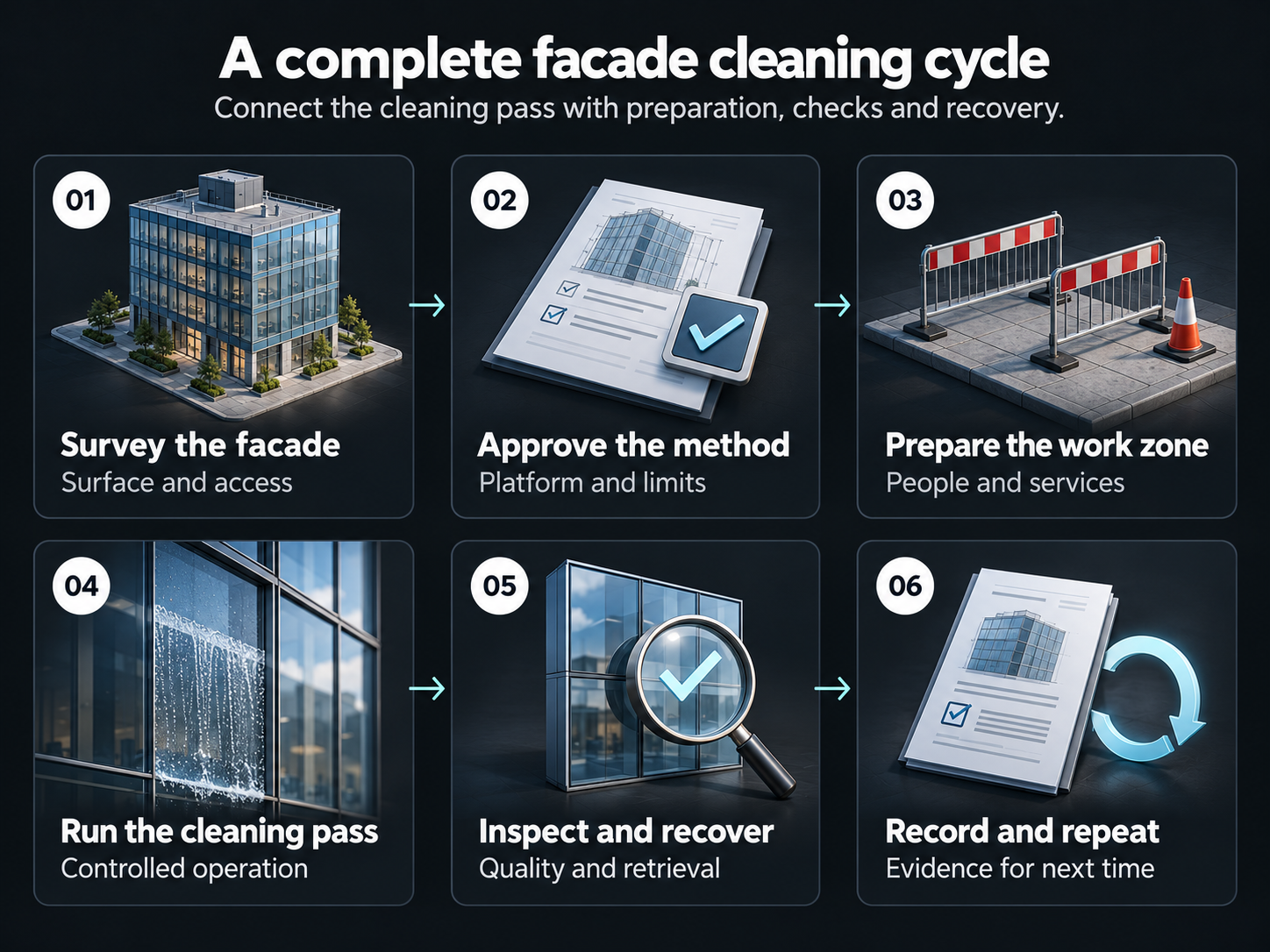
Map the surface, panel geometry, obstacles, roof access and the current cleaning method.
Confirm the chosen platform, suspension or adhesion method, weather limits and recovery procedure.
Assign trained operators, verify anchors and services, and establish ground controls and communications.
Operate the approved spray, brush and wiping process within its defined route and operating limits.
Check representative panels, edges, streaking and residual dirt; manage exceptions and retrieve the system.
Record accepted area, total time, water use, interventions and rework before planning the next cycle.
The intended gains must be demonstrated in the pilot. Productivity, water consumption and total cost depend on the selected equipment, facade geometry, weather and operating method.
Move suitable cleaning passes to robotic equipment. Human responsibilities for setup, supervision, inspection and recovery remain part of the method.
Define pass coverage, contact method, water delivery and acceptance criteria so quality can be checked across repeated cycles.
Scope the elevation, work zone, operating window and service resources before mobilization, with an explicit plan for interruptions.
Record accepted area and total operating effort, including setup, transitions and rework, to evaluate actual site productivity.
Start with the facade and access method, then consider how the work fits the building’s occupants and daily operations.
Surface-following suction platform.
Check: Continuous contact, surface finish, seals and recovery access.
Obstacle-crossing suction or qualified cable support.
Check: Flat geometry, obstacle dimensions, cable clearance and reachable edges.
Material-compatible spray-and-brush system.
Check: Sample-area cleaning, pressure, coatings and water ingress.
Compact platform with a dedicated support setup.
Check: Local access, tethering, services and pedestrian separation.
Review reachability, access and any remaining manual or specialist work as a separate method.
Warpify selects and integrates platforms from multiple manufacturers, matching adhesion, cleaning tools and site support to each facade.
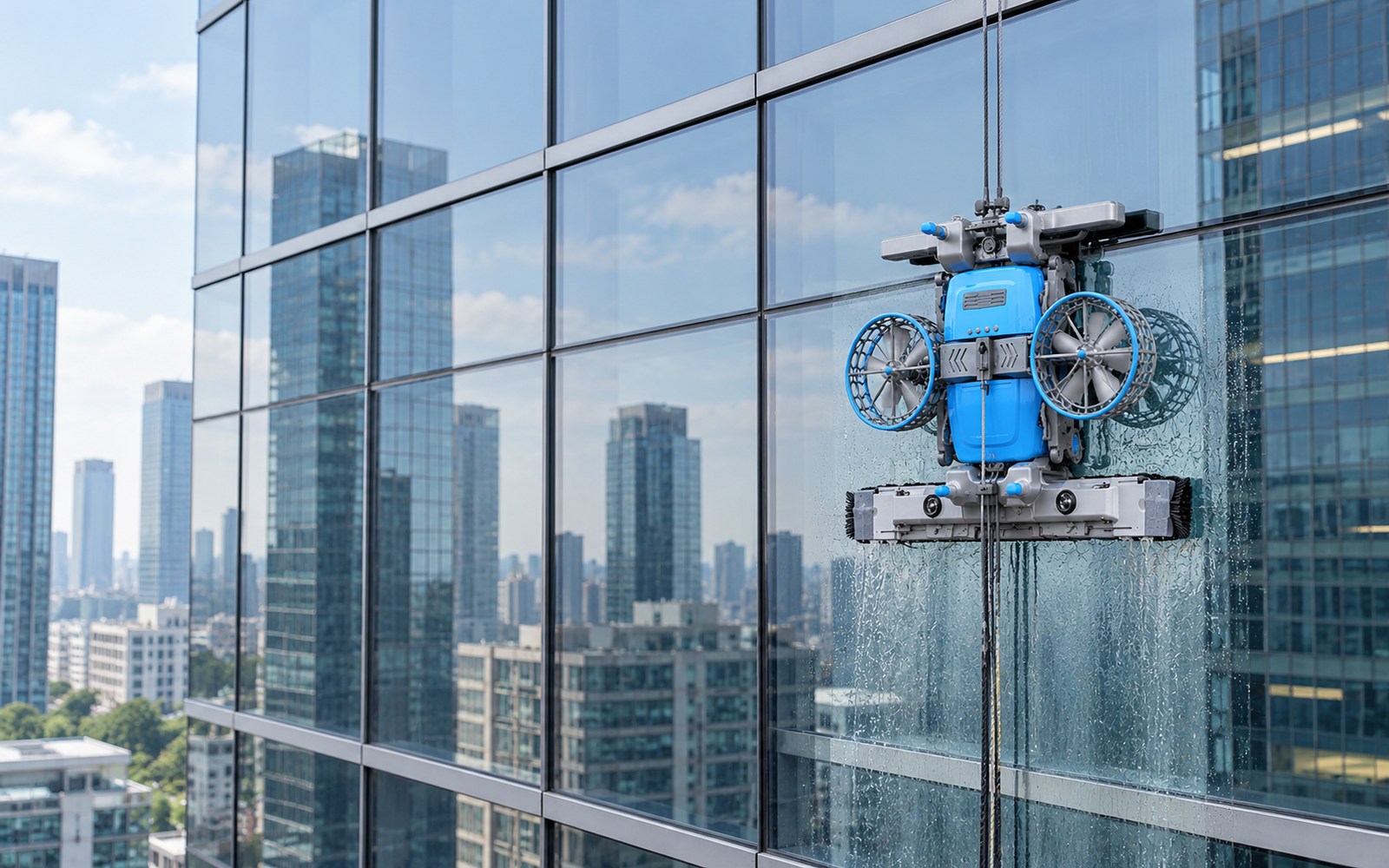
Coordinate repeated elevations, roof access and tenant operations around a defined cleaning route.
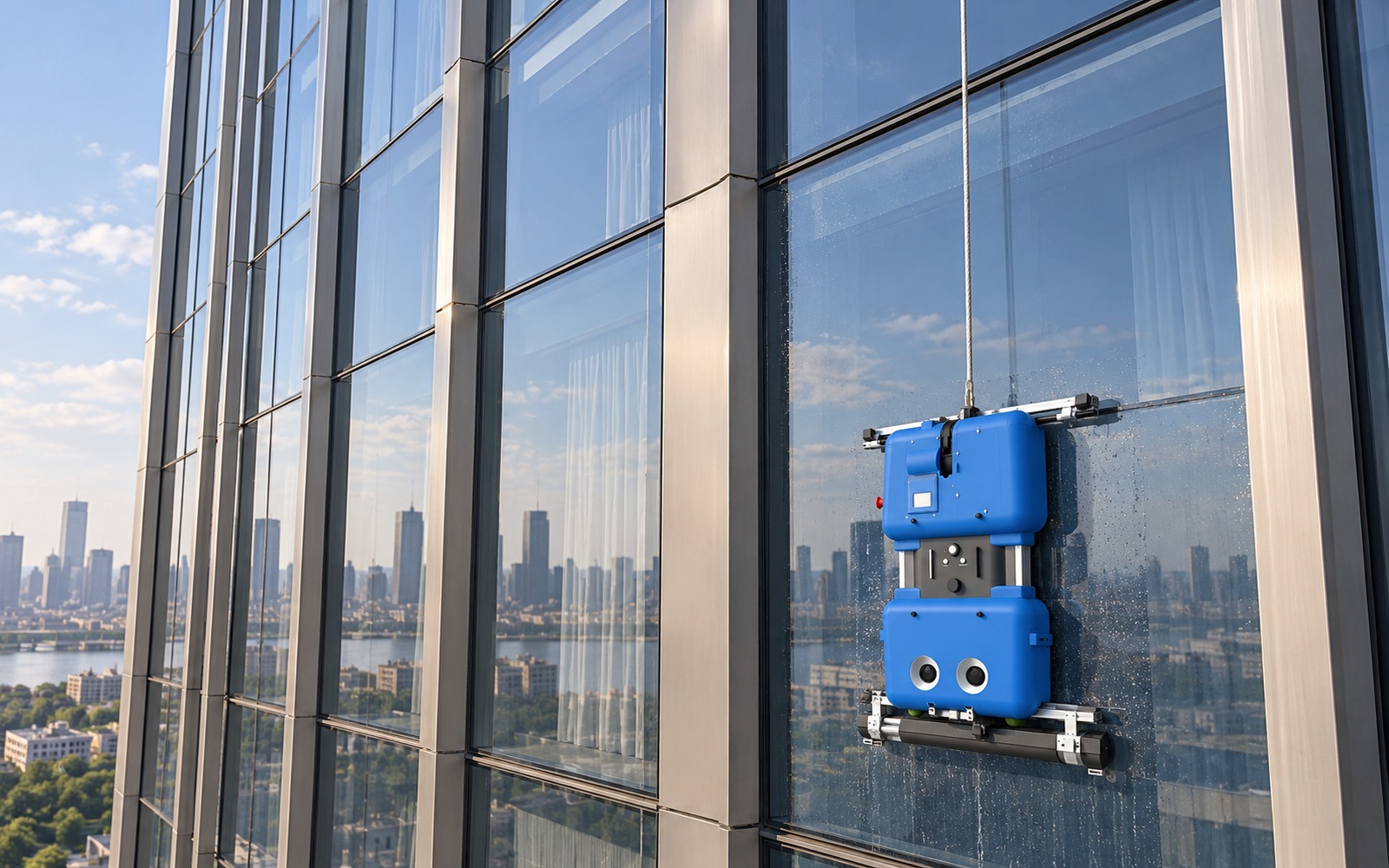
Match the glass bay and operating route to the platform, then coordinate work windows and occupant privacy.
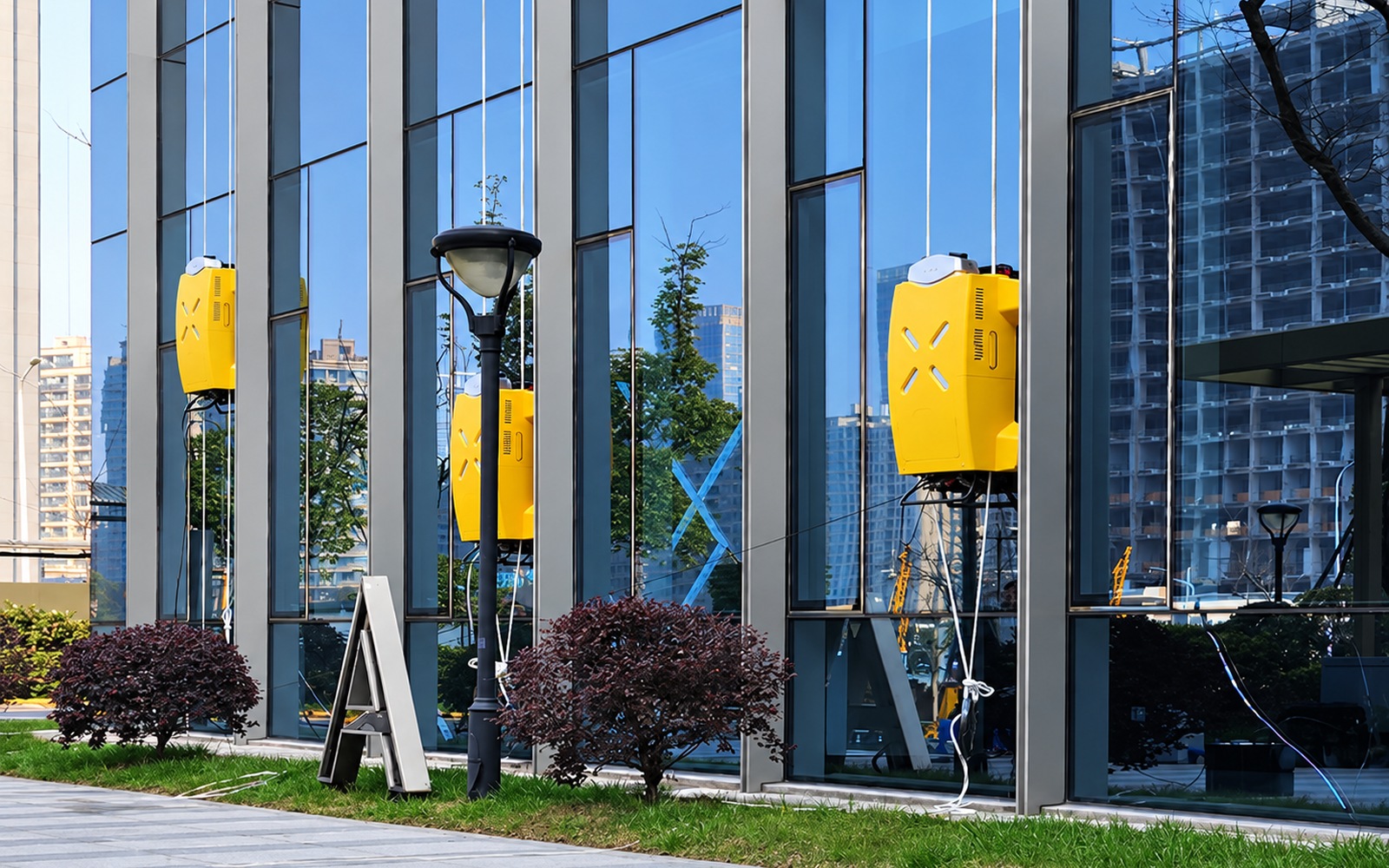
Plan repeated glazing work around doors, canopies and pedestrian routes, with a controlled work zone.

Plan suitable flat-glass routes bay by bay, with roof access, recovery and cleaning-quality checks defined before deployment.
Roof and anchor availability · existing building maintenance unit (BMU) · height and elevation drawings · surface and joint details · water/power access · wind and weather exposure · drainage and public access · operating and recovery ownership.
Compare the same elevation, cleaning frequency and quality standard. Use total job cost and accepted output rather than a robot’s headline travel or cleaning speed.
Include setup, operators, access equipment, utilities, transitions, rework, maintenance and recovery.
Annual spend, cleaning cycles, elevation area, access costs and today’s quality requirements.
Reachable area, setup time, transitions, operating windows, interventions and manual finishing.
Equipment, suspension/access, commissioning, training, consumables, spares and service.
Compare purchase and service options against workload, operating ownership and local support availability.
One coordinated application package connects the cleaning platform with the building, operating team and service plan. The final scope identifies equipment, responsibilities, local delivery arrangements and acceptance criteria.
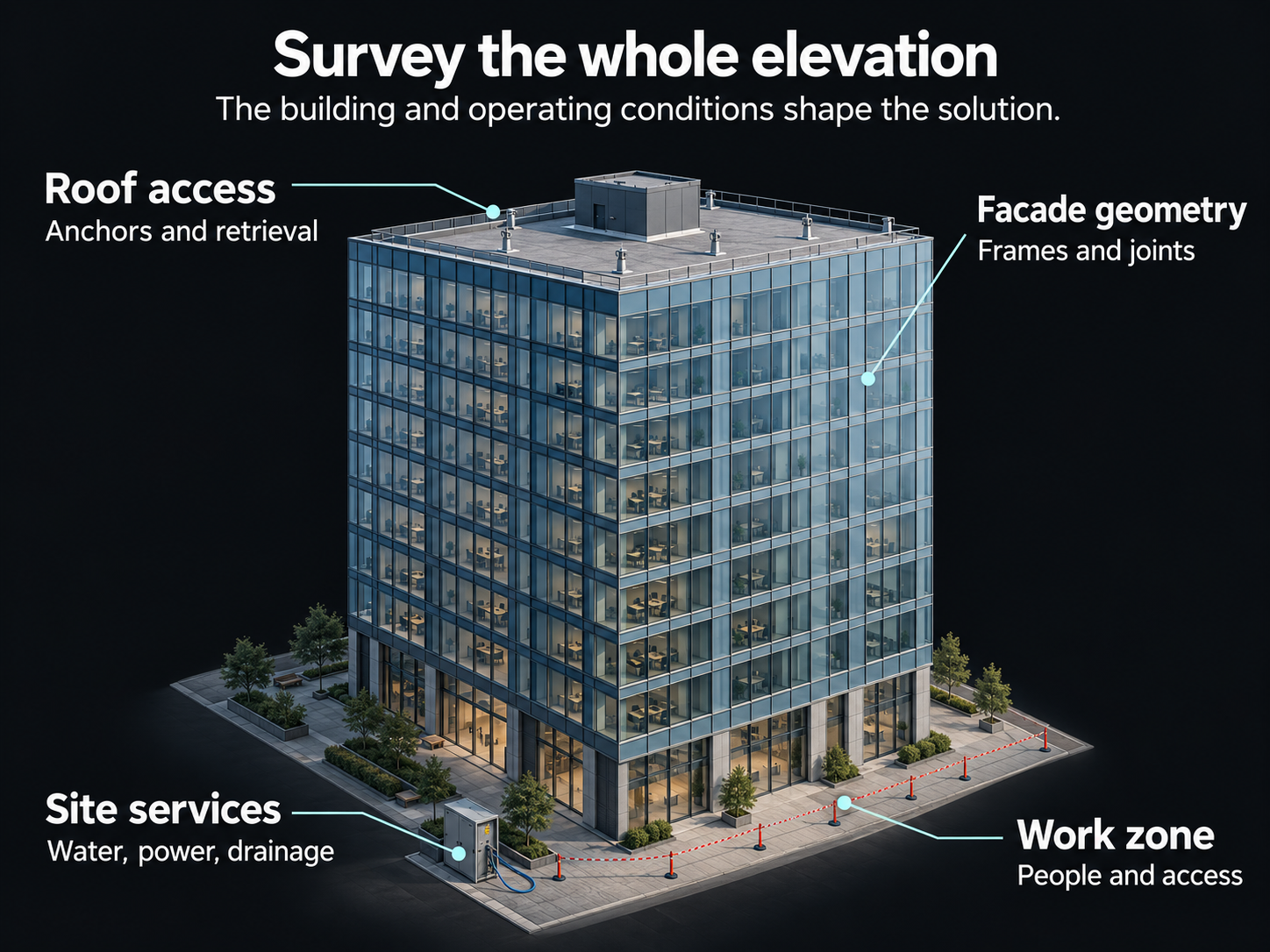
Define the building surfaces, access conditions, cleaning objectives and commercial workload.
Match adhesion or suspension, the cleaning interface and support equipment to the approved method.
Plan mobilization, utilities, operator responsibilities, work-zone controls, recovery and local requirements.
Demonstrate cleaning quality and operating effort on a representative area and prepare the operating team.
Agree maintenance, consumables, spares, service responsibilities and reviews as the building or workload changes.
Agree on acceptance before the pilot starts. Include ordinary panels and the details most likely to create interruptions or manual finishing.
Agreed sample panels, residual dirt, streaking and edge coverage.
Condition of glass, coatings, seals and joints after the test.
Setup, accepted area, total time, interventions and rework.
Communications, stop conditions and retrieval demonstrated under the approved method.
Named operators, consumables, maintenance and escalation responsibilities.
Clear answers to the building, operating and commercial questions that determine a practical deployment.
A facade cleaning robot performs suitable exterior washing, brushing or wiping tasks on building surfaces. Different platforms use suction, cables and thrust assistance to maintain their position. A complete solution also includes access, operators, controls, recovery and cleaning-quality checks.
No. Surface continuity, curvature, joints, frames, ledges and recesses affect compatibility. Flat-glass suction robots and cable-supported systems have different operating envelopes. Mixed facades can require more than one cleaning method.
Selected configurations support stone, metal and other exterior panels. Suitability depends on the actual material, coating, sealant and cleaning process. Test a representative area before confirming the method.
The access requirements depend on the platform and deployment method. The survey must confirm suspension, anchorage, existing BMU compatibility where relevant, cable routing, deployment and recovery. Do not assume an existing access system is compatible.
Operating limits must come from the selected equipment’s current documentation and the approved site method. Adhesion or wind-resistance marketing claims do not establish permission to work in those conditions. Define stop and retrieval criteria before operation.
No. The degree of automation varies by system and building. Trained people remain responsible for preparation, supervision, exception handling, quality checks and recovery under the operating plan.
Cost depends on the equipment, building access, cleaning method, deployment, training and service scope. Share elevation area, cleaning frequency, existing spend and access information to prepare a comparable proposal. No universal price or payback applies.
Start with one building or elevation. Share the location, height, facade materials, drawings or photos, access arrangements, cleaning frequency and current method. Warpify can then scope platform fit, the operating package and pilot acceptance criteria.
Share the building conditions and the work you want automated. We will use them to scope a suitable cleaning system, deployment requirements and a pilot with clear acceptance criteria.
Send your building information to Warpify. We will scope platform fit, deployment requirements and the acceptance criteria for a practical pilot.
Facade planning resources
Explore the wider solution portfolio and the commercial routes for owners, operators and local service partners.
Compare adjacent robotics applications and support requirements.
Explore all solutions →Operating modelExplore ownership, operating responsibilities and Robotics-as-a-Service models.
Explore RaaS →Partner opportunityDiscuss deployment capabilities, customer access and lifecycle service support.
Discuss a partnership →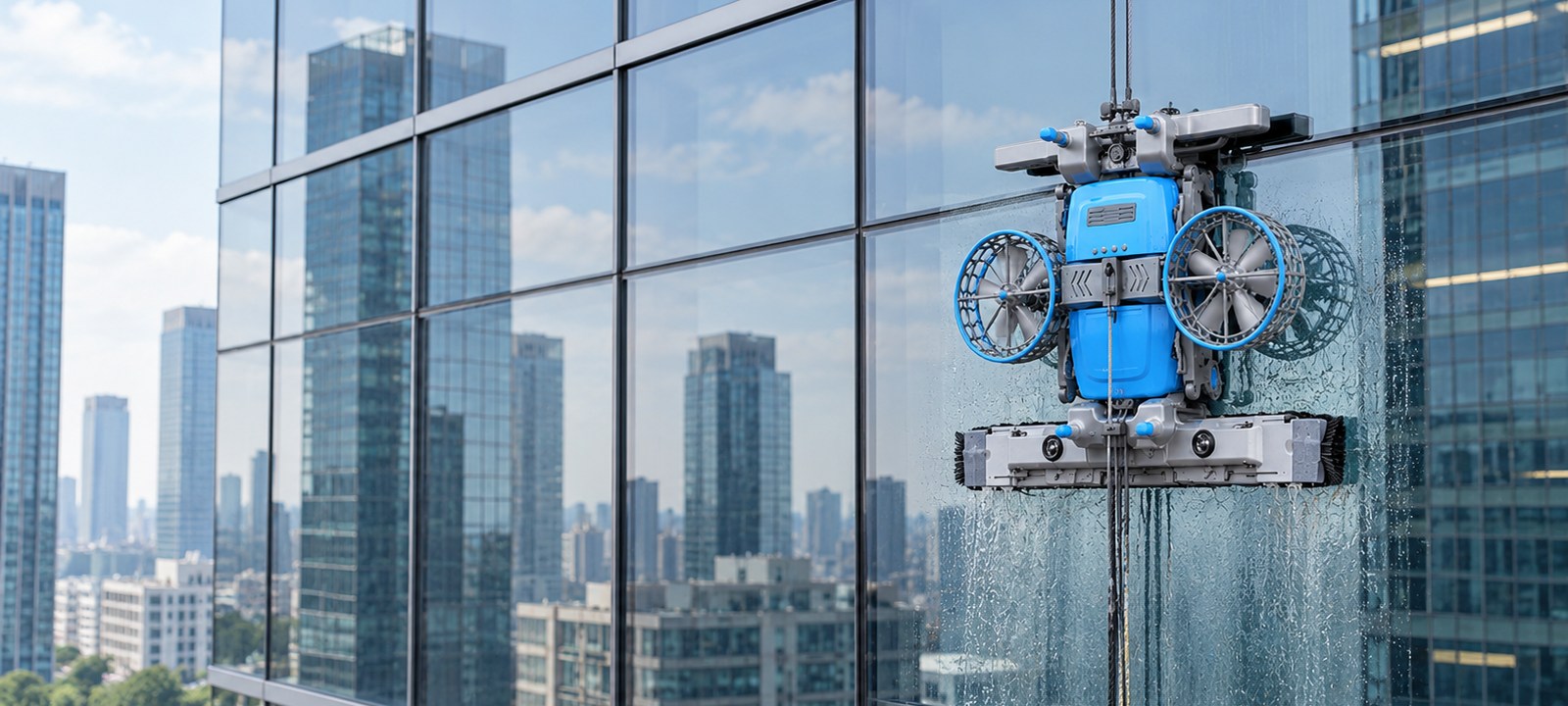
FACADE CLEANING ROBOT SOLUTIONS
Bring the building details. We will connect the robot, cleaning method, deployment plan and lifecycle support around your facade.
©2026 Warpify Robotics. All rights reserved.