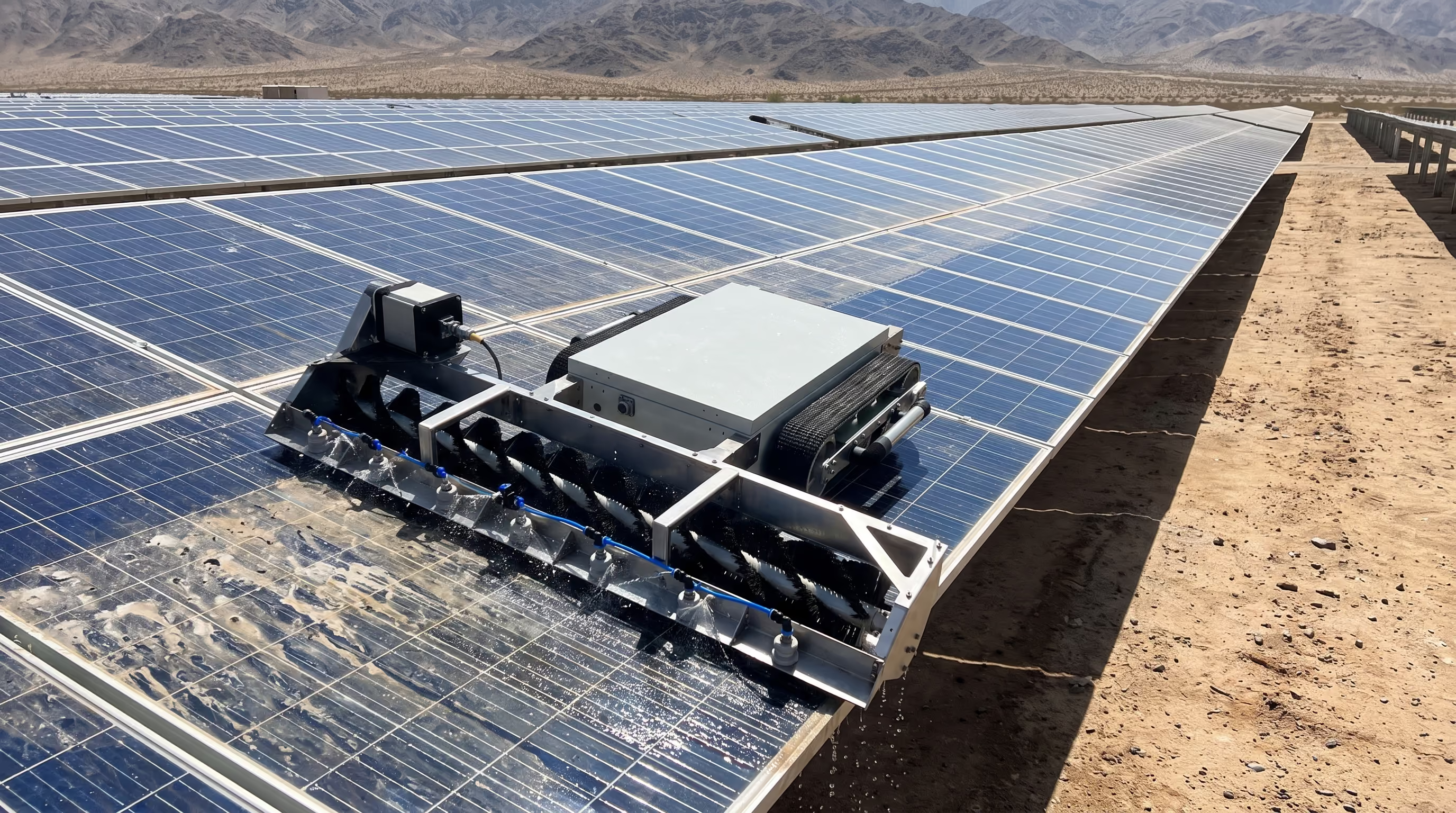
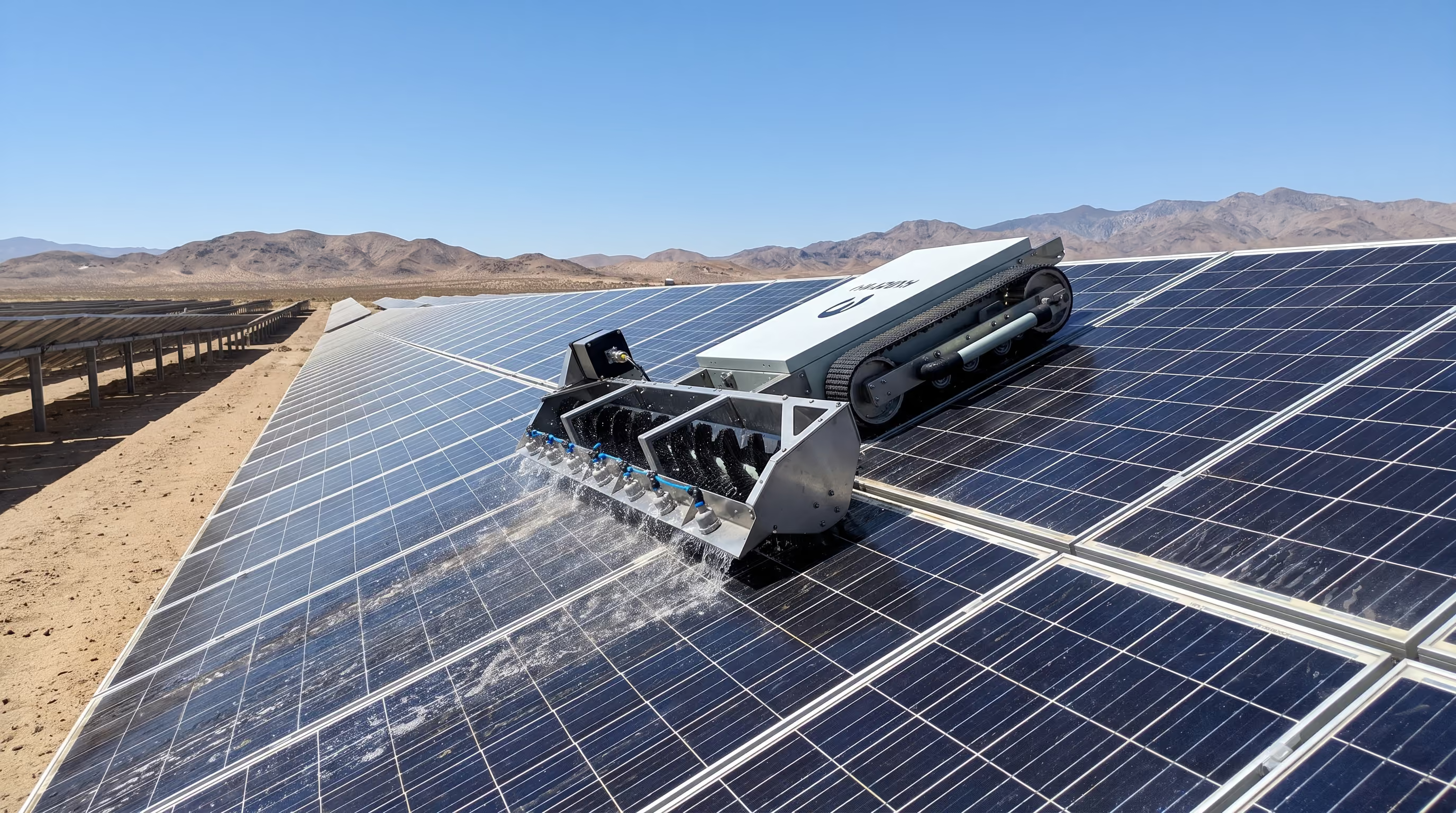
Solar Panel Cleaning Robot Solutions Built for Reliable Site Operations
Automate suitable photovoltaic module-cleaning routes without treating the robot as a standalone purchase. Warpify combines site assessment, cleaning-method selection, robot fit, transfer planning, water, power and communications, operating procedures, acceptance testing and lifecycle support around the array.
See Solar Panel Cleaning Robots in the Context That Determines Success
Tilt, table geometry, gaps, trackers, surface condition, soiling, weather and access all affect whether a robot can clean safely and repeatably. The solution also needs a practical plan for water or dry cleaning, row transfers, supervision, recovery and proof of completion.
Automate Repeatable Cleaning Work, Not Site Responsibility
Start with work your team already performs: a defined array block, an approved cleaning method and a clear response when conditions change. Warpify turns that routine into a repeatable robot mission while site teams retain weather, safety, method, exception, inspection and maintenance responsibility.
Routine row cleaning
Today
Crews move along long rows, repeat the same cleaning motion and manage tools, water and access.
Robot mission
Clean a qualified row or block using an approved dry or wet method and defined operating limits.
O&M value
Create more repeatable coverage and reduce routine work performed directly on module surfaces.
Selected wet and dry cleaning missions
Today
Teams choose methods based on dust, adhered soiling, water availability and module guidance.
Robot mission
Apply the qualified method, brush configuration and water process for the target soiling condition.
O&M value
Use a controlled process that can be scheduled, observed and compared with acceptance criteria.
Multi-block and dispersed-row operations
Today
Travel, lifting and redeployment between rows or terraces can consume substantial effort.
Robot mission
Clean within qualified blocks while a defined transfer or transport process connects them.
O&M value
Separate automated cleaning clearly from human transfer, supervision and exception recovery.
From cleaning need to repeatable service
How a Robotic Solar-Panel Cleaning Workflow Operates
Useful automation connects the cleaning mission to the site's O&M process. The robot is one part of a complete loop that begins with qualification and ends with verified completion, recovery and service.
01
Qualify the array and cleaning method
Review table geometry, modules and frames, slope, trackers, gaps, edges, access, soiling, cleaning instructions and weather limits.
02
Plan zones, schedules and resources
Define cleaning blocks, frequency triggers, dry or wet method, water, charging, communications, staging, transfers and the human operating owner.
03
Prepare the robot and site
Inspect brushes and tracks, confirm settings, establish cleaning resources and secure the work area under the approved procedure.
04
Run the qualified cleaning mission
Follow the approved route while the operating team monitors boundaries, traction, water flow and exceptions under the selected platform and site controls.
05
Inspect exceptions and verify the result
Review incomplete coverage, adhered soiling, surface concerns and intervention events against the pilot or operating criteria.
06
Transfer, recover, service and repeat
Move the robot using the approved method, address faults, maintain the equipment and use run evidence to improve the next cycle.
A completed cleaning run should create evidence that the O&M team can review.
Cleaning assurance
Turn Each Cleaning Run Into a Verifiable O&M Record
Where the selected platform and operating system support it, tie the run to an array zone, record timing and method, capture interventions and exceptions, and confirm completion against the site's acceptance process. This does not replace module inspection or the O&M team's judgment.
Cleaning method and route requirements depend on the qualified site.
Identify the cleaned zone and method
Tie the mission to the intended array block, schedule and approved dry or wet process.
Record exceptions, intervention and recovery
Capture stoppages, adhered soiling, transfer events and any human recovery action.
Review cleaning outcome before the next cycle
Confirm completion against the site's acceptance method and decide what needs follow-up.
That operating record helps teams improve schedules, methods, intervention planning and scale decisions.
Define cleaning by qualified block, method and completion criteria rather than an informal pass.
Reduced routine exposure
Move more repetitive cleaning off manual work performed directly on module rows, subject to safe deployment and recovery procedures.
Predictable resource planning
Plan water, charging, transfers, crew time and weather windows around an operating schedule.
Clearer exception handoff
Give the operating owner a defined process for stoppages, adhered soiling, incomplete coverage and equipment faults.
Use pilot evidence for controlled expansion. Actual impact depends on array geometry, soiling, weather, method, transfer burden, intervention rate, operating ownership and service support.
Where the workflow can fit
Match the Cleaning Service to the Array, Not the Other Way Around
The right platform and operating model depend on array geometry, surface conditions, soiling, cleaning instructions, access, utilities, transfer burden and recovery requirements.
Ground mount
Fixed-tilt arrays
Scheduled row cleaning where table geometry, slope, edges and transfers can be qualified.
Trackers
Single-axis tracker arrays
Cleaning planned around tracker position, allowable angles, drive hardware, gaps and operating windows.
Complex terrain
Hillside and terraced sites
Segmented cleaning with specific slope, wet-surface traction, access, transfer and recovery testing.
Commercial
Large commercial and industrial arrays
Repeatable block cleaning where staging, utilities, access and operating ownership are practical.
Heavy soiling
Dust and agricultural exposure
Event-based or scheduled cleaning adapted to the actual soiling mix and approved module-cleaning process.
Resource limits
Water-constrained sites
Dry-cleaning options assessed against cleaning effectiveness, abrasion risk, soiling type and module guidance.
Typical cleaning missions
Scheduled dust removal
Run qualified dry or wet cleaning cycles on planned array blocks and operating windows.
Qualified wet cleaning
Use an approved water process for suitable adhered soiling and site conditions.
Post-event cleaning
Respond to site-defined dust, weather or agricultural events with a qualified cleaning method.
Segmented block cleaning
Clean qualified sections while a defined transfer and staging process connects dispersed rows.
Exception and quality review
Record incomplete coverage, adhered soiling and intervention events for O&M review.
Supervised fault recovery
Use defined stop, access, recovery and return-to-service procedures when conditions change.
Conditions that need redesign or a different approach include unsupported slope or gaps, unsafe roof edges or recovery access, incompatible modules, frames, coatings or loads, traction outside tested limits, unstable communications, no practical transfer method, or cleaning instructions that conflict with the proposed brush, water or chemical process.
A business case grounded in one cleaning cycle
Model the Complete Service Before Scaling the Fleet
Start with one representative array block and one cleaning cycle. Compare the current cleaning burden and a modelled, evidence-based recovered-energy opportunity with the complete cost of the robotic service.
Current cleaning burdenLabor, access, water and supervision
+
Modelled operational and energy valueRecovered-energy opportunity and resource changes
-
Complete system costRobot, transfer, infrastructure, service and lifecycle
Array and cycle demand
Array area, row geometry, cleaning frequency, weather windows and current crew effort.
Automation fit
Qualified blocks, cleaning method, expected intervention, transfer and fallback requirements.
Avoided burden
Routine labor, access equipment, water handling, transport and repeated setup.
Value scenarios
Modelled recovered-energy opportunity, resource changes, coverage and operating consistency.
Use pilot results to replace assumptions with measured route completion, cleaning outcome, intervention, water or resource use and service effort. Use downside, base and upside cases rather than one promised payback.
From site assessment to lifecycle support
What Warpify Delivers Around the Robot
We start with the cleaning workflow and site conditions, then bring platform fit, cleaning method, infrastructure, integration, acceptance and service together around the array.
01
Site and cleaning assessment
Map the array, soiling, cleaning rules, access, utilities, weather limits, transfers and operating ownership.
02
Platform and method fit
Match mobility, cleaning mechanism, dry or wet process and environmental suitability to the approved blocks.
Test sustained route completion, cleaning outcome, module friendliness, slope and traction, gaps, transfer, intervention, recovery and maintainability.
05
Lifecycle and service
Plan training, preventive maintenance, wear parts, spares, seasonal method changes, software updates and performance review.
Deployment evidence
See Robotics Case Studies
Governed deployment evidence
Explore governed cases to see how Warpify separates verified deployment evidence from modelled planning assumptions. Results depend on the workflow, site conditions, integration scope and operating model; no case should be treated as a universal solar-cleaning result.
Questions Teams Ask Before Automating Module Cleaning
The right solution depends on the array, soiling, cleaning method, access, infrastructure and human operating model. These answers clarify what needs to be qualified before a credible pilot.
What solar-panel cleaning tasks can robots automate?
Robots can automate suitable, repeatable cleaning passes within qualified array blocks. The cleaning method, route, slope, gaps, edges, trackers, access, weather and recovery process must all be assessed. Transfers, exceptions, inspection, maintenance and operating decisions remain partly or fully human-led.
Should a site use wet or dry robotic cleaning?
It depends on the soiling, water availability and quality, module-manufacturer instructions, abrasion risk, environmental controls and required cleaning outcome. Dry cleaning may suit loose dust in some conditions; adhered residue may require a qualified wet process. The pilot should test the actual site method.
Can a robot work on sloped or hillside arrays?
Potentially, but a brochure's maximum slope is not enough. Test representative slopes, wet and dry surface conditions, traction margin, table edges, gaps, access, transfer and recovery under the site's approved operating limits.
How do gaps, frames and trackers affect robot selection?
They can determine whether the robot can maintain contact, cross discontinuities, avoid hardware and stay within the allowed load and cleaning path. Array drawings and a field survey should be checked against current supplier limits, then validated on a representative block.
Can robotic cleaning damage modules or coatings?
An unsuitable brush, pressure, abrasive contamination, water condition or operating method can create risk. Follow the module manufacturer's cleaning instructions and validate cleaning effectiveness and module friendliness using an agreed inspection method during the pilot.
What infrastructure and integration are required?
Requirements may include water treatment or supply, charging, communications, staging and storage, transfer equipment, operating schedules, weather inputs, run records and maintenance support. The exact scope depends on the platform and site; no specific interface is assumed until verified.
What remains human-led after automation?
People still own method approval, weather and safety decisions, site access, setup, transfers where not automated, exception recovery, quality review, module inspection, maintenance and escalation. The operating model should name each owner before the pilot.
How should we evaluate the business case and start a pilot?
Choose one representative array block. Baseline the current cleaning cycle and soiling evidence, then define acceptance criteria for route completion, cleaning outcome, module friendliness, intervention, recovery, resources and maintainability. Build downside, base and upside scenarios before any scale decision.
A practical first step
Start With One Representative Array Block
Do not choose the robot first. Choose one block and define what a safe, repeatable cleaning service would need to prove.
Array layout, table geometry and tiltModule, frame, gap and tracker detailsSoiling pattern, current method and water constraintsAccess, staging, transfer and recovery conditionsCleaning schedule, weather limits and safety ownershipPilot success and module-friendliness criteria
Share that information with Warpify. We can help determine what should be automated, what should remain human-led and what a credible pilot needs to demonstrate.
Ready to turn a business scenario into a robotics application solution?
Tell us your industry, workflow, site conditions, automation goals, and commercial expectations. Warpify Robotics will help assess whether your scenario fits an existing packaged solution, a custom robotics application, or a RaaS-style adoption path.