Begin with the job.
We map routes, tasks, hand-offs, constraints, and success criteria before recommending technology.
SCENARIO ASSESSMENT


Tell us the work you need done. Warpify selects the right robot, connects it to your workflow, deploys it at your site, and keeps it running.
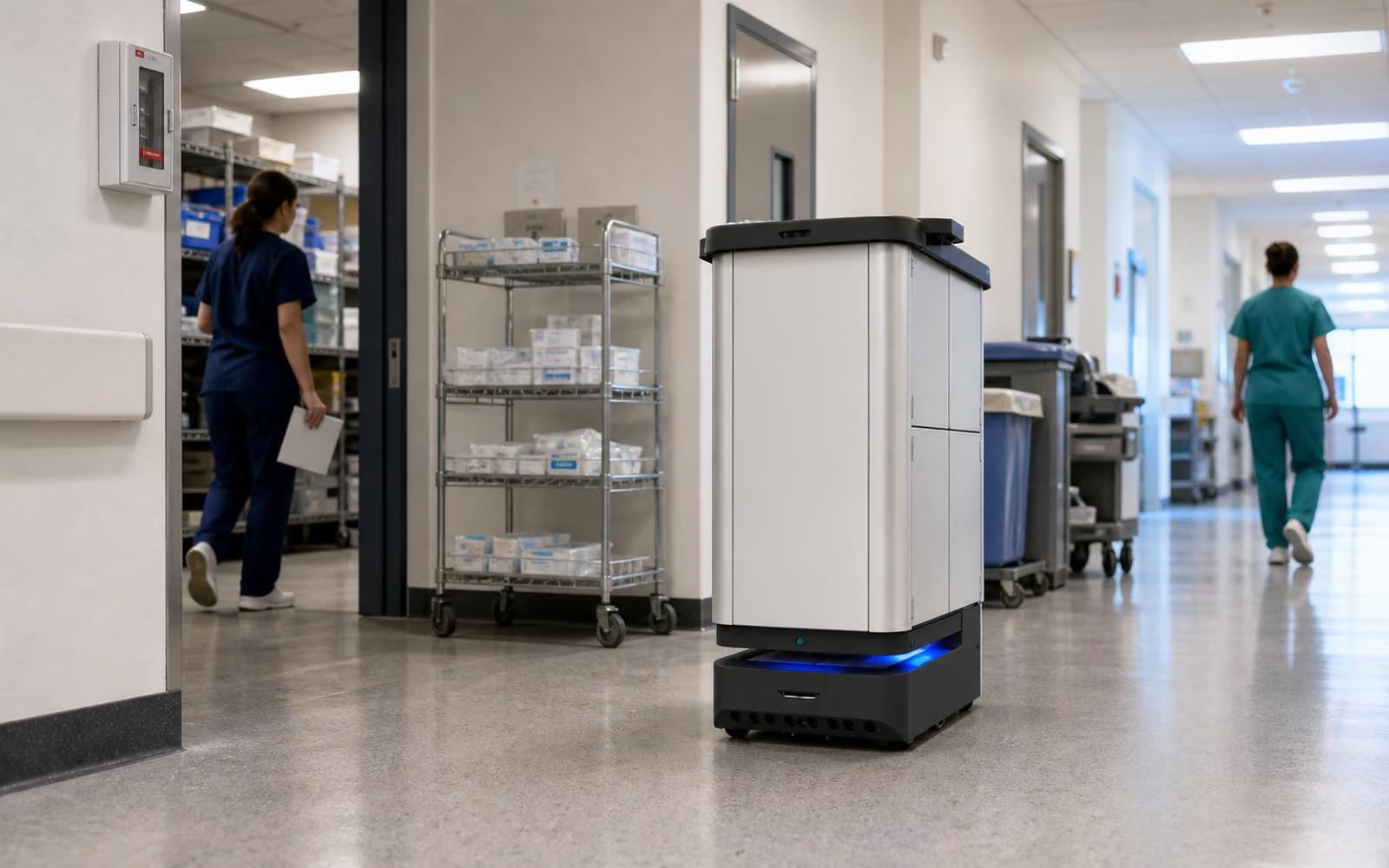
Warpify structures the complete operating solution around your workflow—not simply a robot on site, but a supported capability your team can actually use.
We map routes, tasks, hand-offs, constraints, and success criteria before recommending technology.
Robot platforms, payloads, software modules, and integrations are selected around the work.
Site readiness, safety, systems, people, training, and acceptance are planned together.
Service processes, maintenance, remote support, spares, and improvement continue after launch.
Start with a recurring task that is difficult to staff, risky to perform, inconsistent, or ready to scale.
Move medicines, samples, carts, supplies, work-in-process, or finished goods between storage, production, and delivery points.
AMR · TOWING · MATERIAL FLOWCollect repeatable visual, thermal, acoustic, gas, and condition data in the field.
PATROL · SENSING · REPORTINGAutomate repeatable floor care and support consistent standards across larger sites.
CLEANING · FACILITIESSupport reception, guidance, delivery, and simple interactions in public environments.
RECEPTION · GUIDANCEAssess robot-assisted options for remote handling, intervention, and other defined work in hazardous or restricted-access areas.
REMOTE OPERATION · INTERVENTIONDescribe the task. We will assess whether robotics can deliver practical value.
Each deployment is structured as an operating system of technology, service, and local execution.
Start with an assessment ↗Platform choices matched to tasks, site conditions, capacity, and growth.
Navigation, sensing, workflow logic, fleet tools, interfaces, and site integration.
Readiness planning, testing, training, launch support, and success criteria.
Monitoring, maintenance, technical support, spares, and performance review.
If your company already works with a preferred integrator or service provider, bring them into the conversation. Warpify can provide the robotics technology, platform, supply chain, and operating support they need.
Adopt robotic productivity through the relationships and local expertise you already trust.
The right structure depends on the workflow, utilization, rollout plan, and level of operating support.
Own the robot assets while defining service, software, and support separately.
Access robotic productivity through a recurring model aligned with service continuity.
Combine owned equipment, subscriptions, or site-specific services around a wider rollout.
A good robotics program starts with clear expectations about fit, readiness, responsibility, and support.
No. Start by describing the work, environment, constraints, and intended outcome. Capability selection follows the workflow assessment.
Yes. Warpify can work with your nominated partner and equip them for ongoing robot operations.
The plan can include monitoring, technical support, maintenance, spares, training, and continuous improvement.
Yes. A focused first deployment can establish value and create a repeatable model for broader rollout.
PLANNING RESOURCES
Start with the workflow, then compare the relevant solution and evidence. When the task, site, and outcome are defined, send the requirement for assessment.
Capture the task, environment, payload, interfaces, service expectations, and business constraints.
Read the assessment guide →Healthcare solutionReview transport workflows, integration, safety, deployment support, service, and commercial options.
View hospital AMR solutions →Industrial solutionReview sensing, mobility, communications, data, deployment, and service requirements for real sites.
View inspection solutions →Project evidenceSee how workflow, deployment controls, operating roles, and measured outcomes were assessed.
Browse case studies →Business-case guideTest utilization, integration, service, downtime, and commercial-model assumptions before approval.
Build the financial model →Solution mapCompare application workflows, deployment support, service readiness, and commercial paths across solution areas.
View the Solutions overview →Tell us the task, the environment, and what a successful outcome means. We will help structure the right next step.
©2026 Warpify Robotics. All rights reserved.