Alarm verification
Check an authorised alarm beyond the fixed camera’s view. An approved drone mission gives the control room more context before escalating.


DRONE SOLUTIONS FOR OUTDOOR OPERATIONS
Deploy aerial patrol and inspection across large outdoor sites. Warpify combines aircraft, payloads and mission software with site integration, commissioning and lifecycle support.
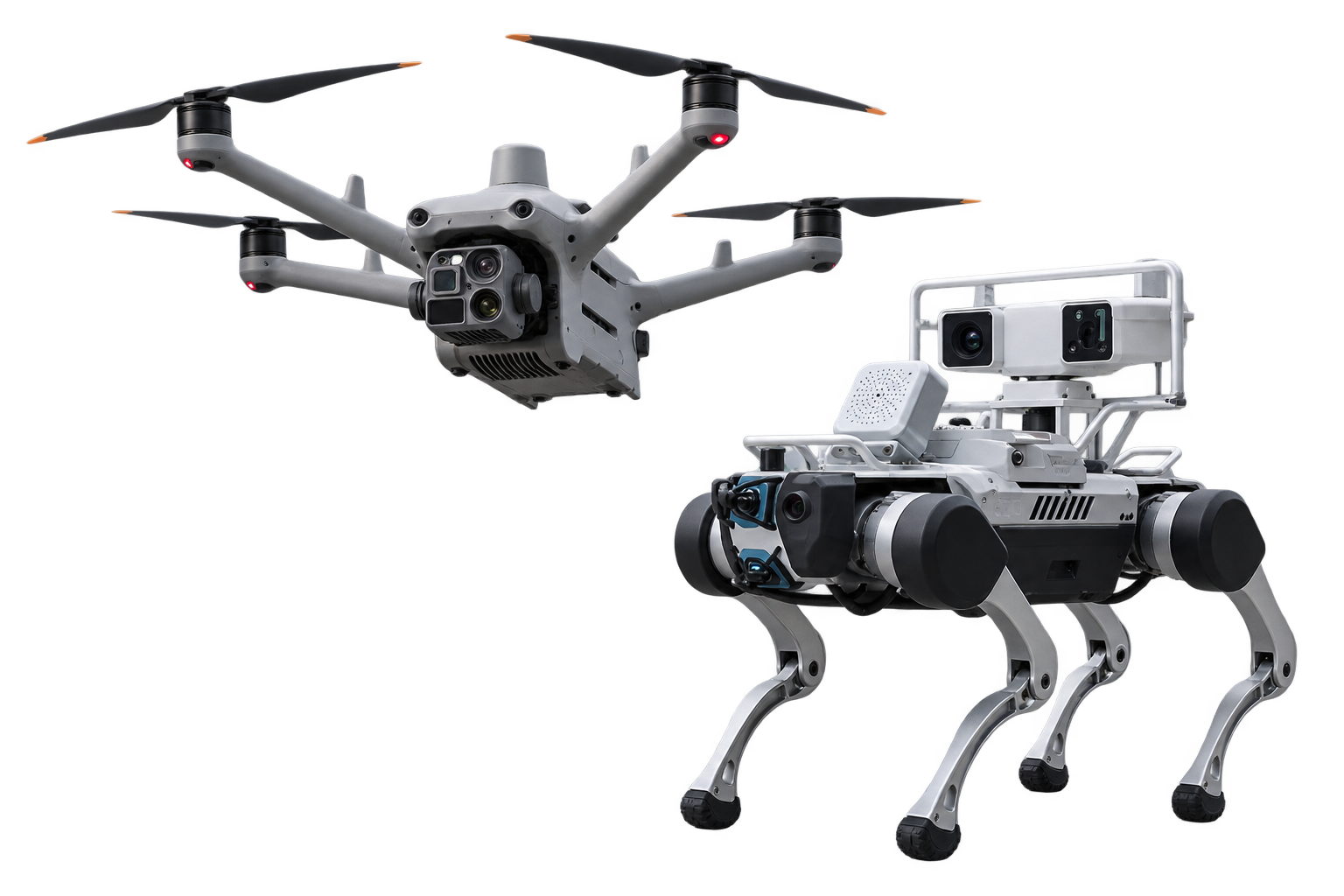
START WITH THE WORK
A drone adds a mobile viewpoint to your security workflow. Choose the aircraft, payload and optional dock around the task your team needs to complete.
Check an authorised alarm beyond the fixed camera’s view. An approved drone mission gives the control room more context before escalating.
Follow surveyed fence lines and observation points on a schedule. Keep time- and location-linked records for shift review.
Use a suitable visible-light or thermal payload to review selected areas after dark, with imagery checked by an operator.
WHEN THE SITE LAYOUT CHANGES
Keep entrance cameras focused on access. When earth banks, temporary structures or changing site levels obscure the work area, an authorised drone mission adds an elevated view.
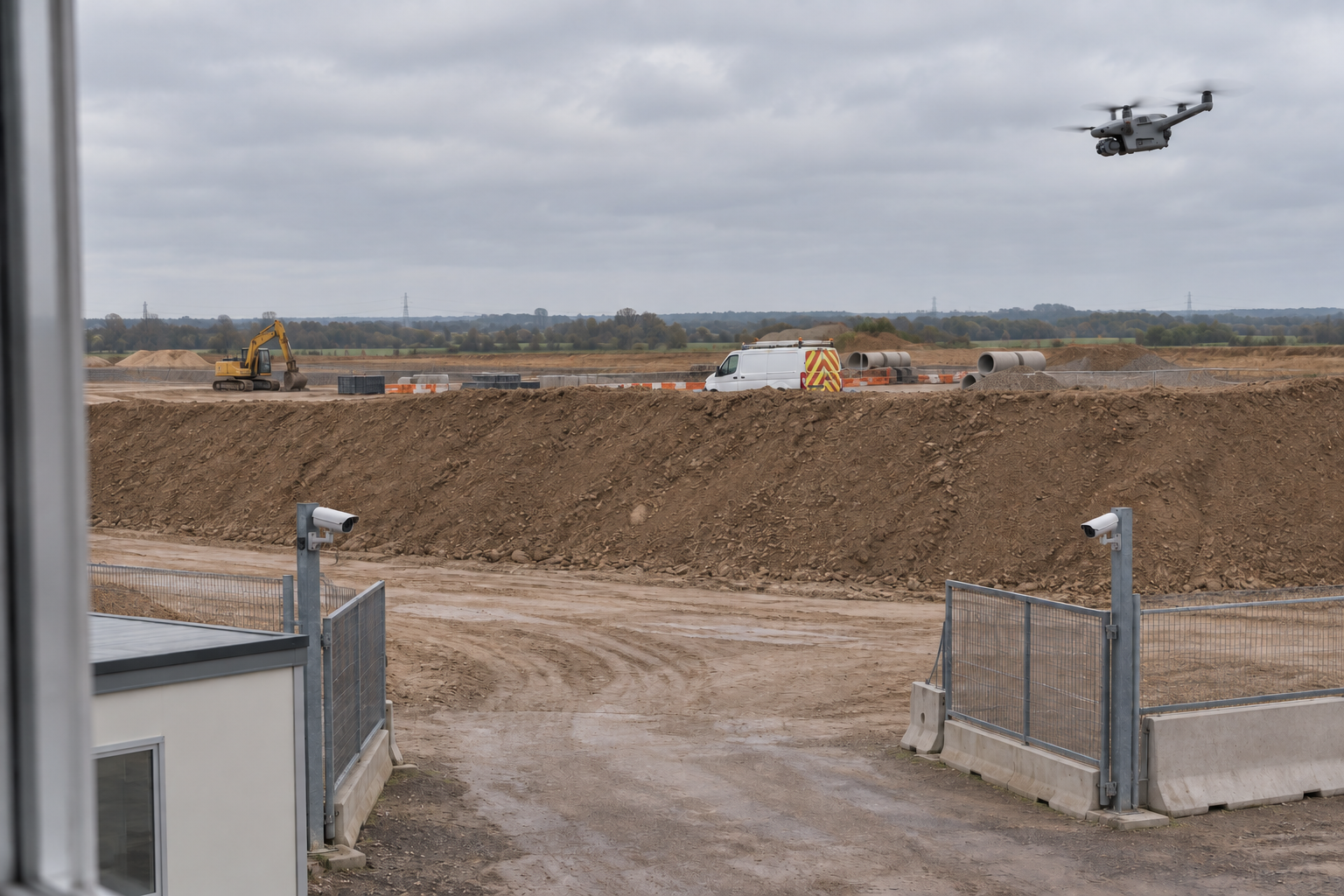
Fixed CCTVCameras on both sides monitor the entrance and approach.
Changing terrainTemporary earth banks obscure parts of the work area from entrance-level views.
Drone dispatchedThe operator checks the work area from above without redirecting the entrance cameras.
CONNECT THE WORKFLOW
Bring drone video and incident context into your existing CCTV or VMS workflow. Add ground patrol where a closer view is useful, with clear handoffs between authorised operators.
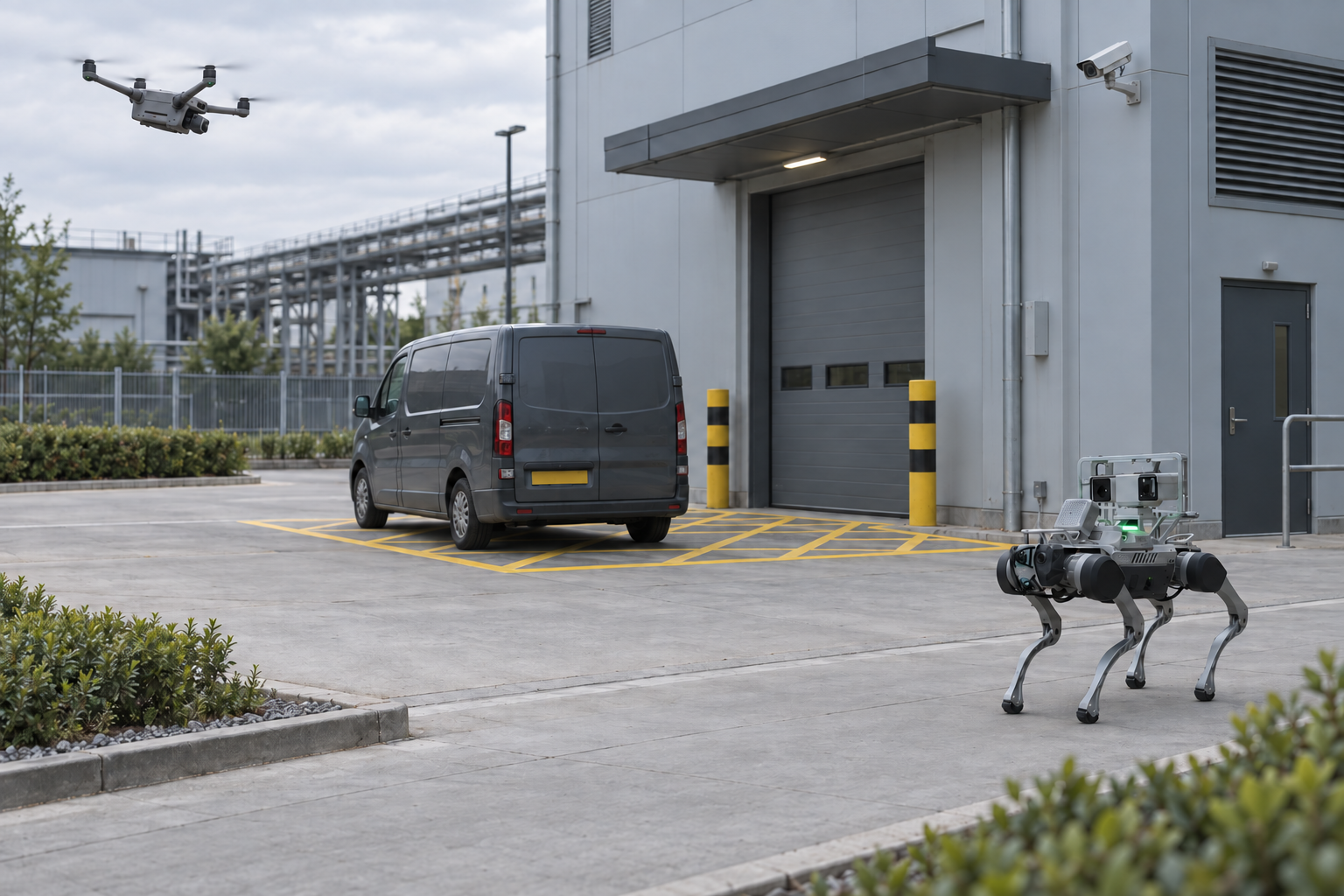
Check live video and incident imagery against your VMS, recording needs, image quality and latency requirements.
Link the alert location, mission status and evidence to the same incident. Test repeat alerts and incomplete tasks.
Define who may launch, cancel or take over a mission, and who responds on site. Flight control stays with the authorised operator.
The proposal defines the supported video, alarm and control interfaces for your selected platforms. Acceptance testing confirms those functions before operational handover.
ONE OPERATING LOOP
An alert or schedule starts the process. The control room receives the observations and decides the response; the mission team manages the flight and recovery.
Map authorised areas, observation points, schedules, privacy boundaries and the response owner.
Verify dock access, aircraft and battery status, communications, weather and the flight operating conditions.
Confirm the task, dispatch permissions and airspace conditions. Start only within the agreed operating window.
Collect the agreed visible or thermal views. Record mission time, location and the relevant incident reference.
The control room checks the evidence, records the decision and dispatches authorised personnel when needed.
Recover the aircraft, check the dock and battery, retain the permitted records and review failed or incomplete tasks.
MATCH THE SITE TO THE MISSION
Large outdoor sites benefit from an aerial view when teams need to check long boundaries, changing layouts or hard-to-reach areas. Missions can run as a standalone workflow or connect to existing security systems.
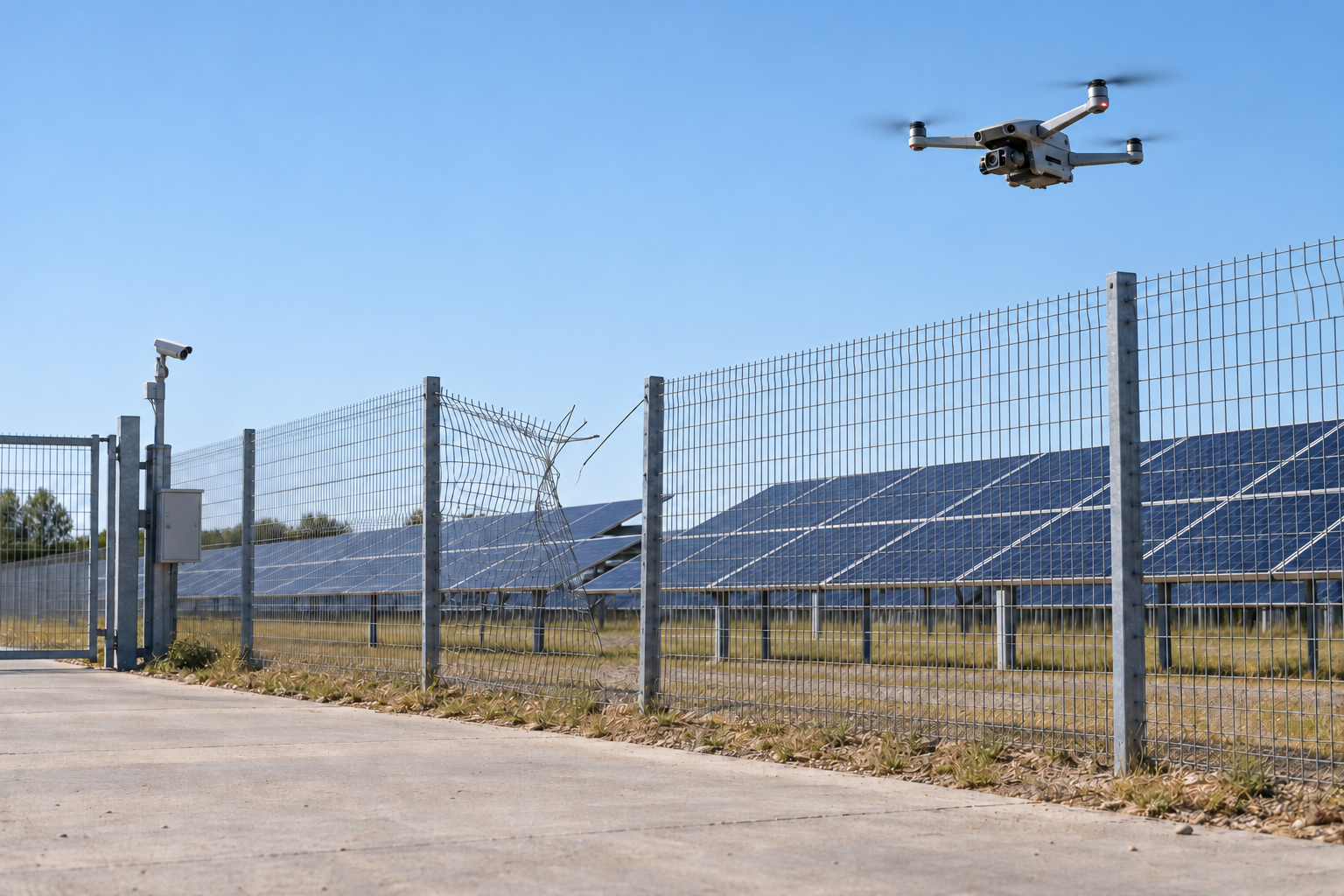
Connect aerial observation with fixed cameras at access points. Define patrol routes, communications and the response owner around the site.
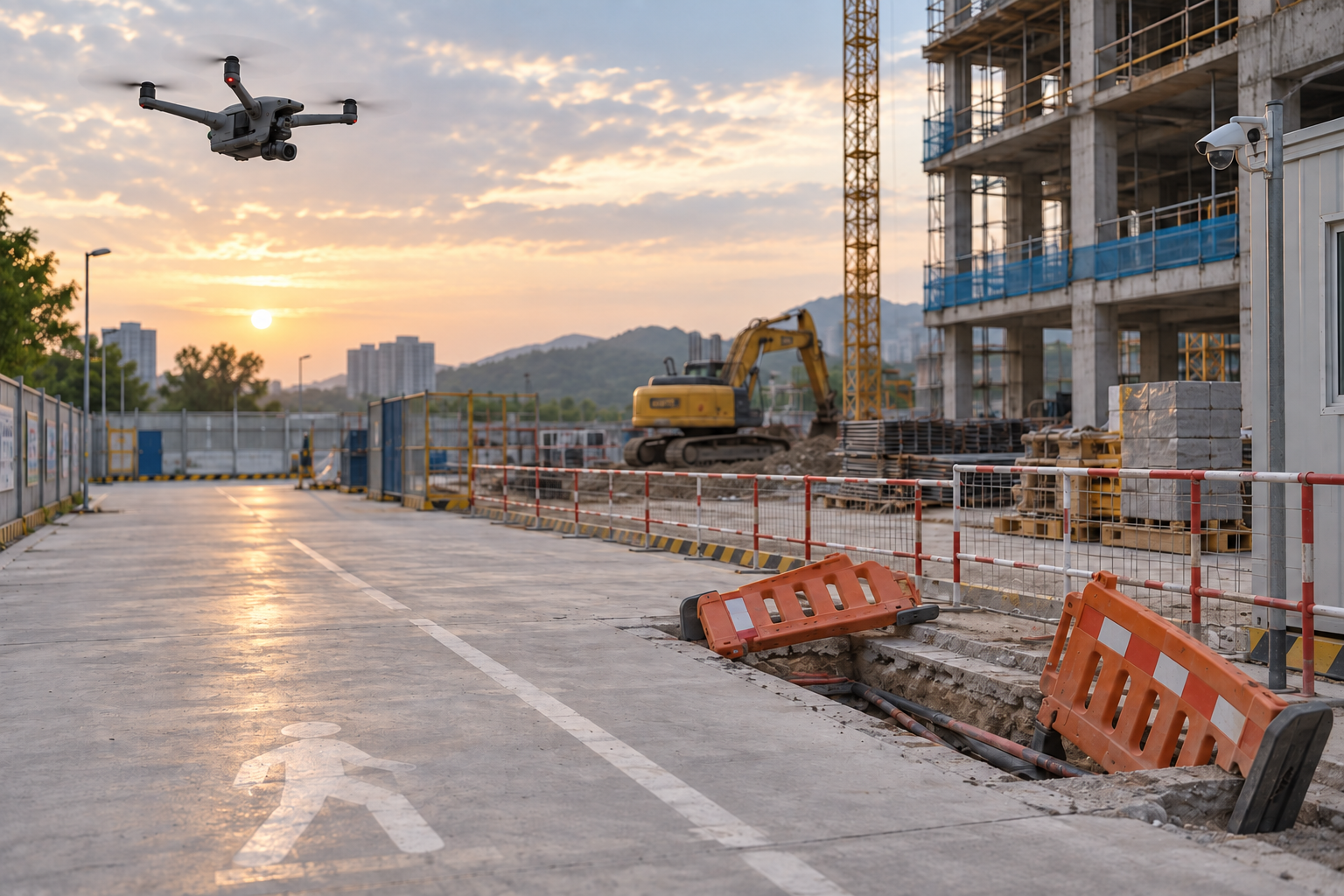
Check temporary boundaries, equipment areas and access roads as the site changes. Update routes when structures, cranes or stored materials move.
For industrial campuses, energy sites and logistics yards, start with one perimeter or alarm that fixed cameras cannot fully show. Include the site team or a ground robot when a closer check is needed.
STANDALONE AERIAL INSPECTION
Some missions start with an asset that needs inspection. A drone can collect views of roofs, façades and elevated structures without a CCTV system or a ground robot.
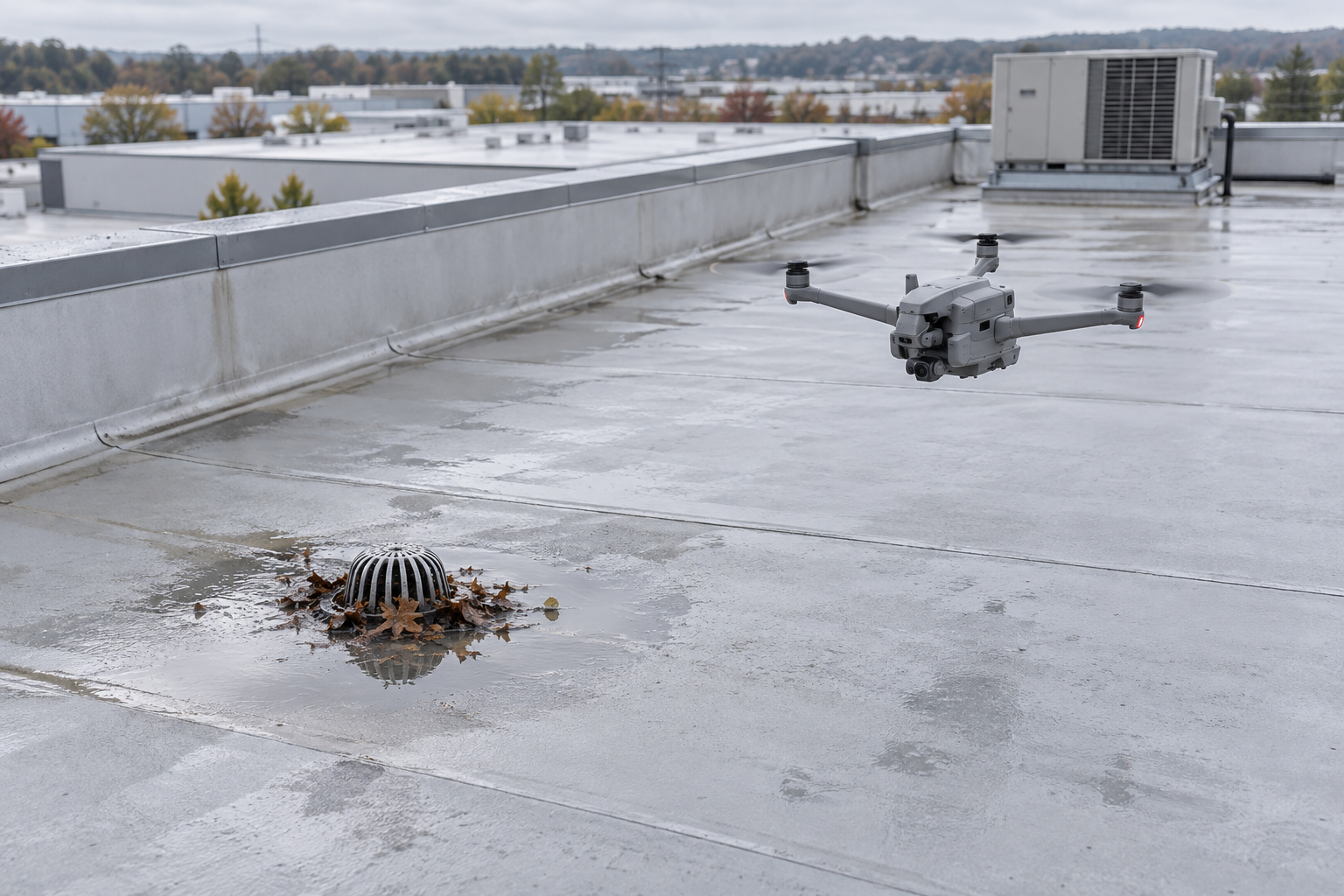
Capture roof surfaces, drainage points and rooftop equipment from above. Plan the viewing angle, image detail and repeat coverage around the inspection question.
Select the payload and survey conditions for the asset and the evidence needed.
Organise the images by asset and location so maintenance teams can review changes and plan follow-up checks.
Security patrol and asset-condition inspection use different mission plans, data outputs and acceptance criteria. Aerial images support maintenance decisions; specialist assessment or close-access checks may still be needed.
Explore industrial inspection solutionsONE DEFINED DELIVERY SCOPE
Warpify brings aircraft, payloads, mission software, commissioning, training and lifecycle support into one delivery scope. Add an automated dock or security-system integration where the mission requires it. Your existing integrator can be part of the delivery team.
Define the patrol or inspection task, required imagery, operating window, site infrastructure and the team responsible for reviewing the results.
Match the drone, dock, camera or thermal payload and mission software to the required observation task.
Connect mission imagery and records to the agreed review workflow. For security applications, define and test video, alarm and operator handoffs with the selected CCTV or VMS.
Validate representative missions, evidence quality, exception handling, recovery and operator training against agreed criteria.
Scope software support, maintenance, battery management, spares and escalation responsibilities for the intended region.
Hardware configuration, integration scope, operating support and service coverage are confirmed in the project proposal.
MEASURE THE SECURITY OUTCOME
Compare your current verification process with a representative pilot. Measure useful observations, response time and the total effort required to obtain a result.
Measure from the agreed alarm or task timestamp to the first view a reviewer can use.
Track completed tasks alongside cancellations and non-flyable periods. Record why each task could not be completed.
Include operator, control-room and on-site response time, including recovery and exceptions.
Divide total operating cost by the number of verifications that meet the agreed evidence criteria. Include site infrastructure, software, maintenance and human response.
Agree the baseline, sample tasks, conditions and acceptance thresholds before the pilot. Use the results to decide the right deployment scale and service model.
DESIGN FOR REAL OPERATING CONDITIONS
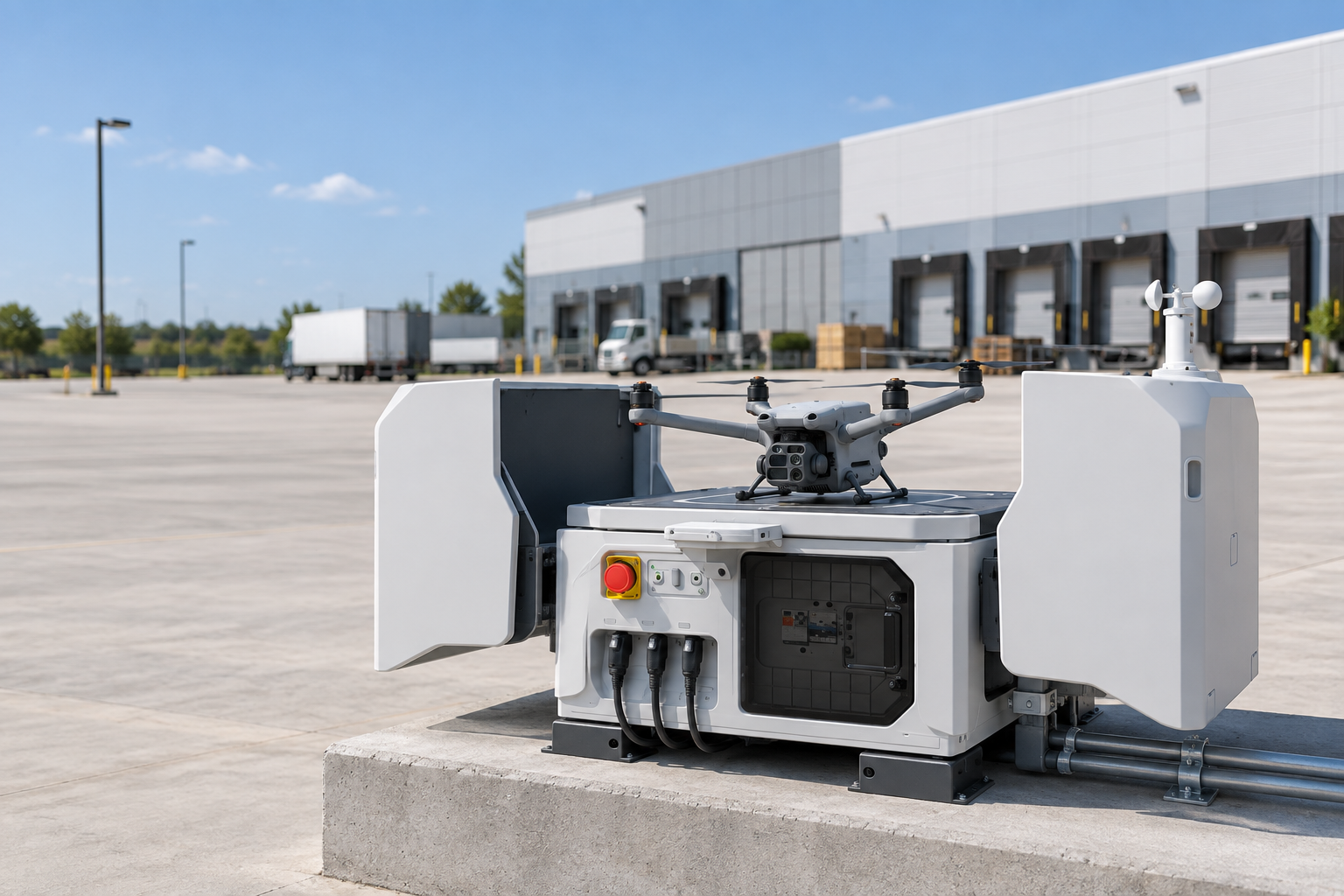
Power, connectivity and clear launch space make the dock part of the site infrastructure. Warpify plans the installation and recovery access alongside the mission workflow.
Survey the launch area, power, network, access for maintenance, obstructions, weather exposure and recovery options.
Confirm the applicable local flight requirements, operator responsibilities, authorised airspace and permitted operating method for the specific site.
Set recording boundaries, user roles, retention, audit logs and escalation ownership before connecting the workflow to the control room.
Test low battery, lost connectivity, blocked dock access, mission cancellation and non-flyable periods. Keep an alternative verification route available.
Mission scheduling accounts for battery cycles, weather and maintenance so the site has a clear plan for coverage and response.
QUESTIONS BEFORE DEPLOYMENT
Yes. Scheduled aerial patrol and asset-inspection missions can use a standalone drone operating workflow. CCTV integration is useful when fixed-camera events need aerial verification; a ground robot is optional where close-range checks add value.
Warpify scopes the integration around your video management system, software version and security workflow. Live video, alarm handoff, recording and mission control are checked separately, so the proposal is clear about what the chosen systems will support.
No. A drone can support a CCTV-based security workflow without a ground robot. Add a quadruped where accessible ground routes need closer checks. For an existing robot, we assess the incident handoff, interface support and operator permissions.
The main items are the aircraft and dock, camera payload, mission software, site works, connectivity, security integration, commissioning, training and ongoing support. Route count, operating hours and the response model shape both deployment and recurring operating costs.
An alarm can trigger a dispatch request where the selected system supports it. The approved workflow determines whether an operator authorises launch and which readiness checks apply. Automatic dispatch is enabled only within the agreed site operating conditions and permissions.
Your authorised security team reviews the imagery, decides whether to escalate and coordinates the site response. Warpify defines those handoffs with you during solution design and commissioning.
Night patrol depends on the payload and authorised operating conditions. Visible-light and thermal cameras serve different observation tasks. Weather, visibility or aircraft limits can prevent flight, so the operating plan includes an alternative verification route.
A site survey checks the launch area, power, communications, obstacles, maintenance access and recovery arrangements. It also establishes recording boundaries, local operating requirements and the people responsible for flight and security response.
Start with one route or alarm type. Agree the evidence quality, time to useful imagery, completion and exception measures, human effort and recovery criteria. Evaluate failed and non-flyable missions alongside completed tasks.
DRONE SECURITY PATROL SOLUTIONS
Drone missions, site integration and operating support for security patrol and aerial inspection.
©2026 Warpify Robotics. All rights reserved.