Start with real customer work.
Qualify named workflows, site constraints, outcomes, timelines, and stakeholder expectations.
MARKET FIT

You bring local customers and service expertise. Warpify provides the robots, ready-to-deploy solutions, software, supply chain, and ongoing support you need to deliver robotics as a service.
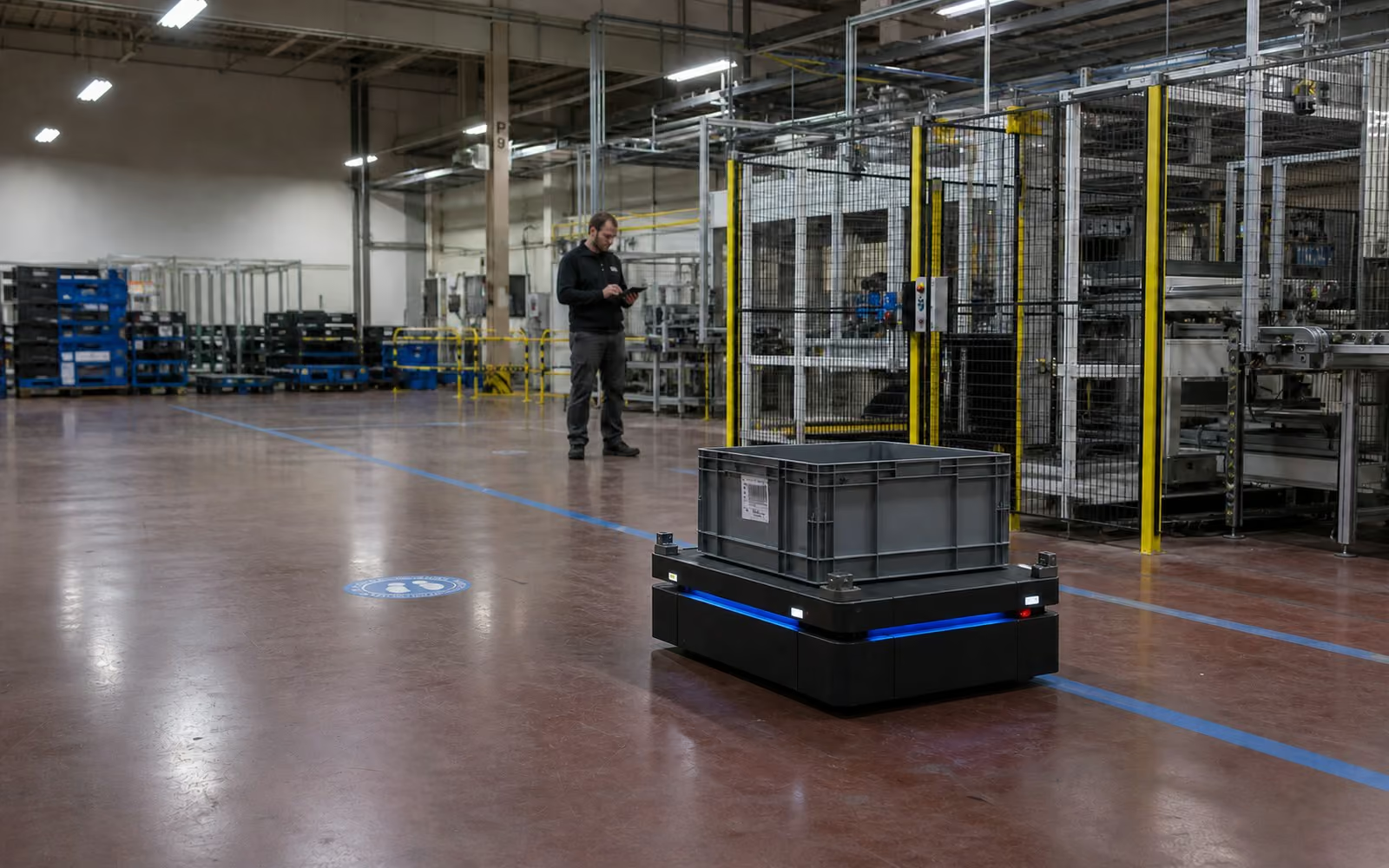
You bring customer trust, industry context, and local execution. Warpify reduces the zero-to-one work required to structure, deploy, and operate robotic solutions.
Qualify named workflows, site constraints, outcomes, timelines, and stakeholder expectations.
MARKET FITCombine robots, modules, software, integration, and service around a deployable application.
SOLUTION CONFIDENCELead site readiness, deployment, customer communication, training, and field-service response.
LOCAL CAPABILITYUse monitoring, maintenance, SLA performance, spares, and improvement to grow recurring revenue.
LIFECYCLE VALUEStart with industries and customer relationships you already understand, then structure a repeatable solution around the work.
Move medicines, samples, carts, supplies, work-in-process, or finished goods between storage, production, and delivery points.
AMR · TOWING · MATERIAL FLOWCapture repeatable visual, thermal, acoustic, gas, and condition data in high-risk environments.
PATROL · SENSING · REPORTINGDeliver repeatable floor care and facility workflows across hospitals, campuses, and commercial sites.
CLEANING · FACILITIESSupport reception, guidance, room delivery, and simple interactions in public environments.
SERVICE · DELIVERYAssess robot-assisted options for remote handling, intervention, and other defined work in hazardous or restricted-access areas.
REMOTE OPERATION · INTERVENTIONBring the workflow, site context, target outcome, and the role you want to play locally.
Each opportunity combines partner-led execution with reusable technology, supply chain, operating processes, and commercial support.
Start a partner discussion ↗Match workflows with suitable mobility, sensing, handling, and interaction capabilities without a one-brand constraint.
Start with proven workflows, integrations, testing methods, and deployment knowledge instead of rebuilding from zero.
Coordinate monitoring, incidents, work orders, service records, SLA performance, and continuous improvement.
Structure sourcing, spares, lifecycle cost, utilization, contract duration, asset risk, and recurring pricing.
The local operator normally leads the customer relationship and local delivery. Warpify supports solution architecture, technology access, operating systems, supply chain, and lifecycle capability.
Roles are documented by opportunity so customer ownership, service responsibilities, data access, and commercial contribution remain clear.
Collaboration can begin with one qualified project and grow as local delivery capability, operating performance, and recurring economics mature.
Structure and deliver a named customer opportunity with clear roles, margin, scope, and support.
Operate robotic productivity through a recurring model supported by lifecycle systems and service discipline.
Expand across multiple applications, industries, or sites as delivery capacity and market evidence grow.
Strong partnerships begin with clear expectations about opportunity ownership, delivery roles, sourcing, and recurring economics.
Robot integrators, distributors, technical service organizations, and local operators with trusted customer access, industry knowledge, and the ambition to build deployment, field-service, operating, and RaaS capabilities.
No. The goal is to build capable local robot productivity operators. Collaboration is structured around qualified opportunities, clear responsibilities, service capability, and operating performance—not abstract exclusivity.
The local operator normally leads the customer relationship and local delivery. Account, commercial, service, data, and non-circumvention responsibilities are documented for each opportunity.
No. Warpify supports a multi-brand, open ecosystem. Approved alternative channels may be used when compatibility, warranty, data access, serviceability, and platform requirements are satisfied.
Not necessarily. A first opportunity may begin with a pilot, purchase, financing, or leasing. RaaS fits when the workflow, lifecycle responsibilities, and unit economics support a sustainable recurring model.
Bring a named customer or defined market opportunity, the workflow and pain point, site context, target outcome, expected timeline, local service coverage, and the role you want to play.
PLANNING RESOURCES
Use the solution map, commercial-model guidance, deployment checklist, and project evidence to qualify opportunities. Organizations seeking collaboration can apply through the partner route.
Compare enablement, delivery roles, service capacity, commercial governance and evidence before committing to a program.
Use the partner-program guide →Demo and POCDefine the workflow question, site gate, evidence, acceptance, ownership and closeout before equipment arrives.
Use the POC responsibility guide →Partner enablementDefine competency, practical assessment, scope limits, renewal, documentation and service escalation.
Review the enablement framework →Project evidenceGround customer conversations in workflow design, deployment controls, operating roles, and measured outcomes.
Browse case studies →Tell us the customer, workflow, market, and local role you want to build. We will help structure the most practical next step.
©2026 Warpify Robotics. All rights reserved.