Factory Security Robot Case Study: 43 Daily Patrol Missions
This real Warpify customer deployment is anonymized, with identifying details withheld. It shows how two security inspection robots supported 43 daily missions and an indexed financial case.
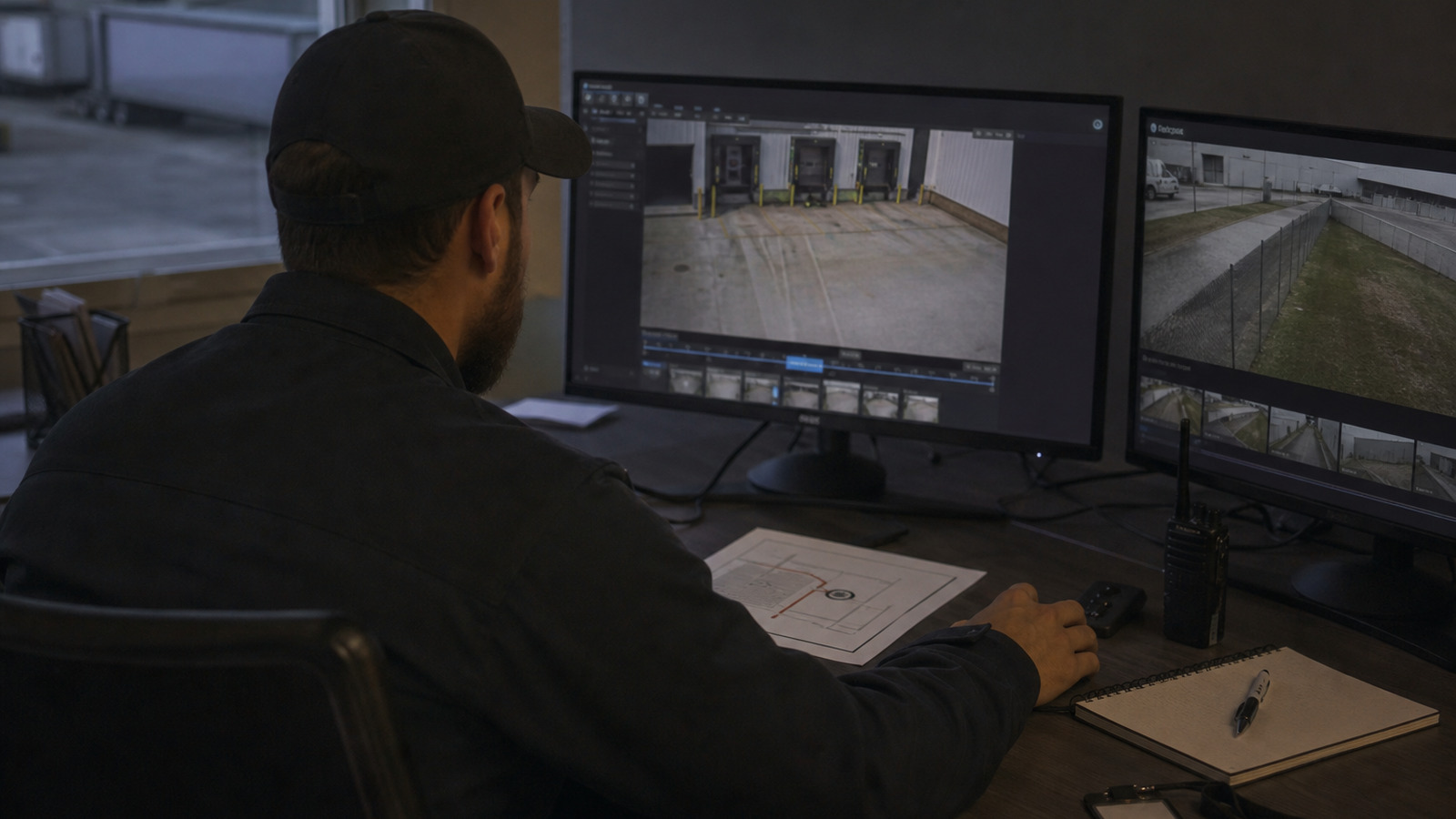
A multi-shift factory used two autonomous security inspection robots to make repeatable patrol coverage more consistent while keeping access decisions, investigation, emergency response, and accountability with its human security team.
The stabilized project record reports 43 robot missions per day, a 97.1% mission-completion rate, and approximately 14.7 guard-hours released from routine patrol travel. The public financial view uses indexed economics so readers can understand the method without learning the customer’s confidential Robotics-as-a-Service (RaaS) price.
Scenario at a glance
Scroll horizontally to compare all columns.
| Decision factor | Project record | Status |
|---|---|---|
| Operating environment | Large, continuously operating manufacturing and warehouse site with indoor and outdoor routes | Real, anonymized |
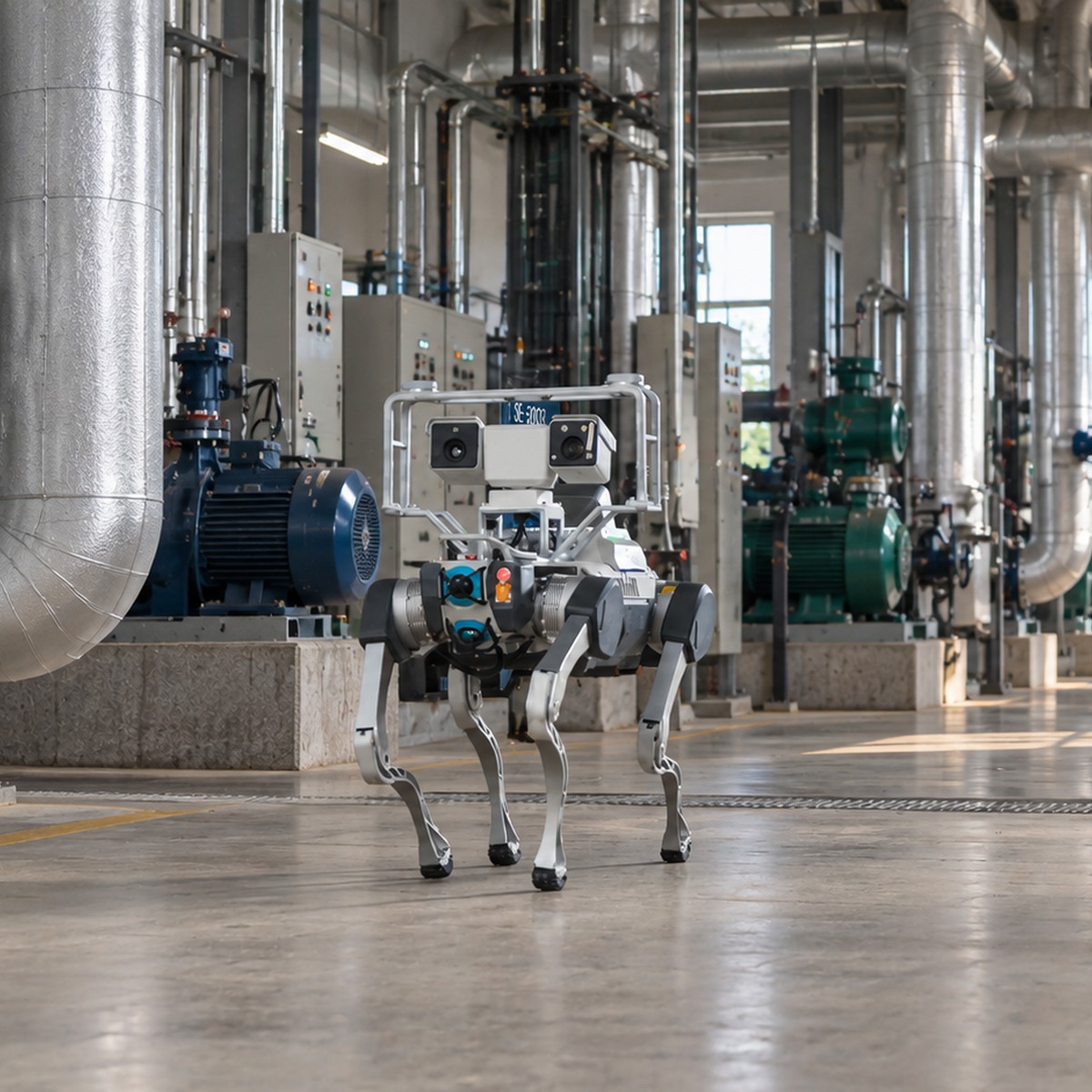
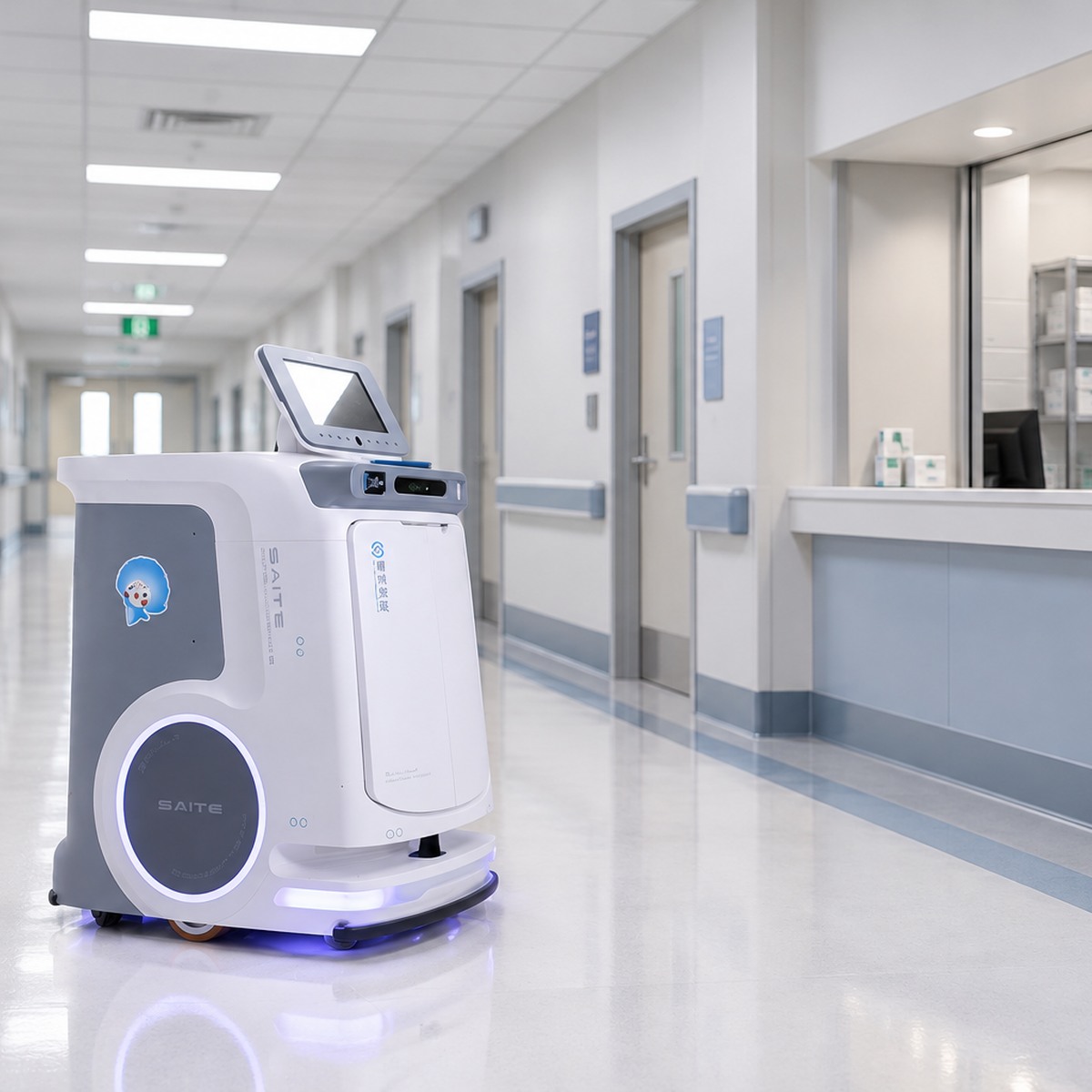
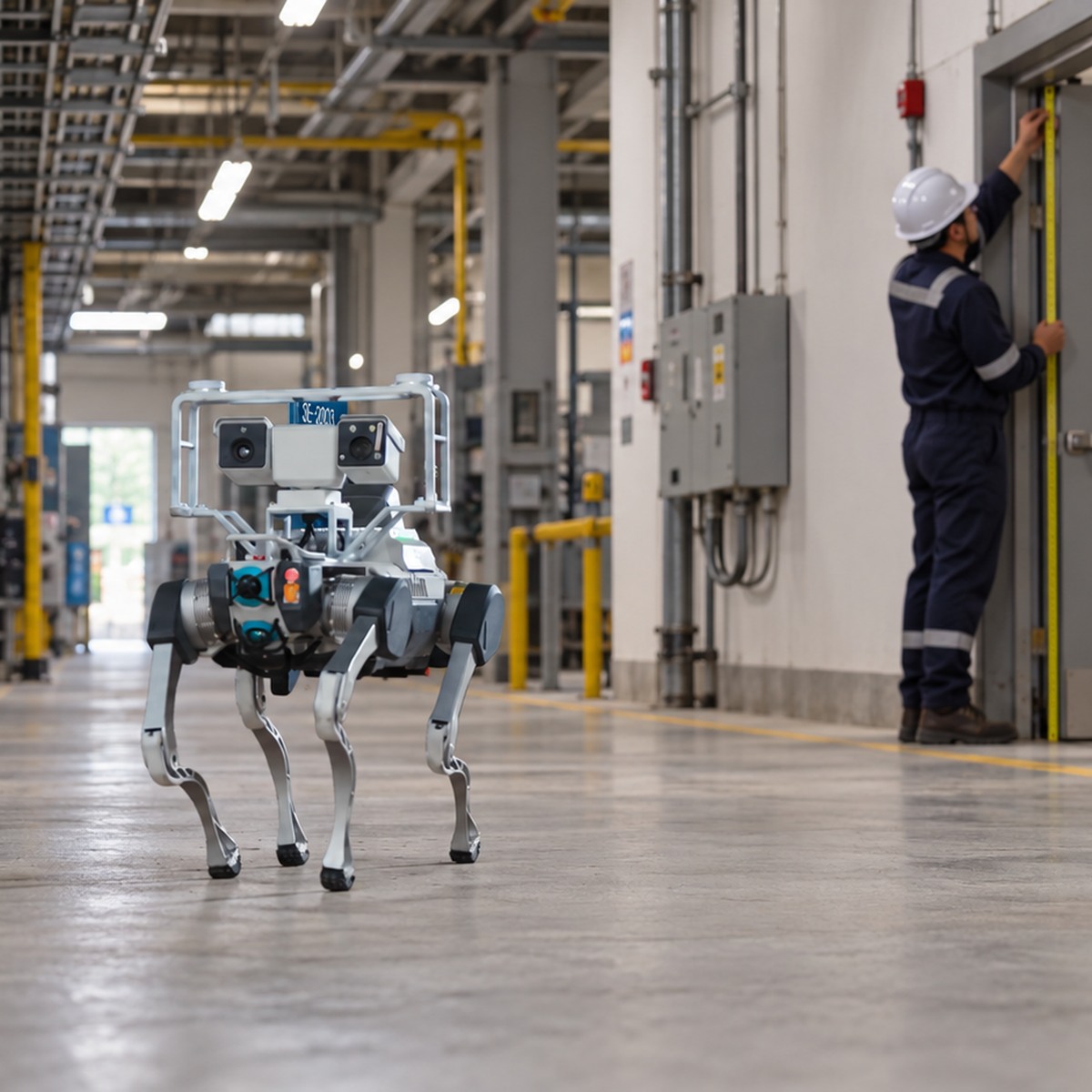
| Deployment | Two autonomous security inspection robots, one primarily indoors and one primarily outdoors | Real, anonymized; models withheld |
| Pilot | Ten weeks across baseline, controlled testing, live shifts, and stabilization | Project record |
| Recorded operations | 43 missions/day; 97.1% completion; about 14.7 guard-hours/day released | Measured project figures; confidential records reviewed and approved |
| Financial result | 5.7% first-year hard-savings ROI; 1.057x benefit-cost ratio; 11.3-month simple cost-equivalent period | Calculated from confidential verified inputs; not independently audited |
Operational context and decision
The factory already had guards, fixed cameras, access controls, and incident procedures. Its gap was repeatable physical observation. Loading-dock activity, contractor arrivals, paperwork, employee assistance, and urgent events could delay lower-priority rounds. Adding patrol frequency through overtime or incremental coverage would increase operating cost without changing how routine travel was performed.
The project question was therefore not “Can a robot replace a guard?” It was: Which predictable observation tasks can a mobile sensing platform perform while trained people retain every decision that requires authority, judgment, or response?
Baseline and measurement boundary
The assessment covered day, evening, and overnight activity; route length and duration; door, dock, fence-line, and utility checks; forklift and truck crossings; glare, rain, freezing conditions, and road salt; communications coverage; emergency routes; privacy zones; charging; cleaning; and manual recovery.
The project record identified 43 suitable missions per day: 26 scheduled patrol circuits and 17 shorter door, dock, thermal, or obstruction checks. The recorded average human-equivalent time was 20.5 minutes per mission.
Released-capacity calculation: 43 missions × 20.5 minutes = 881.5 minutes, or 14.69 hours per day. Rounded for public reporting, that is 14.7 guard-hours per day. Released time is operating capacity; it becomes cash value only where the approved staffing plan shows overtime, temporary coverage, or incremental coverage that the site can actually avoid.
Constraints, exclusions, and responsibilities
The robots were mobile sensing and documentation platforms. They did not perform identity verification, access-control decisions, confrontation, detention, emergency command, law-enforcement coordination, or final incident classification.
Human security personnel remained responsible for reviewing alerts, investigating exceptions, approaching people, managing emergencies, preserving evidence, releasing routes after changes, and stopping operation outside the approved envelope.
New Jersey security-personnel requirements depend on the staffing and contracting arrangement. The deployment did not treat a robot as a registered security officer or use automation to bypass duties that belong to qualified people.
The documented robotic workflow
- Dispatch: the security desk released a scheduled or targeted mission only when the route was available.
- Observe: the robot followed an approved route and collected time-stamped evidence in permitted zones.
- Alert: defined door, obstruction, thermal, vehicle, or route exceptions were sent to the security desk.
- Decide: a person classified the alert, checked operational context, and selected the response.
- Close: the team recorded the outcome, restored the route if appropriate, and retained evidence under the approved policy.
The indoor and outdoor routes were designed separately because traffic, weather, surface conditions, sensing needs, charging, and recovery were different. Public copy intentionally omits manufacturers and model numbers; another factory should select a platform only after validating its own payload, route, environment, support, privacy, and integration requirements.
Verified scope and deployment assumptions
Weeks 1–3 established the baseline and risk boundary. Weeks 4–5 covered mapping, charging, network segmentation, stop and yield zones, and alert integration. Week 6 tested protective stops, recovery, glare, rain, thresholds, communications loss, charging, and escalation outside normal traffic. Weeks 7–9 introduced approved live routes. Week 10 compared stabilized operations with the baseline and set scale gates.
What changed during the pilot
Forklift crossings: repeated protective stops made two routes unpredictable. Geofenced yield points and restricted dispatch windows produced a slower but more dependable route.
False detections: reflective wrap, stainless surfaces, and changing dock light created low-value alerts. Camera angles, thresholds, and human verification rules were adjusted.
Missing operational context: a loading door that was legitimately open during trailer work generated repeated alerts. A time-limited dock-schedule rule suppressed expected conditions without disabling after-hours escalation.
Weather and cleaning: rain, road salt, and condensation affected the outdoor sensor window. Pre-shift inspection, approved cleaning materials, and weather-specific restrictions became part of the operating procedure.
Privacy questions: permitted routes, prohibited spaces, sensing configuration, retention, and escalation ownership were documented for employees. Any published retention or disabled-feature claim must match the approved project configuration.
Recorded operational results
Scroll horizontally to compare all columns.
| Metric | Recorded result | Interpretation |
|---|---|---|
| Missions completed | 43 per day | Repeatable mobile observation coverage |
| Mission-completion rate | 97.1% | Below 100%; exceptions and recovery still required |
| Released guard capacity | Approximately 14.7 hours/day | Routine travel shifted; not automatic headcount reduction |
| Human interventions | 2.6 per 100 missions | Human support remained part of normal operation |
| Major robot-related safety events | 0 in the recorded pilot window | Time-bounded observation, not a guarantee of future safety |
Model, formulas, evidence, and data quality without disclosing the solution price
The executed commercial terms are confidential. The public model therefore sets the complete first-year customer cost—including the service, deployment, integrations, training, and support inside the approved scope—to an index of 100.
Only budget-realizable savings entered the hard-return calculation. Released time redirected to investigations, audit support, training, or other higher-value work remained operational value unless the site could connect it to an approved cash-flow line.
Scroll horizontally to compare all columns.
| Financial measure | Indexed result | Formula |
|---|---|---|
| Complete first-year customer cost | 100.0 | Confidential verified cost baseline |
| Annual budget-realizable savings | 105.7 | Verified avoided budget ÷ confidential cost × 100 |
| First-year net hard value | 5.7 | 105.7 − 100.0 |
| First-year hard-savings ROI | 5.7% | (105.7 − 100.0) ÷ 100.0 |
| Benefit-cost ratio | 1.057x | 105.7 ÷ 100.0 |
| Simple cost-equivalent period | 11.3 months | 100.0 ÷ 105.7 × 12 |
The 11.3-month figure is a simple cost-equivalent period based on a stabilized annual run rate. It is not a literal cash-payback schedule. Actual cash timing depends on invoice dates, ramp-up, service credits, taxes, and when avoided coverage enters the budget.
Sensitivity and break-even
The base case has a narrow first-year margin: annual hard savings need to reach 94.6% of the base estimate to cover the indexed first-year cost. A decline of more than about 5.4% makes the first-year hard-savings ROI negative.
- Downside: at 90% of base hard savings, the benefit-cost ratio is approximately 0.95x and first-year ROI is approximately −4.9%.
- Base: at the recorded model inputs, the ratio is 1.057x and ROI is 5.7%.
- Upside: at 115% of base hard savings, the ratio is approximately 1.22x and ROI is approximately 21.6%.
The largest drivers are the amount of coverage the budget can genuinely avoid, mission completion, intervention and downtime, support scope, weather restrictions, and the difference between first-year implementation cost and steady-state service cost.
What could change the outcome
Results can deteriorate if routes change, vehicle conflicts increase, weather exceeds the validated envelope, alerts do not have an owner, communications are unreliable, robots are unavailable, cleaning is missed, or released time cannot be connected to avoidable budget. They can improve if the site adds suitable routes without proportional support cost or reduces premium coverage more effectively than planned.
Operational risks, limitations, exception handling, privacy, and OT security
Obstacle detection alone is not a safety case. The project used route risk assessment, stop and yield zones, restricted dispatch windows, emergency-route controls, manual recovery, management of change, and trained human oversight. OSHA requires exit routes to remain unobstructed, and current ANSI/A3 R15.08 standards address industrial mobile-robot design, integration, and user responsibilities.
The robot service was separated from production operational technology, and a manual security process remained available during downtime. NIST SP 800-82 Rev. 3 supports treating performance, reliability, and safety as part of OT-security design. Privacy configuration must be purpose-limited, documented, and reviewed when routes, sensing, retention, or access changes.
Evidence and source boundary
Operational figures and the confidential financial inputs come from the anonymized project record. Public sources are used only for external context: New Jersey wage and employment rules, industrial mobile-robot safety, exit routes, OT security, privacy risk management, and a broad vendor-reported subscription benchmark filed with the U.S. Securities and Exchange Commission. Those sources do not independently prove this customer’s results.
What a real site assessment should verify
- Which patrols and targeted checks are stable, repeatable, and valuable.
- Whether released time can reduce a real budget line rather than merely move work.
- Traffic, surface, weather, communications, charging, cleaning, and recovery conditions.
- Who owns alerts, exceptions, evidence, maintenance, support, and change control.
- Which areas and sensing functions are permitted, restricted, or prohibited.
- Whether the commercial model remains viable in downside and break-even cases.
Next step: request an assessment of your security patrol workflow
Warpify Robotics helps factory teams measure patrol demand, define the human–robot responsibility boundary, evaluate platform fit without exposing confidential product pricing, and build a site-specific operating and financial case.
Start with the workflow-first robotics assessment method, compare Robotics-as-a-Service options, or request an End-User workflow assessment.
Use Warpify's security patrol robot solutions page to qualify route, observation, privacy, human escalation, charging, recovery and acceptance boundaries without generalizing this factory pilot to other environments.

Iven Wang
Iven Wang is the Co-Founder of Warpify Robotics, specializing in the commercialization and deployment of robotic solutions. With a background in electrical engineering and product management, he works with manufacturers, integrators, and enterprise clients across industrial inspection, security, logistics, and Robotics-as-a-Service.
Subscribe to our newsletter today
Get practical robotics deployment insights, case studies, and planning guidance from Warpify Robotics.