Robotics Solution Assessment: Why Workflow Must Come First
Use a six-layer robotics solution assessment to define the workflow, site, payload, interfaces, service model and economics before selecting hardware.
A robotics solution assessment defines the workflow, environment, payload, interfaces, operating model and decision criteria before hardware is selected. Its purpose is to turn a general automation idea into requirements that suppliers, integrators and the site can test.
A robot-first process can force the site, safety design or software architecture to accommodate a poor workflow fit. A workflow-first process makes constraints, responsibilities and evidence needs visible before procurement.
What the assessment should produce
- a current-state process and demand baseline;
- eligible and excluded tasks;
- payload, tool or sensor requirements;
- site, route or workcell constraints;
- safety, quality and operating requirements;
- building, machine, software and data interfaces;
- service, exception and manual-fallback responsibilities;
- a comparison method, pilot plan and acceptance criteria.
Use a six-layer assessment
Scroll horizontally to compare all columns.
| Layer | Questions to answer | Evidence to retain |
|---|---|---|
| 1. Workflow | What work is performed, at what volume and variability, by whom, and what counts as complete? | Process map, demand data, time study and exception log |
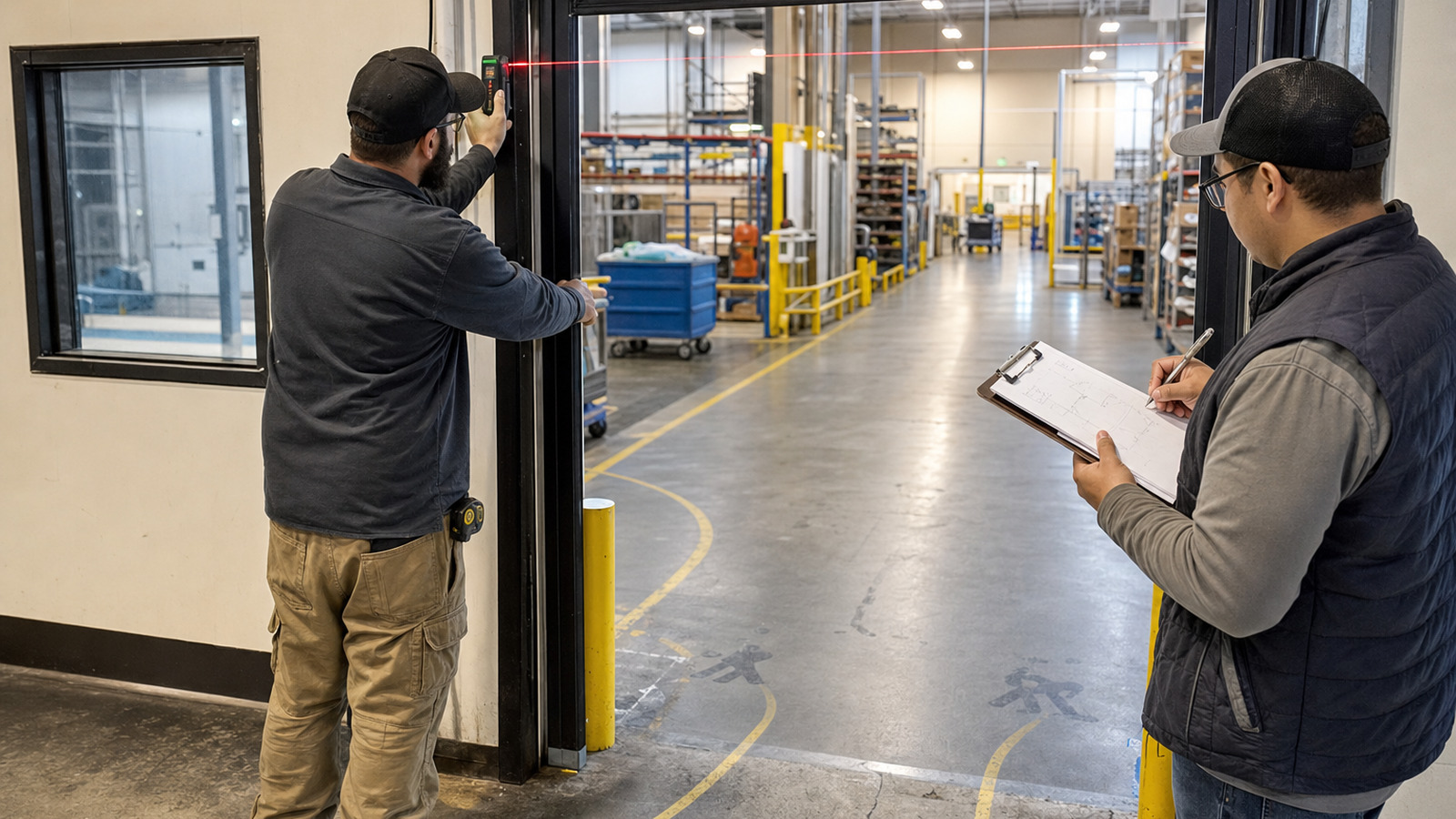
| 2. Site and environment | What clearances, surfaces, traffic, utilities, hazards and operating conditions apply? | Survey, route or workcell map, photos and constraint register |
| 3. Payload and task interface | What item, tool or sensor is handled, with what mass, geometry, center of gravity and containment? | Payload definition, load cases and interface concept |
| 4. Integration and safety | Which machines, doors, lifts, software, identity, data and protective measures are required? | Interface list, risk inputs and validation plan |
| 5. Operations and service | Who loads, monitors, cleans, maintains, recovers and supports the system? | Responsibility matrix, SOP outline and service requirements |
| 6. Economics and decision | Which costs, benefits, risks and thresholds determine approval? | Cost boundary, assumptions register, scenarios and acceptance criteria |
Define the task and variability
Describe the unit of work, origin, destination, sequence, volume by operating period, cycle or travel time, queue, changeovers, quality rule and exceptions. Measure normal, peak and boundary conditions. Avoid designing around an average that hides the heaviest payload, narrowest clearance or most time-sensitive handoff.
Assess payload at the real operating point
Payload is more than the item mass. Include End-of-Arm Tooling (EOAT), brackets, cables, hoses, containers and any offset between the load and the robot interface. Use the manufacturer's load diagram and inertia limits for the actual center of gravity, reach, speed and motion profile.
For mobile robots, confirm the mechanically credible shelf, lift, pallet, fork, conveyor, hook, tow or other interface. The complete carried load affects stability, stopping, clearance and service.
Map the site and traffic
Measure the full route or workcell, not only the nominal working envelope. Include access, maintenance and recovery space; doors; elevators; floor transitions; slopes; lighting; dust or washdown; people; forklifts; carts; emergency routes; network coverage and temporary obstructions.
Observe the site while it is operating. Empty-floor dimensions cannot explain congestion, handoff delays or changing traffic priority.
Define interfaces and failure behavior
List every machine, PLC, conveyor, fleet system, WMS, MES, CMMS, door, lift, access-control, identity or data interface. For each one, define command ownership, timing, authentication, timeout, retry, logging, unavailable-state behavior and manual fallback.
Safety requirements depend on the complete application. The assessment should identify the inputs and qualified reviewers needed for the project-specific risk assessment and validation; it should not claim safety based on a product label.
Compare solutions against requirements
Build a scorecard from the approved workflow. Typical criteria include task coverage, payload fit, environment, integration, safety validation, serviceability, evidence quality, operating effort and total cost. Weight only criteria that change the decision. Label estimates and replace them with demonstration, pilot or supplier evidence.
Do not allow a high product-feature score to compensate for a failed mandatory requirement.
Connect the assessment to the business case
Use the robot ROI and TCO model to compare the fully integrated option with the measured baseline. Keep unverified benefits outside the base case and run downside, base and upside scenarios.
Sources and limitations
- NIST Engineering Laboratory robotics research
- NIST measurement science for robotics and autonomous systems
NIST's measurement-science work supports a requirements-and-evidence approach; it does not select or approve a specific Warpify solution. This guide does not replace engineering, safety, legal or financial review.
Move from idea to requirements
Review Warpify's robotics application solutions and deployment checklist, then request a workflow assessment.

Iven Wang
Iven Wang is the Co-Founder of Warpify Robotics, specializing in the commercialization and deployment of robotic solutions. With a background in electrical engineering and product management, he works with manufacturers, integrators, and enterprise clients across industrial inspection, security, logistics, and Robotics-as-a-Service.
Subscribe to our newsletter today
Get practical robotics deployment insights, case studies, and planning guidance from Warpify Robotics.