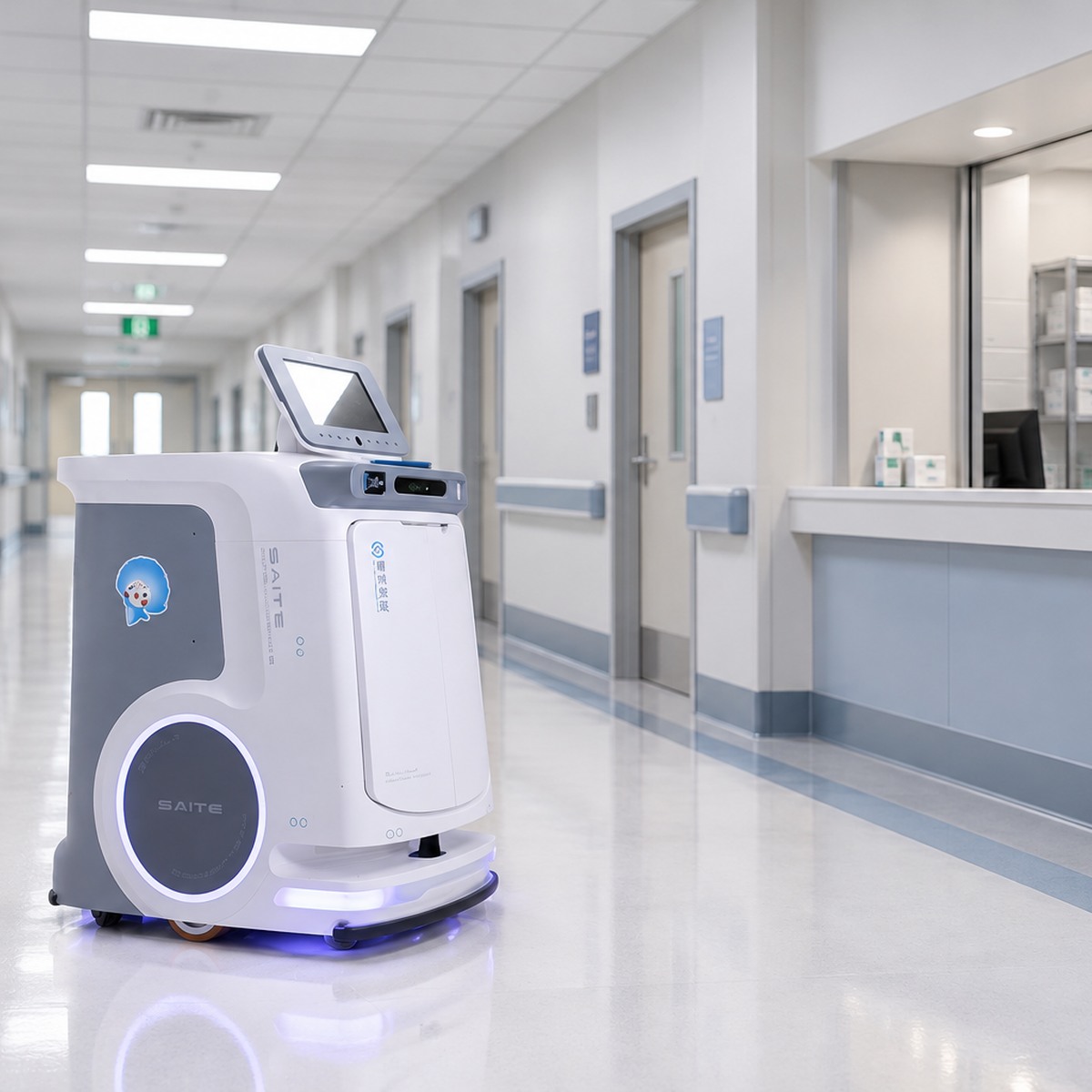
Medication Delivery by AMR: Security, Handoffs and Exceptions
A hospital medication-delivery AMR control model covering authorization, secured custody, verified handoffs and exception escalation.
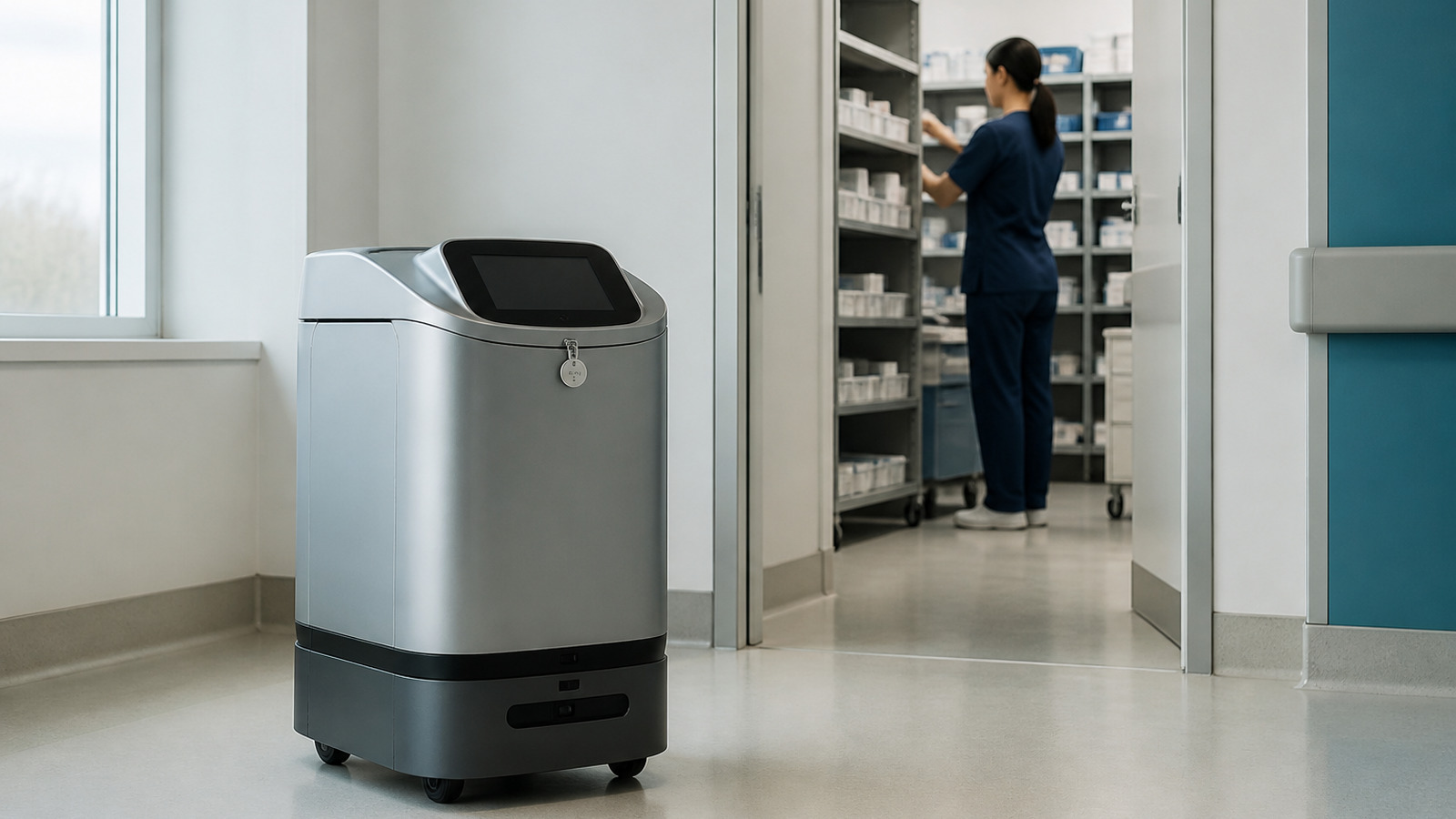
Medication delivery by autonomous mobile robot (AMR) is not simply a faster cart route. It is a custody workflow. The design must preserve authorized release, secured transport, verified receipt and clear exception ownership from pharmacy to the intended clinical destination.
The robot is one component in that control system. Pharmacy, nursing, security, IT, facilities, clinical engineering and the solution provider must agree what the service may carry, who may request and receive it, what evidence is retained and what happens when normal delivery cannot finish.
Define the medication class and service boundary first
Do not begin with “all medications.” Segment the proposed payloads by handling requirements, urgency, access restrictions, temperature or environmental needs, diversion risk and local policy. Exclude any class whose requirements the proposed compartment, workflow or governance cannot meet.
Document origin and destination points, permitted routes, delivery windows, staffing assumptions and maximum unattended time. State whether the AMR moves sealed totes, pharmacy-prepared packages or another approved container. The article does not replace pharmacy policy, accreditation interpretation, legal advice or a site-specific security assessment.
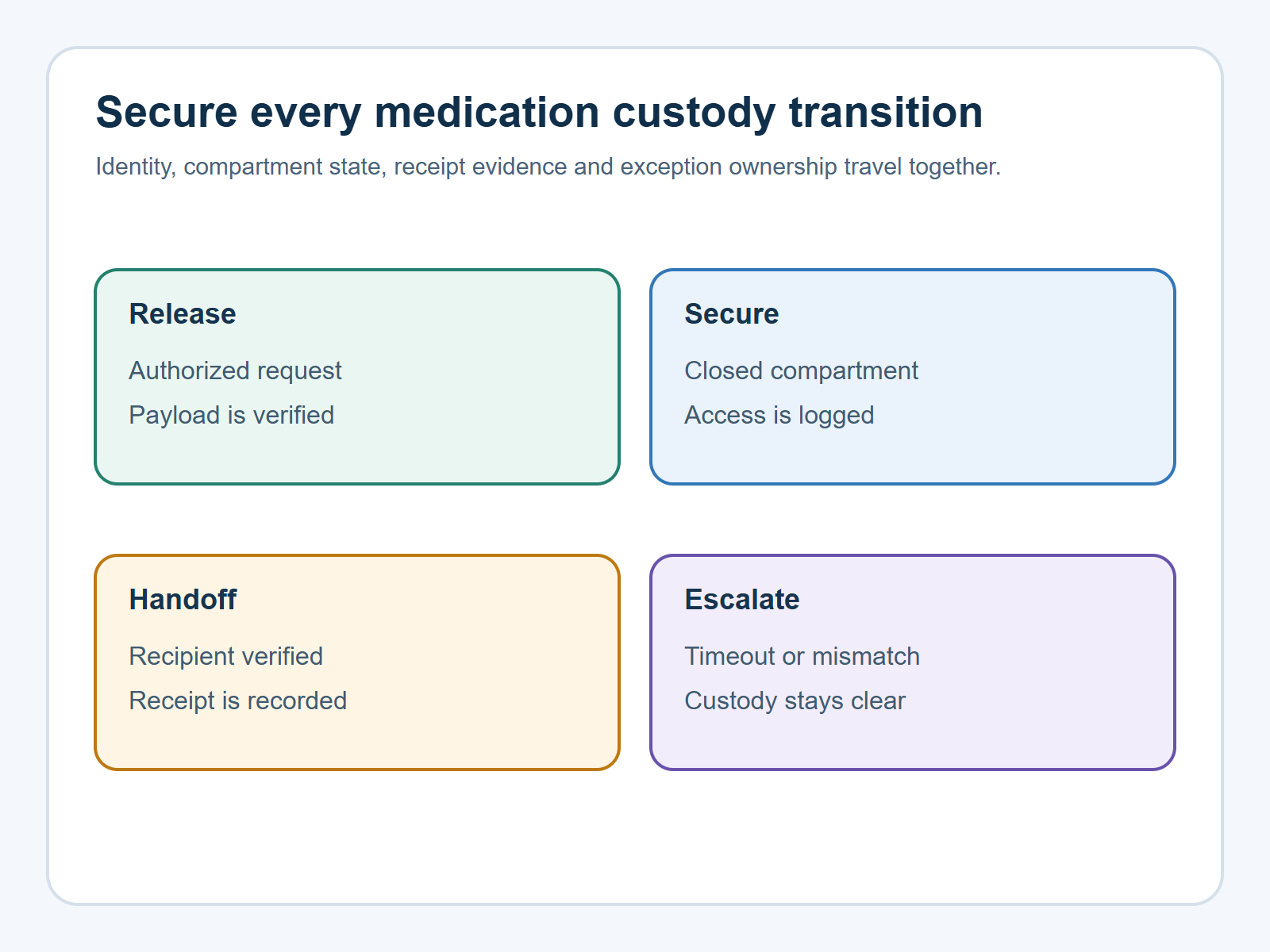
Control who can request, release, open and receive
The Joint Commission’s medication-security guidance centers on preventing unauthorized access while allowing organizations to design controls appropriate to their settings. Translate that principle into explicit roles: requester, pharmacist or authorized releaser, transport service, recipient and exception owner.
Use the minimum access necessary for the task. Separate permission to request a delivery from permission to load or open the compartment. Define how identity is authenticated, how temporary access is issued and revoked, and how shared credentials are prohibited. When systems contain electronic protected health information, involve privacy and security teams in access, audit, authentication and transmission decisions.
Make compartment state and custody observable
A closed door is not enough. The workflow should know when the compartment was loaded, secured, opened and re-secured, and by which authorized role. Use tamper-evident or electronically monitored controls appropriate to the risk. Do not claim a feature unless the selected hardware and integration actually provide it.
Keep patient and medication details off exposed robot screens and notifications unless explicitly required and protected. Logs should support investigation without collecting unnecessary information. Define retention, access and reconciliation responsibilities before the pilot.
Design the destination handoff as a verification step
Arrival is not completion. Completion occurs when the approved recipient verifies the delivery, takes custody and records receipt using the approved method. Define what is checked: destination, package identifier, compartment state, recipient authorization and any required time or condition data.
A busy clinical area creates predictable ambiguity. Decide whether the AMR waits, returns, moves to a secured holding point or escalates if the recipient is unavailable. Do not leave medication unattended merely because the robot reached the destination.
Use a control matrix for normal and abnormal flow
Scroll horizontally to compare all columns.
| Stage | Primary control | Evidence | Exception owner |
|---|---|---|---|
| Release | Authorized order and payload verification | Request and load record | Pharmacy |
| Transport | Secured compartment and route limits | State and event log | Operations |
| Handoff | Authorized recipient and receipt check | Timestamped receipt | Receiving unit |
| Failure | Safe custody and defined escalation | Incident and disposition record | Named service owner |
Pre-plan the exceptions that matter
Test recipient timeout, identity mismatch, wrong destination, compartment access failure, robot immobilization, loss of connectivity, route blockage, power shortage, damaged or suspect package, and urgent recall. For each, specify the safe state, permitted access, notification sequence, manual replacement process and restart authority.
Emergency access deserves particular care. A method that is too permissive defeats security; a method that is too restrictive can delay needed care. The hospital should make that risk decision with pharmacy, clinical, security and compliance leadership—not delegate it to an integration default.
Accept the workflow only when custody is demonstrable
Pilot metrics should include eligible deliveries completed, verified handoff rate, recipient wait, unauthorized or failed access attempts, interventions, exception resolution time and reconciliation accuracy. Set local thresholds and mandatory controls before testing; there is no universal acceptance number.
Retain representative evidence for normal delivery and every required exception. Review missing data, workarounds and staff burden. Production approval should name the exact payload classes, routes, schedules, system configuration and support model covered by the decision.
Explore Warpify’s hospital AMR workflow approach and the related safety, infection-control and egress framework. When the custody boundary is clear, assess your medication workflow.

Iven Wang
Iven Wang is the Co-Founder of Warpify Robotics, specializing in the commercialization and deployment of robotic solutions. With a background in electrical engineering and product management, he works with manufacturers, integrators, and enterprise clients across industrial inspection, security, logistics, and Robotics-as-a-Service.
Subscribe to our newsletter today
Get practical robotics deployment insights, case studies, and planning guidance from Warpify Robotics.