Can Your Company Become a Local Robotics Operator? A Readiness Scorecard
Assess customer access, deployment capability, support coverage and commercial readiness before becoming a local robotics operator.
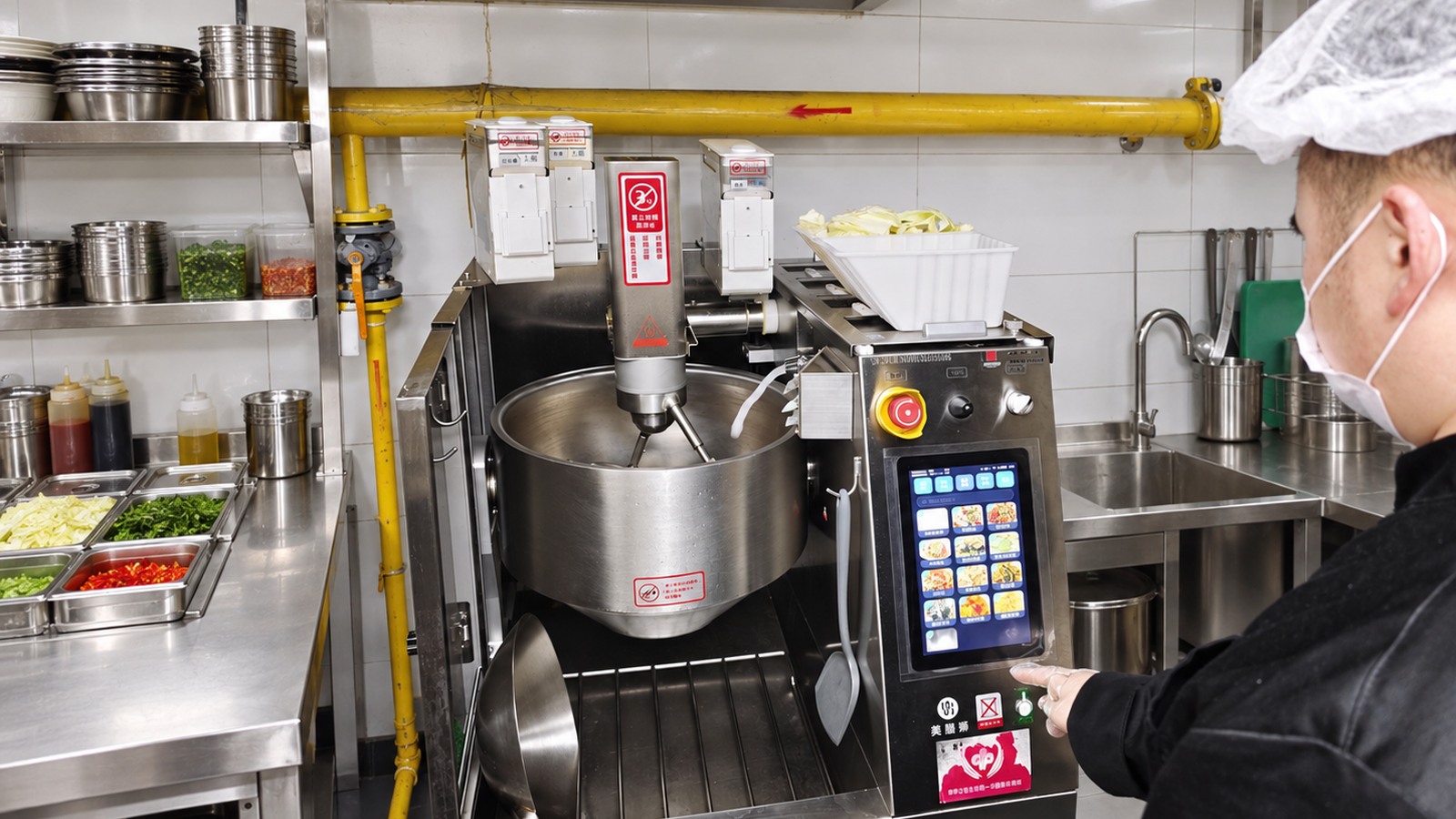
A local robotics operator earns its role by keeping a defined service working after the installation team leaves. Customer access helps, but it does not establish deployment competence, fault response, spare-parts readiness or the ability to recover a disrupted workflow. Before building a robotics operator business, test the responsibilities your company can own with evidence.
This readiness scorecard is an editorial planning method, not an accreditation or a prediction of commercial success. It complements Warpify’s integrator and distributor pathway by separating opportunity access from operating capability.
Choose the service boundary first
Describe one service in one reachable market. For example, moving standardized supplies between agreed handoff points is more assessable than offering automation to every hospital. State the customer task, supported locations, operating hours, equipment boundary, local response boundary and exclusions.
Distinguish operator work from distribution and integration. An operator may monitor missions, coordinate incidents and manage recurring service. An integrator may own application engineering and acceptance. A distributor may own the commercial channel and equipment supply. One company can perform several roles, but each role needs resources and accountability.
Write the proposed division of work before assigning a score. The partner programme evaluation guide helps identify which capabilities a supplier or platform partner must contribute.
Rate evidence maturity, not confidence
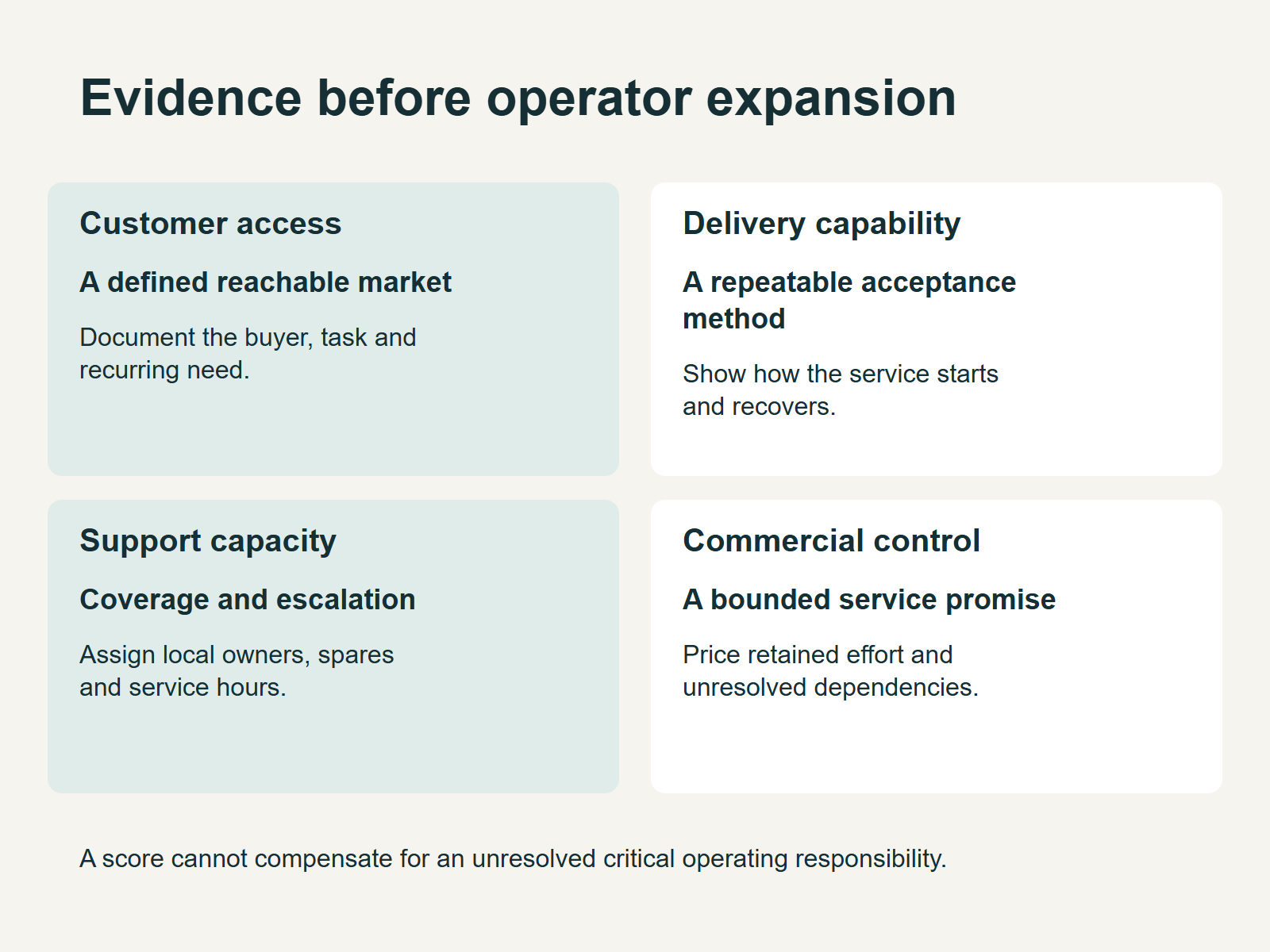
For each capability, use four descriptive states: unproven, documented, rehearsed and demonstrated in the relevant operating context. Attach evidence and an owner. These states deliberately avoid a numerical pass mark: strong sales coverage should not compensate for an unresolved service recovery dependency.
Customer and workflow qualification. Can the team collect a demand baseline, define the task boundary and identify non-fit conditions before proposing equipment? Evidence includes a usable discovery record and an example of declining or narrowing an unsuitable opportunity.
Deployment and acceptance. Can the team coordinate site access, interface owners, training, testing and sign-off? Retain an acceptance plan that separates demonstration success from repeatable production service.
Daily operations. Can someone explain dispatch, handoff, cleaning, charging, incident hold and shift handover without relying on one individual’s memory? A roster should include deputies and the actual hours covered.
Technical support. Can the team distinguish a recoverable fault from a condition requiring qualified intervention? Retain escalation paths, access permissions and a rehearsal record. Training attendance alone is not proof of task competence.
Parts and field response. Can the team obtain the correct replacement part, arrange site entry and document return to service? Evidence should include a parts list linked to installed configurations and a realistic logistics process.
Commercial control. Can the business identify the cost of travel, remote support, preventive work, consumables and unresolved incidents? Separate supplier warranty coverage from the service effort the local operator must still fund.
Apply non-negotiable readiness gates
Some gaps should stop a proposed launch even when other capabilities are strong. Examples include no authorized recovery owner, no workable manual fallback, unresolved customer access permissions, or a service promise beyond the available roster. Treat these as conditions to close rather than weaknesses to average away.
NIST’s robotics measurement work develops ways to evaluate capabilities through tests. It supports asking for task evidence instead of relying on a product demonstration or an attractive partner certificate. The specific scorecard here is Warpify editorial guidance; it is not a NIST certification scheme.
Run a service rehearsal
Choose a bounded, controlled scenario with the customer and technical provider. Walk through an unavailable receiver, a blocked route, a failed building interface and an equipment fault using approved procedures. Avoid unsafe fault injection. The rehearsal should test people and communication as well as technology.
Record who received the alert, who assessed the condition, which instructions were available, what the customer was told and how service was restored or transferred to manual operation. A test that ends when an engineer fixes the robot misses the customer-facing work needed to close the incident.
Use the findings to revise the after-sales service plan. Resolve ambiguities in the handoff between remote support, local technicians and the customer’s facilities or IT team.
Check whether the service can fund itself
Build a service-cost model from activities rather than a percentage added to hardware. Estimate planned visits, travel, remote handling, training refreshes, parts administration and reporting. Keep assumptions visible, then replace them with observations as authorized pilots produce evidence.
Test downside conditions such as dispersed customers, repeat visits, restricted site access and slow parts supply. Do not count released customer staff time as revenue to the operator. Keep cash timing, working capital and recurring support obligations visible even when the equipment supplier owns the robots.
Make a bounded go, improve or defer decision
Proceed to a scoped pilot when critical responsibilities have credible owners and the remaining uncertainties can be tested safely. Improve the operating model when a service dependency is repairable. Defer the opportunity when the promise depends on capacity or authority the team does not have.
Prepare a one-page readiness record containing the service boundary, evidence by capability, unresolved conditions, training needs, supplier support required and the next validation event. Use it to discuss a qualified partner opportunity, with a clear distinction between what your company can deliver now and what still needs to be built.
Sources and scope
- NIST: Mobility Performance of Robotic Systems — Task-oriented measurement methods; no accreditation or universal pass threshold.

Iven Wang
Iven Wang is the Co-Founder of Warpify Robotics, specializing in the commercialization and deployment of robotic solutions. With a background in electrical engineering and product management, he works with manufacturers, integrators, and enterprise clients across industrial inspection, security, logistics, and Robotics-as-a-Service.
Subscribe to our newsletter today
Get practical robotics deployment insights, case studies, and planning guidance from Warpify Robotics.