Quadruped vs. Wheeled Inspection Robot: Which Mobility Platform Fits?
Compare quadruped, wheeled and wheel-leg inspection robots by terrain, stairs, payload, energy, sensing, serviceability and route evidence.
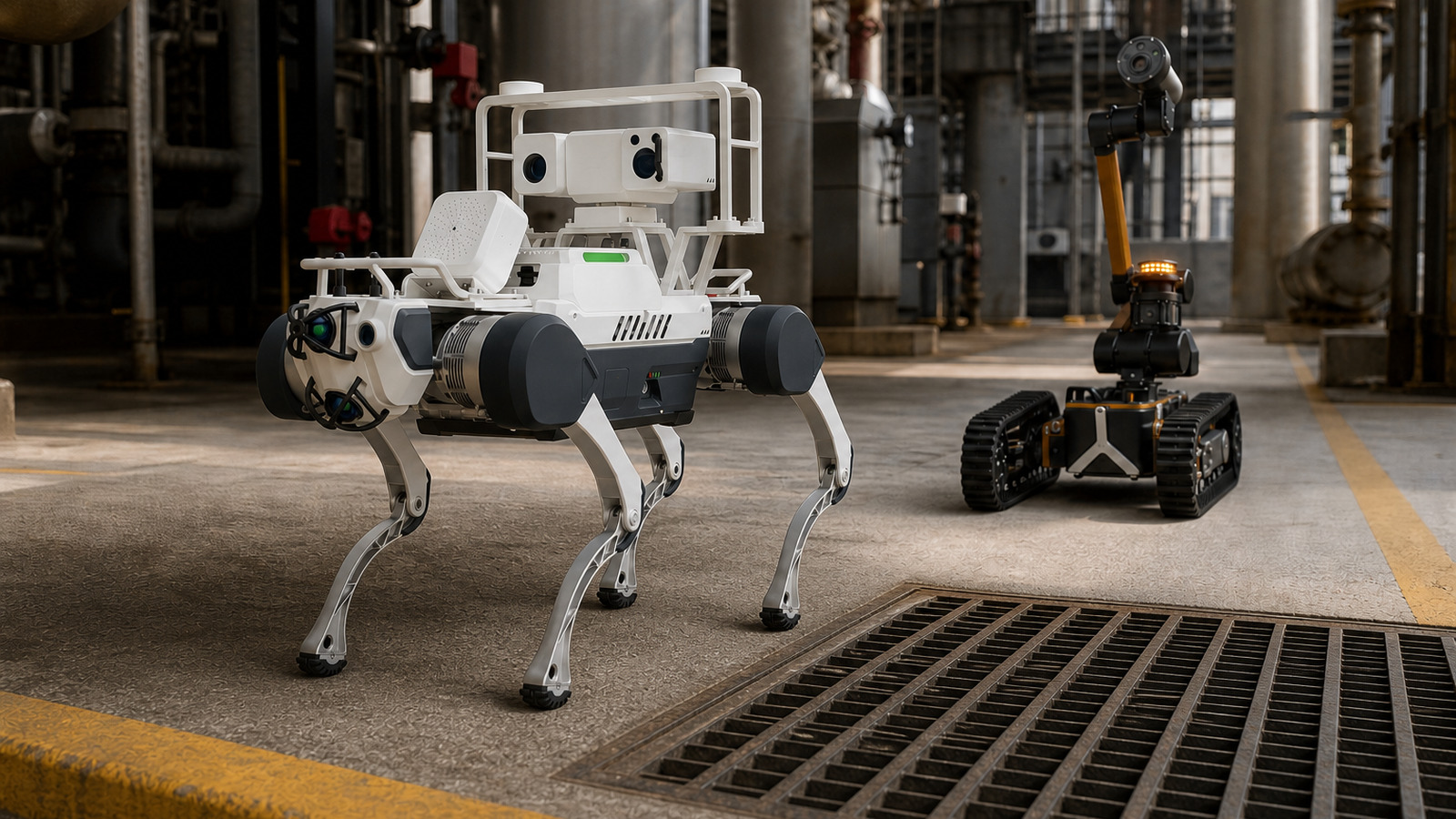
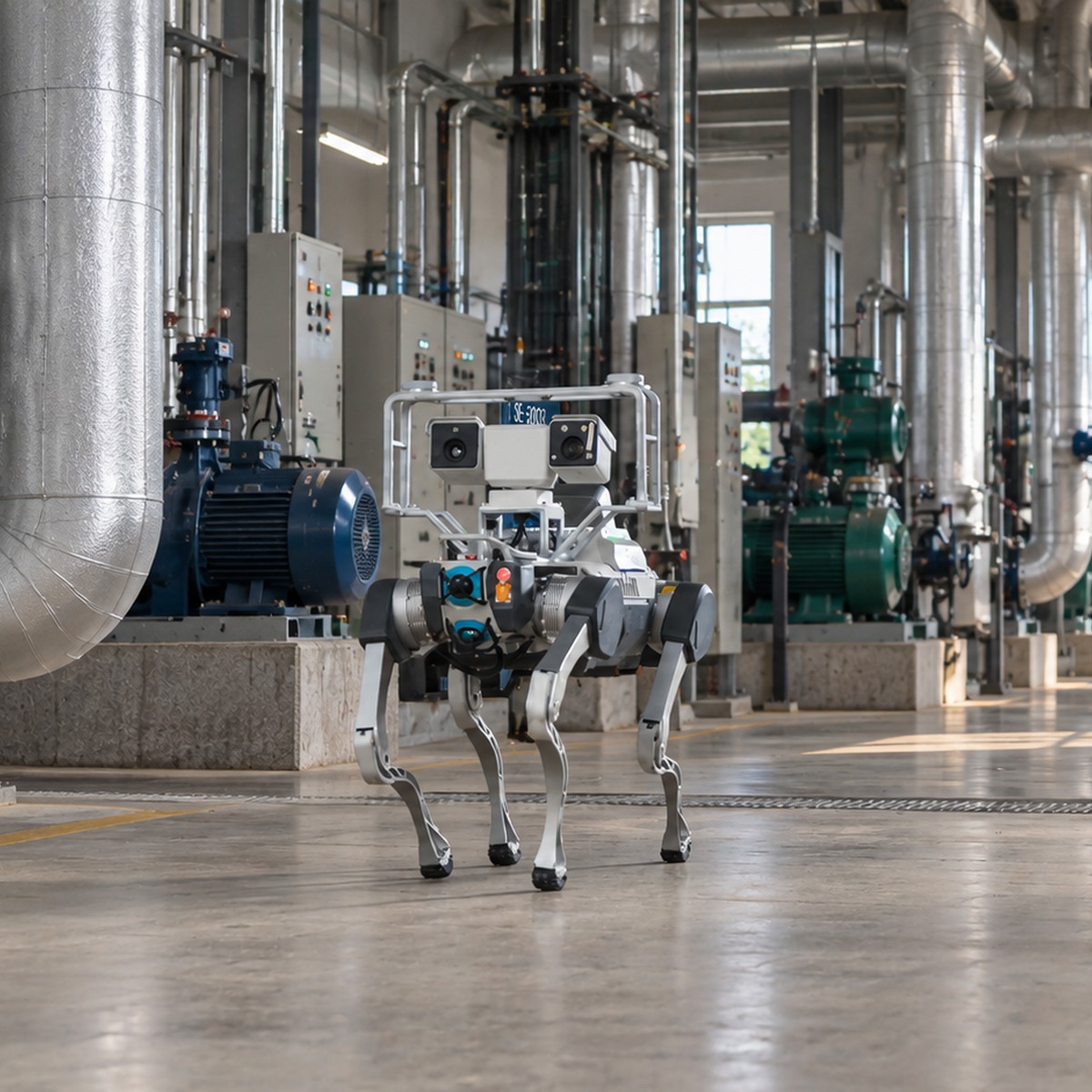
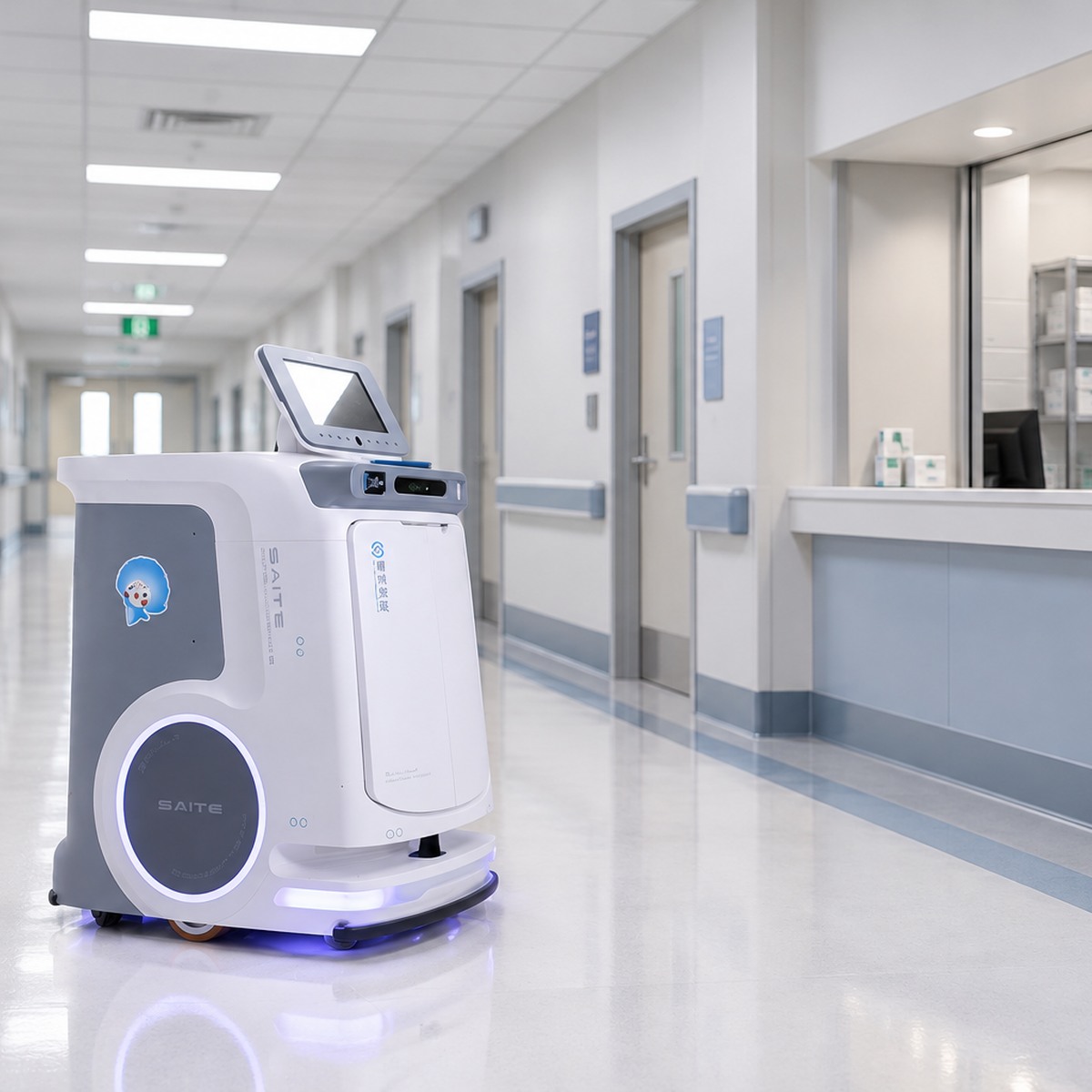
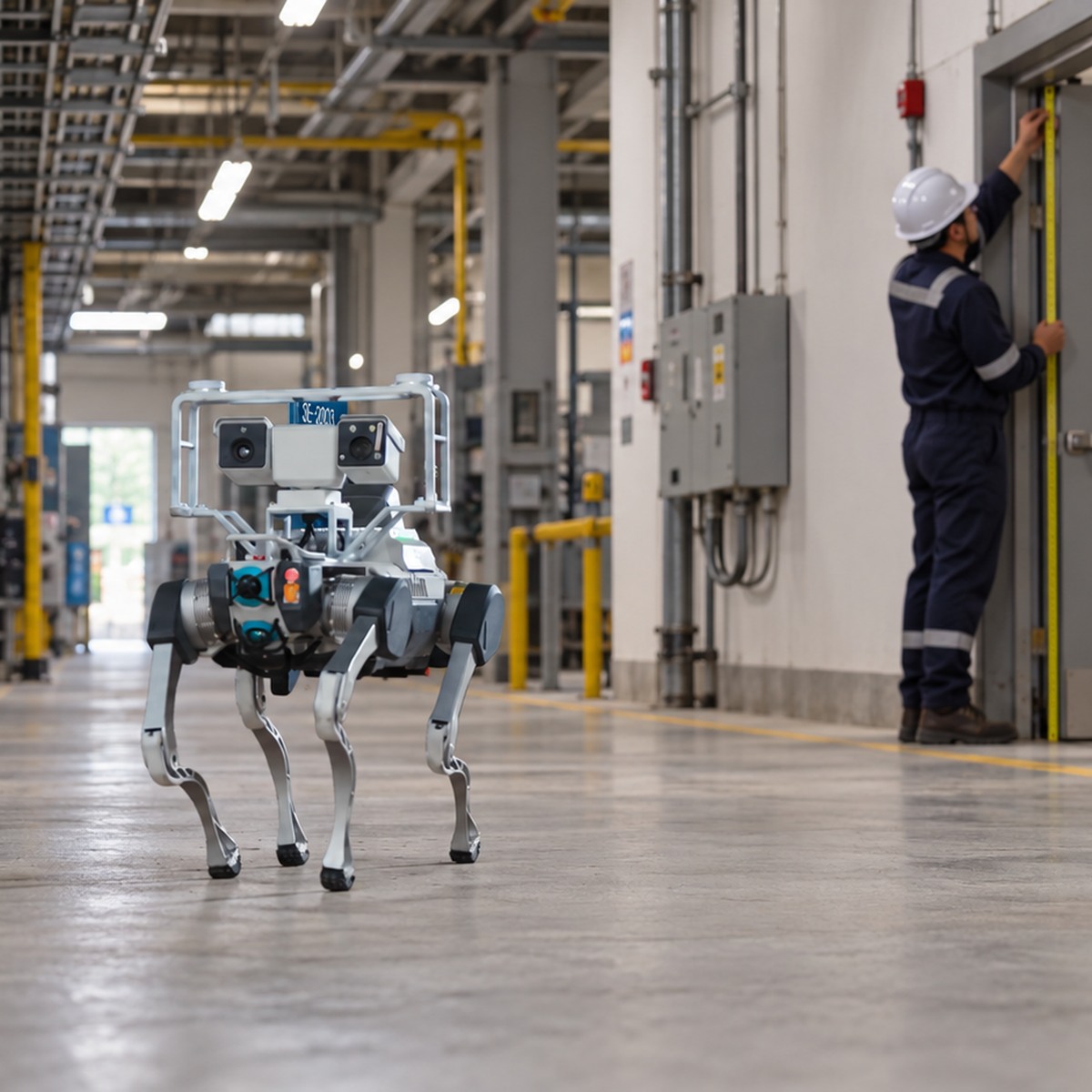
Choose an inspection robot by route and sensing requirements, not by form factor alone. Quadrupeds can address stairs, steps and irregular terrain. Wheeled platforms usually offer simpler mechanics and efficient travel on structured surfaces. Wheel-leg hybrids may fit routes that are mostly smooth but contain occasional obstacles.
The correct choice also depends on payload, sensor stability, operating time, recovery, service access, safety and the evidence required at each read point.
Compare the mobility options
Scroll horizontally to compare all columns.
| Decision factor | Quadruped | Wheeled | Wheel-leg hybrid |
|---|---|---|---|
| Route profile | Strong candidate for stairs, steps, grating and irregular surfaces | Strong candidate for smooth, repeatable floors and long corridors | Candidate for mixed routes with occasional step-over needs |
| Energy and endurance | Leg actuation can increase energy use; verify with the actual gait and payload | Rolling can be efficient on suitable surfaces | Depends on how often legged motion is required |
| Payload and sensor stability | Verify payload, center of gravity, vibration and mounting for each gait | Often supports stable sensor mounting on smooth routes | Validate both rolling and stepping modes |
| Mechanical and service complexity | More joints and actuators may increase inspection and service scope | Simpler drive systems may reduce service complexity | Adds wheel and leg mechanisms that both require support |
| Recovery | Plan recovery from stairs, gaps, falls and blocked postures | Plan recovery from thresholds, wheel traps and blocked aisles | Plan recovery for both mobility modes |
| Best evidence | Route trial across representative obstacles with the final payload | Endurance and read-point repeatability on the full route | Mode-transition, obstacle and endurance tests on the full route |
Map the route before scoring the robot
Record floor type, slopes, steps, stair geometry, gratings, gaps, thresholds, clearances, turning areas, weather, dust, water, lighting, traffic and communication coverage. Separate occasional obstacles from the normal route. A platform should not carry the cost and service burden of a capability the route rarely needs unless that capability is operationally critical.
NIST's mobility work emphasizes reproducible test methods and terrain descriptions. Apply that principle by defining the route and acceptance test in measurable terms rather than using labels such as “rough” or “complex.”
Start with the inspection payload
The robot is a carrier for the measurement task. Define the visible, thermal, acoustic, gas, radiation, LiDAR or other sensor; its field of view; required distance and angle; mounting; power; data rate; environmental rating; calibration; and any dwell time needed at the read point. For hazardous locations, confirm the complete system and operating method with qualified specialists.
Reject a mobility concept that cannot carry the approved payload without compromising stability, endurance, sensing or recovery. A visually impressive platform without a task-appropriate sensor interface does not satisfy the inspection requirement.
Compare operating effort, not only purchase price
Include mapping, teleoperation, autonomy software, charging, connectivity, integration, monitoring, preventive maintenance, spares, recovery equipment, training and route changes. A platform that completes a difficult route may still be a poor choice if local teams cannot service or recover it within the required operating window.
Use an evidence-based decision matrix
Weight only criteria that affect the approved workflow. Typical criteria include route coverage, measurement quality, endurance, payload capacity, recovery, safety, serviceability, environmental fit, integration and total cost. Label early scores as estimates and replace them with pilot evidence.
Avoid a universal score such as “quadruped 9, wheeled 6.” The same platform can score differently in a smooth warehouse, a multi-level utility plant and an outdoor substation.
Consider wheel-leg hybrids carefully
A hybrid can reduce energy use by rolling on smooth surfaces and use articulated motion for limited obstacles. It also adds mode transitions and mechanical complexity. Test the actual obstacle, payload, control behavior, recovery and service plan before treating the hybrid as a default compromise.
Run a representative pilot
- Use the final or representative sensor payload.
- Test the complete route in normal and adverse operating conditions.
- Measure read-point repeatability, data quality, mission completion, energy, interventions and recovery time separately.
- Record every exclusion and manual step.
- Confirm how results enter the maintenance or inspection workflow.
Sources and limitations
This is a platform-screening method, not a manufacturer ranking or performance guarantee.
Assess the inspection route
Review the wider industrial inspection robotics solution and deployment guide, then request a route and payload assessment.

Iven Wang
Iven Wang is the Co-Founder of Warpify Robotics, specializing in the commercialization and deployment of robotic solutions. With a background in electrical engineering and product management, he works with manufacturers, integrators, and enterprise clients across industrial inspection, security, logistics, and Robotics-as-a-Service.
Subscribe to our newsletter today
Get practical robotics deployment insights, case studies, and planning guidance from Warpify Robotics.