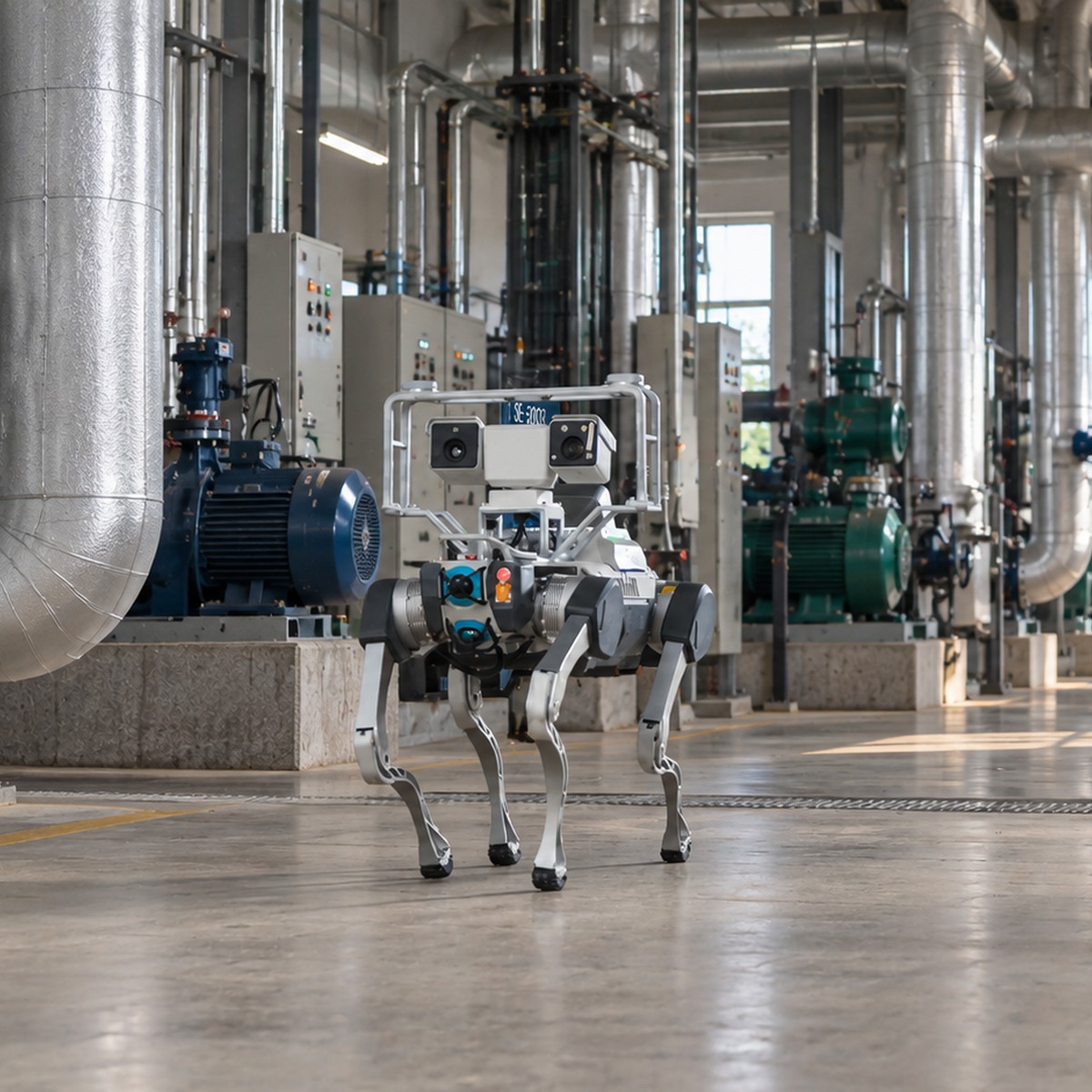
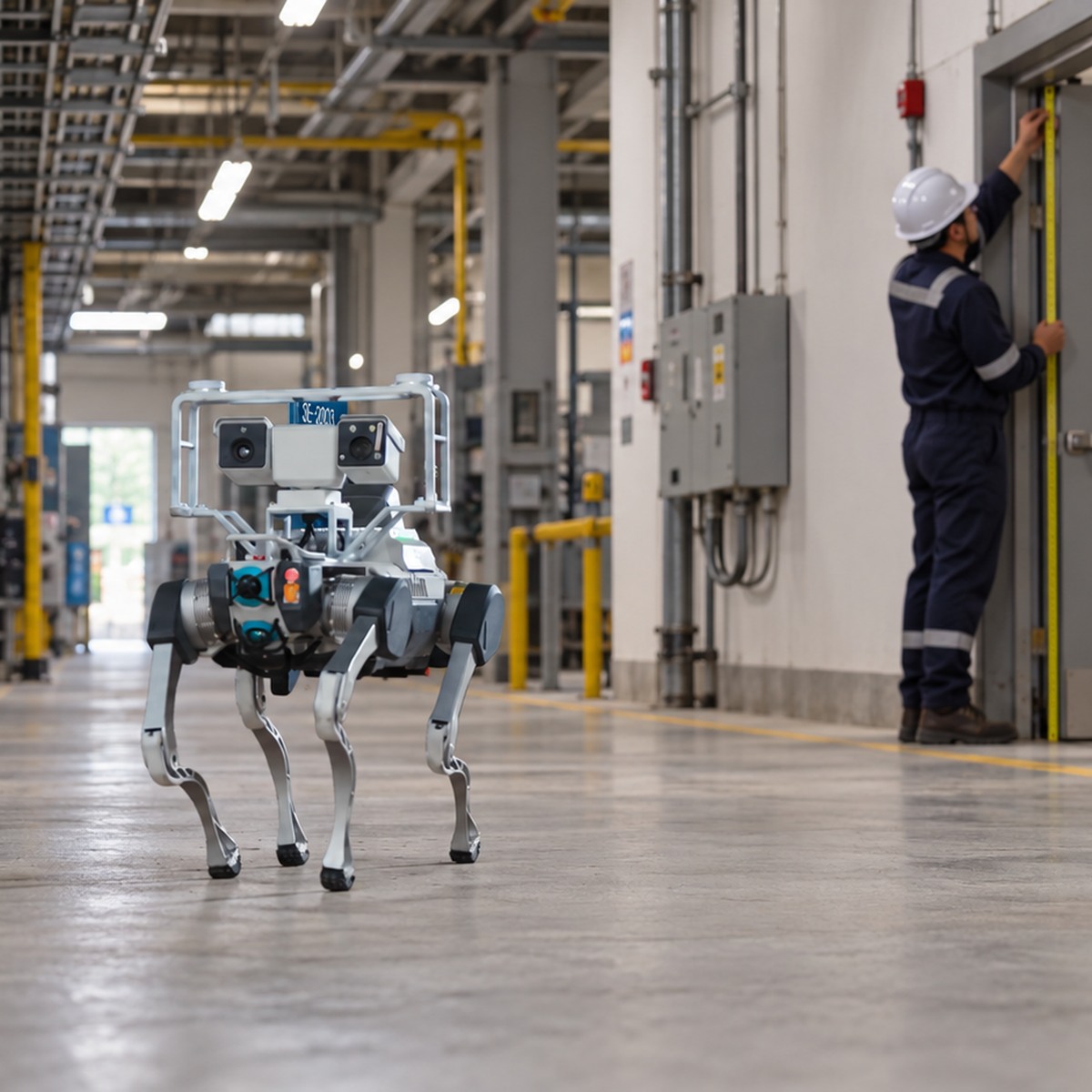
Industrial Inspection Robot Deployment Guide for Facilities
Use a five-stage industrial inspection robot deployment method covering environment, sensing, route design, safety, integration, validation and operations.
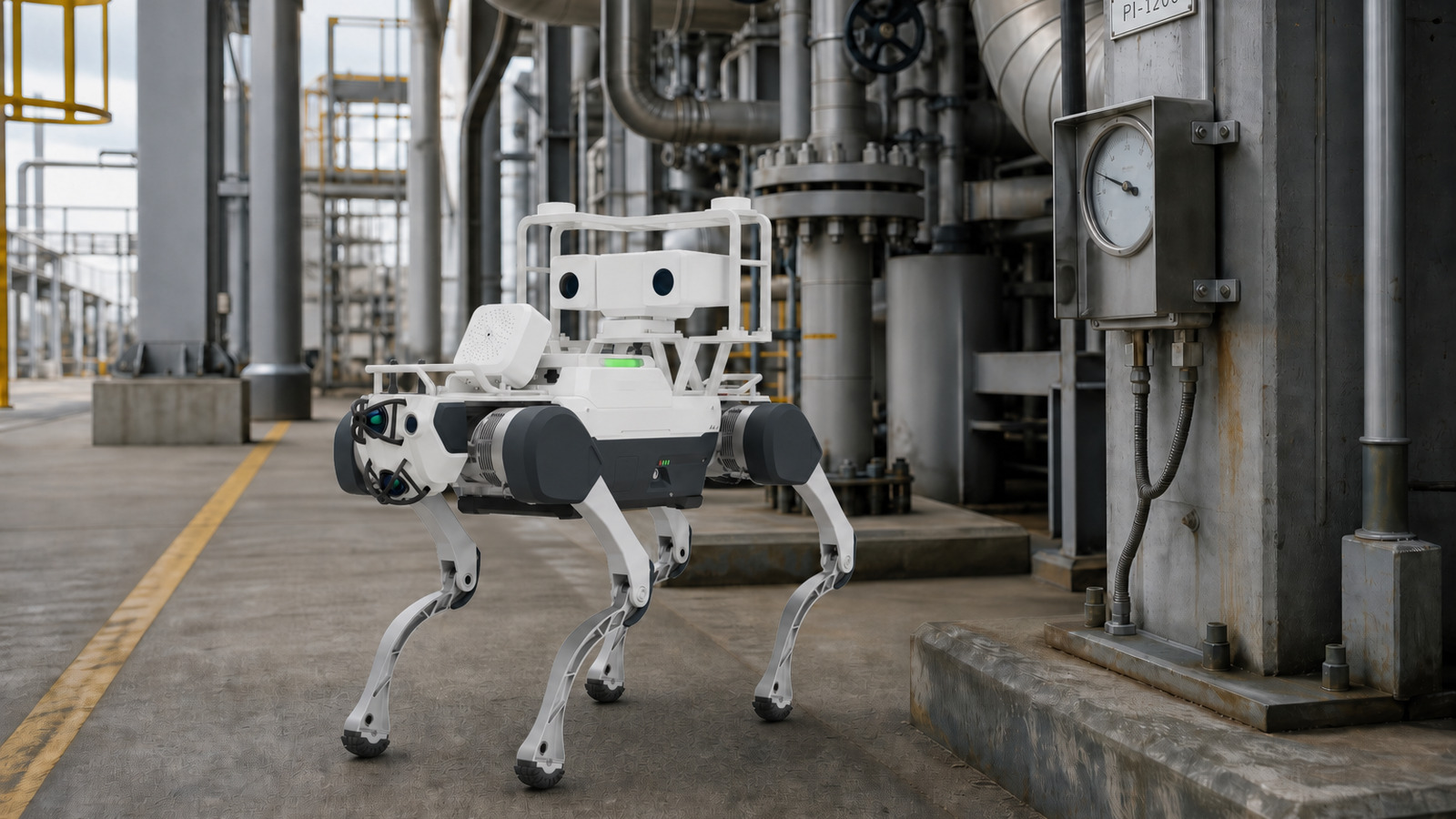
An industrial inspection robot deployment should begin with the measurement task and operating environment. The objective is not to make a robot patrol. It is to collect usable evidence at defined read points, route exceptions to the right people and reduce exposure where the complete system can do so safely.
This guide covers planning and validation for mobile inspection systems. It does not certify equipment for a hazardous location, replace a risk assessment or provide a universal sensor recipe.
Define the inspection objective
List each asset, condition or anomaly to be observed; the required sensor; reading position; acceptance range; frequency; data owner; escalation rule; and manual fallback. Decide which findings support routine trending and which require immediate human confirmation.
Use the workflow assessment method to keep the task, environment, payload, interfaces, service and economics connected.
Build a sensor-to-read-point plan
Scroll horizontally to compare all columns.
| Inspection need | Planning inputs | Validation evidence |
|---|---|---|
| Visual condition | Target size, lighting, distance, angle, occlusion, image resolution and retention | Representative images and repeatability test |
| Thermal trend | Temperature range, emissivity, distance, reflections, environmental conditions and reference method | Comparison with an approved reference and alarm test |
| Acoustic or ultrasonic indication | Frequency range, background noise, sensor position, dwell time and classification method | Controlled source or known-condition test |
| Gas or environmental reading | Target substance, range, response time, airflow, cross-sensitivity, sampling position and calibration | Calibration record and controlled response test |
| Gauge or display reading | Character size, glare, vibration, viewing angle, OCR confidence and exception rule | Known-value comparison and manual review threshold |
| 3D or spatial change | Required resolution, surface properties, registration method, baseline and change threshold | Repeat scan and controlled-change test |
Assess environment, route and system safety
Record floor and terrain, slopes, stairs, gaps, thresholds, clearances, weather, dust, moisture, heat, lighting, vibration, traffic, restricted areas, emergency routes and communications. The mobility platform must use a task-appropriate, reference-supported payload and a credible interface for that payload.
For industrial robot applications, OSHA's technical guidance illustrates why the surrounding system and process equipment belong inside the safety boundary. Confirm the applicable law, standards, hazardous-area rules and site procedures with qualified specialists.
Design routes around read quality and recovery
Map the path and every read point. For each point, define approach direction, position tolerance, sensor angle, distance, dwell condition, obstruction rule and retry limit. Route design should also include passing, charging, loss of localization, blocked path, communications loss, depleted battery and manual recovery.
The companion quadruped versus wheeled comparison helps screen mobility against the route rather than against product appearance.
Connect observations to the operating workflow
Define how files, readings and alarms move into the historian, CMMS, inspection platform or other approved system. Record timestamp and asset identity, units, quality flags, confidence, route version, robot and sensor configuration, review status and the final disposition of an exception.
Keep network and cybersecurity requirements explicit: segmentation, identity, encryption, remote access, update process, logging, retention and offline behavior all need owners and tests.
Validate before scaling
- Verify the configured robot, payload, sensor and software versions.
- Run controlled sensor checks against known conditions.
- Test route, read points, charging and recovery.
- Test normal, boundary and failure cases.
- Compare robotic readings with the approved manual or instrument reference.
- Train operators, reviewers, maintenance and responders.
- Run a bounded pilot with stop criteria and a versioned issue log.
- Approve only the routes and measurements supported by evidence.
Measure the operating system
Separate mission completion, route intervention, read-point success, measurement quality, alert precision, review time, recovery time, availability and maintenance effort. One blended “inspection success” number can hide whether the robot moved correctly but captured unusable evidence.
Sources and limitations
- OSHA Technical Manual: Industrial Robot Systems and Industrial Robot System Safety
- NIST Engineering Laboratory robotics research
Confirm the current requirements for the jurisdiction, facility and selected system.
Plan the first route
Review Warpify's industrial inspection robotics solutions, then request a route, payload and integration assessment.

Iven Wang
Iven Wang is the Co-Founder of Warpify Robotics, specializing in the commercialization and deployment of robotic solutions. With a background in electrical engineering and product management, he works with manufacturers, integrators, and enterprise clients across industrial inspection, security, logistics, and Robotics-as-a-Service.
Subscribe to our newsletter today
Get practical robotics deployment insights, case studies, and planning guidance from Warpify Robotics.