Surface-Water Cleaning Robots: Debris Collection, Offloading and Waste Handoffs
Assess floating-debris robots through collection, return, offloading, shore handling and accepted cleaning output across the complete cycle.
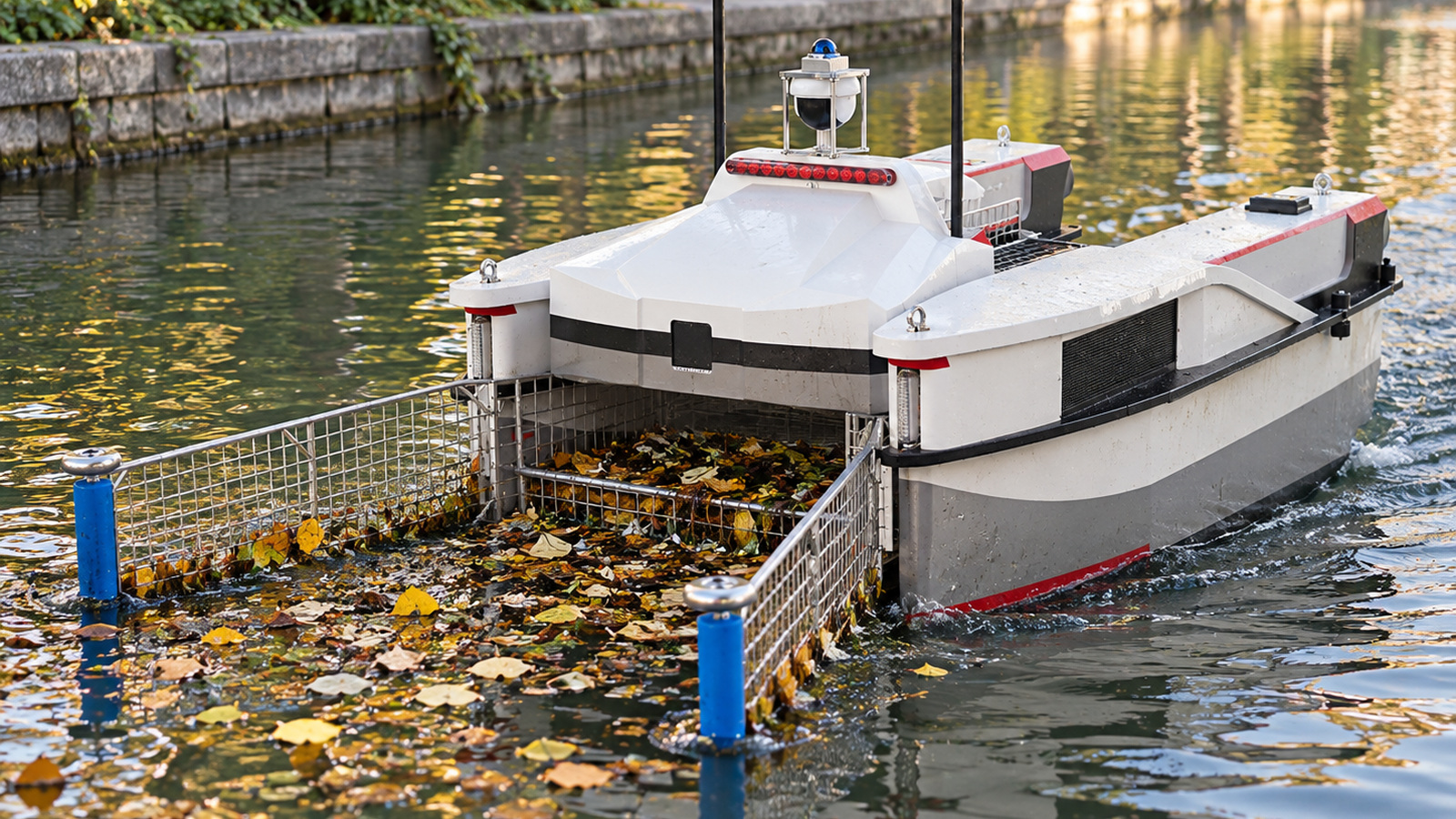
A surface-water cleaning robot is useful when it can collect the target floating material and deliver it into a workable shore-side handling process. The operating loop includes access, collection, return, offloading, inspection and preparation for the next mission. Evaluate that loop before comparing collection capacity or autonomy claims.
Floating debris is a defined task. It is different from dredging, treating dissolved pollution or cleaning submerged structures. Warpify's surface and underwater robotics solutions use the mission and material to scope the platform, deployment, training and support package.
Define the material and where it accumulates
Record the debris the site wants to remove, where it gathers and how its presence changes with weather, water conditions or local activity. Use dated observations and photographs rather than assuming a single inspection represents the whole operating period.
Ask the supplier to review the material against the selected collector. Leaves, mixed litter, vegetation and unfamiliar objects need configuration-specific handling decisions. A large floating object or potentially hazardous material should not become part of the scope merely because it is visible from shore.
Separate routine collection from exceptional response. Identify which material the planned method can address, what the operator must leave in place and how an unexpected item is escalated to the responsible site team.
Follow the collection path through the vessel
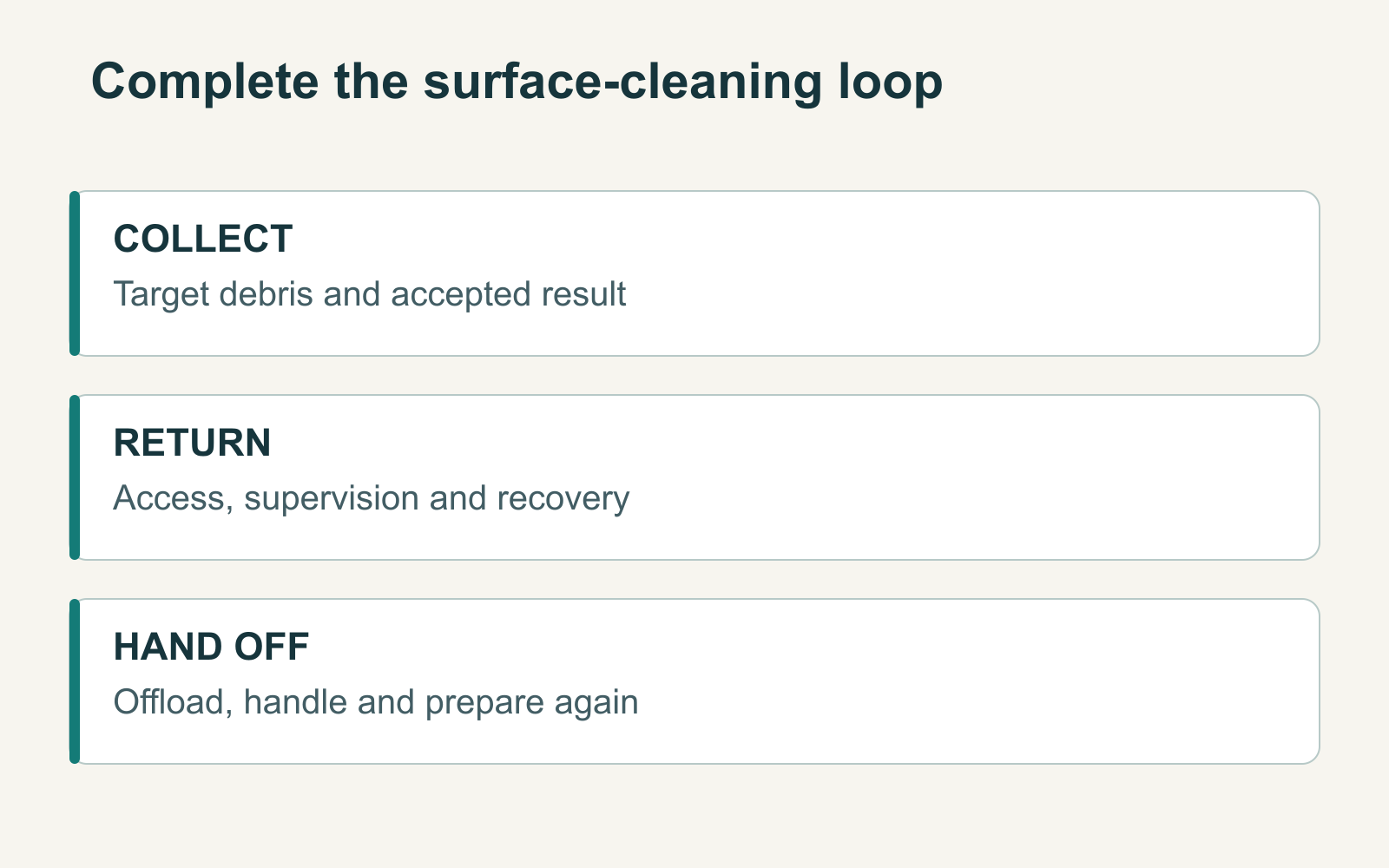
Review how material enters, is retained and is later removed. The Robosea S-Cleaner description provides an example of a purpose-built surface-cleaning system. Its existence is a reason to assess a defined collection workflow, not proof that any vessel can handle every debris type or site condition.
Confirm the configured mechanism and its operating instructions. Ask what limits useful collection, how the operator recognizes a problem and which interventions require recovery or shore access. Avoid treating a basket volume as accepted cleaned area or sustained site productivity.
Record what remains in the water after a pass and how the site will judge the result. Collection quality needs its own acceptance criteria; a vessel following a route is not the same as an accepted cleaning outcome.
Design the return and offloading step early
Choose a practical return point and inspect the full path from the water to the receiving container or handling area. Record the water-edge geometry, available space, access restrictions and equipment needed for the selected offloading method.
Name the people responsible for the handoff. Identify how the collected material will be received, contained, moved and transferred through the site's authorized waste process. Obtain the relevant site's handling requirements before promising a service arrangement.
Include preparation for the next cycle. Basket handling, inspection, cleaning, charging or battery service and equipment checks can affect the time between useful collection missions. Record these tasks alongside time spent moving and collecting on the water.
Evaluate the site route and recovery arrangement
Map the intended work boundary, obstacles, traffic and places where material tends to concentrate. Identify launch, return and alternative recovery locations. Ask which water, weather or access conditions prevent the selected mission from proceeding.
Test command and status communications in the proposed operating area. Agree who supervises, who can stop the task and who responds if the vessel cannot complete the route. A remote operating feature does not eliminate local response or recovery planning.
Keep the actual operating method aligned with selected-system instructions and the site's qualified review. An assessment should identify those requirements rather than inventing universal thresholds for all waterways.
Measure accepted cleaning output and the effort around it
Choose the observation period and the outcome the waterway owner wants. Record the agreed cleaning area or zone, the target material addressed, residual material, mission interruptions and complete cycle time. Include offloading and shore handling in the operating boundary.
Avoid comparing unlike metrics. Basket volume, area traversed, time on the water and accepted cleaning output describe different things. If a supplier uses one as an example of capacity, ask how it relates to the site's actual material and cycle.
Use the commercial robot cost method to include the vessel, services, shore work, consumables, support and exception handling within the same proposal boundary.
Pilot the handoff as well as collection
Select a representative bounded zone and define the collection result, safe return and material handoff the trial must demonstrate. Include an interruption or exception review and record who accepts the output at each stage.
Use pilot acceptance to turn observations into a decision about the next operating scope. A successful collection pass is useful evidence; a repeatable collection-and-offloading loop is the evidence an operating plan needs.
Request a marine workflow assessment with site photographs, debris observations, access information and the current handling process. Those details help define a system that fits the work beyond the water surface.

Iven Wang
Iven Wang is the Co-Founder of Warpify Robotics, specializing in the commercialization and deployment of robotic solutions. With a background in electrical engineering and product management, he works with manufacturers, integrators, and enterprise clients across industrial inspection, security, logistics, and Robotics-as-a-Service.
Subscribe to our newsletter today
Get practical robotics deployment insights, case studies, and planning guidance from Warpify Robotics.