Robotic Facade Cleaning on Stone and Metal: Surface and Coating Checks
Check stone, metal and coated facade compatibility through material records, cleaning inputs, sample trials and accepted surface condition.
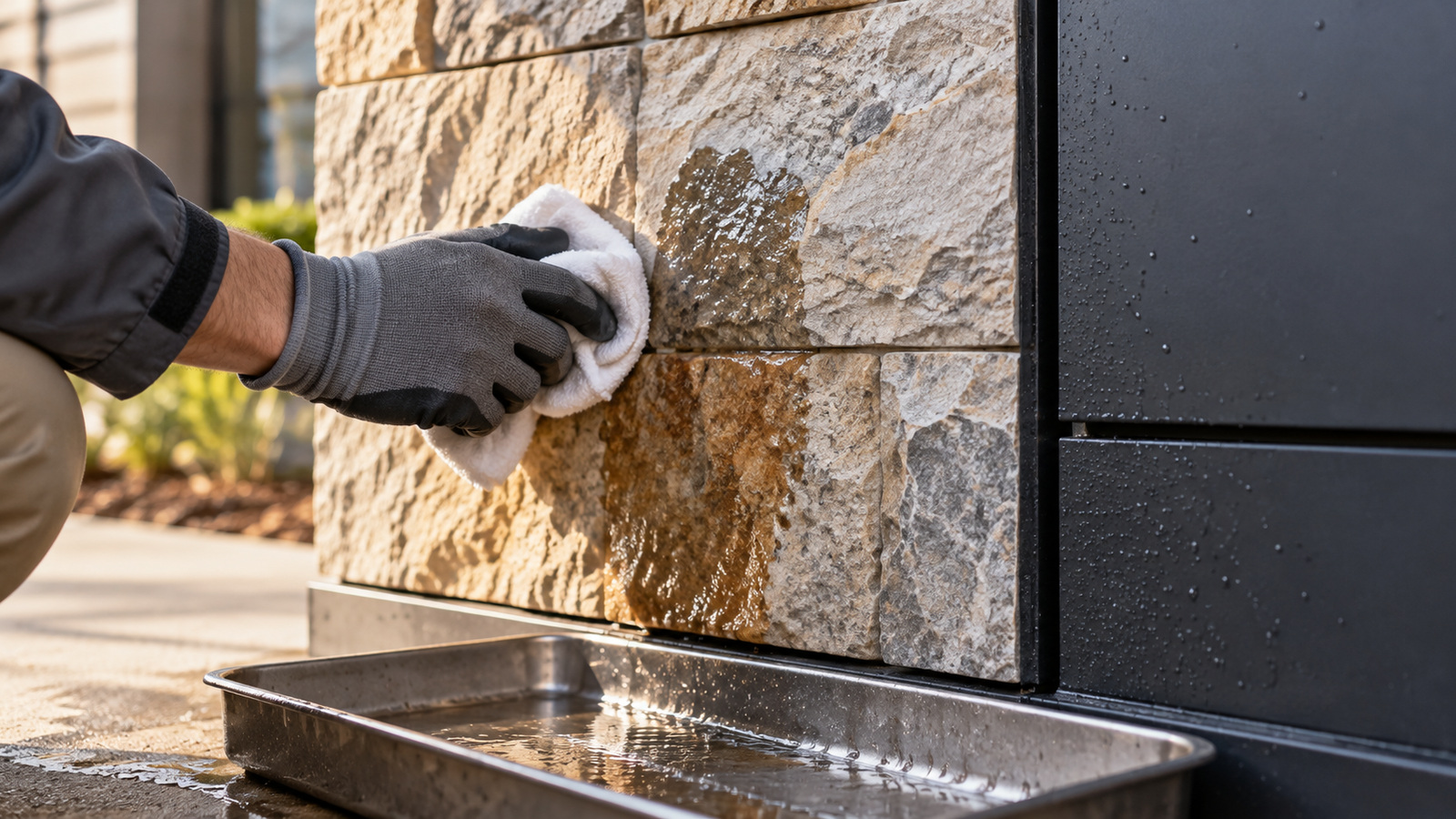
Robot access and cleaning compatibility are separate decisions. A system may reach a stone or metal panel while its proposed brush, chemistry, water delivery or contact method still needs a material review. Assess the finish and cleaning process before extending a successful glass trial to another facade material.
The objective is a repeatable clean surface that meets the building owner's acceptance criteria. Warpify's facade cleaning robot solutions match the platform and cleaning system to the building. Material records and a controlled sample-area trial help determine which method belongs in that scope.
Identify the actual surface, not only its category
Record the stone type or metal substrate, visible finish, coating, previous treatment and known repairs. Include the supplier's care guidance and any building-specific maintenance requirements. Two panels described simply as stone or metal may have different cleaning requirements.
Photograph the current condition. Distinguish ordinary dirt from staining, deposits, coating deterioration, damaged joints or another issue requiring a separate assessment. Cleaning should not be used as a catch-all description for repair or restoration work.
The Natural Stone Institute's care guidance emphasizes identifying stone composition when selecting cleaning products. Its discussion of acid sensitivity illustrates why a general material label is insufficient; obtain guidance applicable to the actual exterior finish and proposed method.
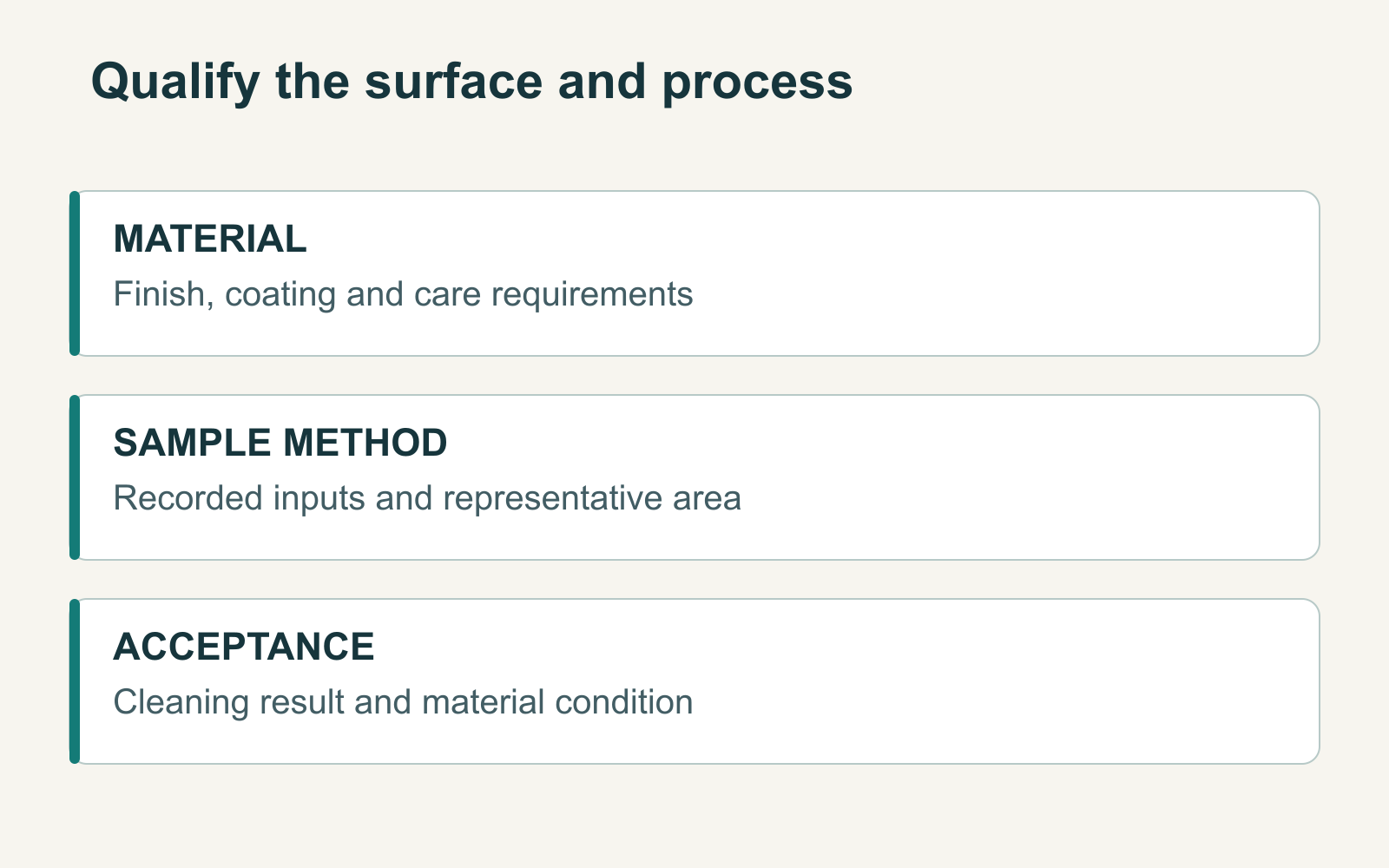
Describe the proposed process as a set of inputs
Ask the provider to identify the brush or contact material, contact arrangement, water delivery, cleaning agent where proposed, rinse process and intended settings. Include the conditions that the operator can control and the instructions that govern them.
Review each input against the actual finish and its care requirements. Do not infer compatibility because a supplier lists stone or alloy among a product's possible applications. Robot++'s cable-supported cleaner information describes several exterior surface applications; a particular building still needs the configuration and material assessment.
Keep the evaluation specific. An approved process for one coated panel is not a blanket approval for every coating, weathered finish or repaired section on the site.
Review the joints and surrounding building elements
The panel face is only part of the cleaning area. Record joints, seals, openings, adjacent finishes, fixing details and features where the proposed process needs additional review. Identify the people who can confirm relevant construction and maintenance requirements.
Plan how water and removed material will be managed around entrances, planting, occupied spaces and sensitive equipment. Include the site's access and environmental requirements in that review. Avoid promising water containment or chemical recovery unless the selected system and work method actually provide it.
Ask where the robotic route ends and another method begins. Include edges and recesses in the quality and cost boundary rather than leaving their completion implicit.
Agree the sample before testing
Select a representative test area with the facade owner and relevant material or coating specialist. Record its initial condition, the proposed process, who can authorize the trial and the criteria used to assess the result.
Keep the trial controlled enough to explain what produced the outcome. Record the selected equipment, consumables, settings, pass sequence and any manual finishing. Do not change several inputs without recording the difference; otherwise a cleaner-looking patch may provide little guidance for repeat work.
Include the observation period and inspection conditions needed for the chosen finish. The responsible material specialist should decide how to assess any change that is not apparent during the cleaning pass itself.
Inspect cleaning and material condition together
Agree the checks before the demonstration. They may include the removal of the target dirt, residual marks, streaking, edge condition and any observed change to the finish. Keep the test area's before-and-after records associated with the actual method and conditions.
Distinguish an acceptable cleaning result from an acceptable material outcome. A process that removes dirt but leaves an unwanted finish change has not demonstrated the proposed scope. Equally, a gentle process that preserves the finish but fails the agreed cleaning requirement may need adjustment or another method.
Use the pilot acceptance framework to record pass criteria, exceptions and the decision the evidence supports. Avoid turning one attractive sample into a guarantee for an unsurveyed elevation.
Carry the approved method into operations
Document the material and condition covered, permitted consumables and settings, operator checks, exclusions and the circumstances that require review. Include how the team recognizes an unexpected surface condition and who decides the next step.
Keep replacement panels, recoating, repairs and a change of cleaning system as review triggers. A repeatable method relies on its defined inputs remaining appropriate to the building.
Send material and coating records, care instructions, condition photographs and the target cleaning result with a building workflow assessment request. These inputs make a material-specific trial and scoped proposal possible.

Iven Wang
Iven Wang is the Co-Founder of Warpify Robotics, specializing in the commercialization and deployment of robotic solutions. With a background in electrical engineering and product management, he works with manufacturers, integrators, and enterprise clients across industrial inspection, security, logistics, and Robotics-as-a-Service.
Subscribe to our newsletter today
Get practical robotics deployment insights, case studies, and planning guidance from Warpify Robotics.