

Robot Inspection at a 220 kV Steelworks Substation in Wuhan
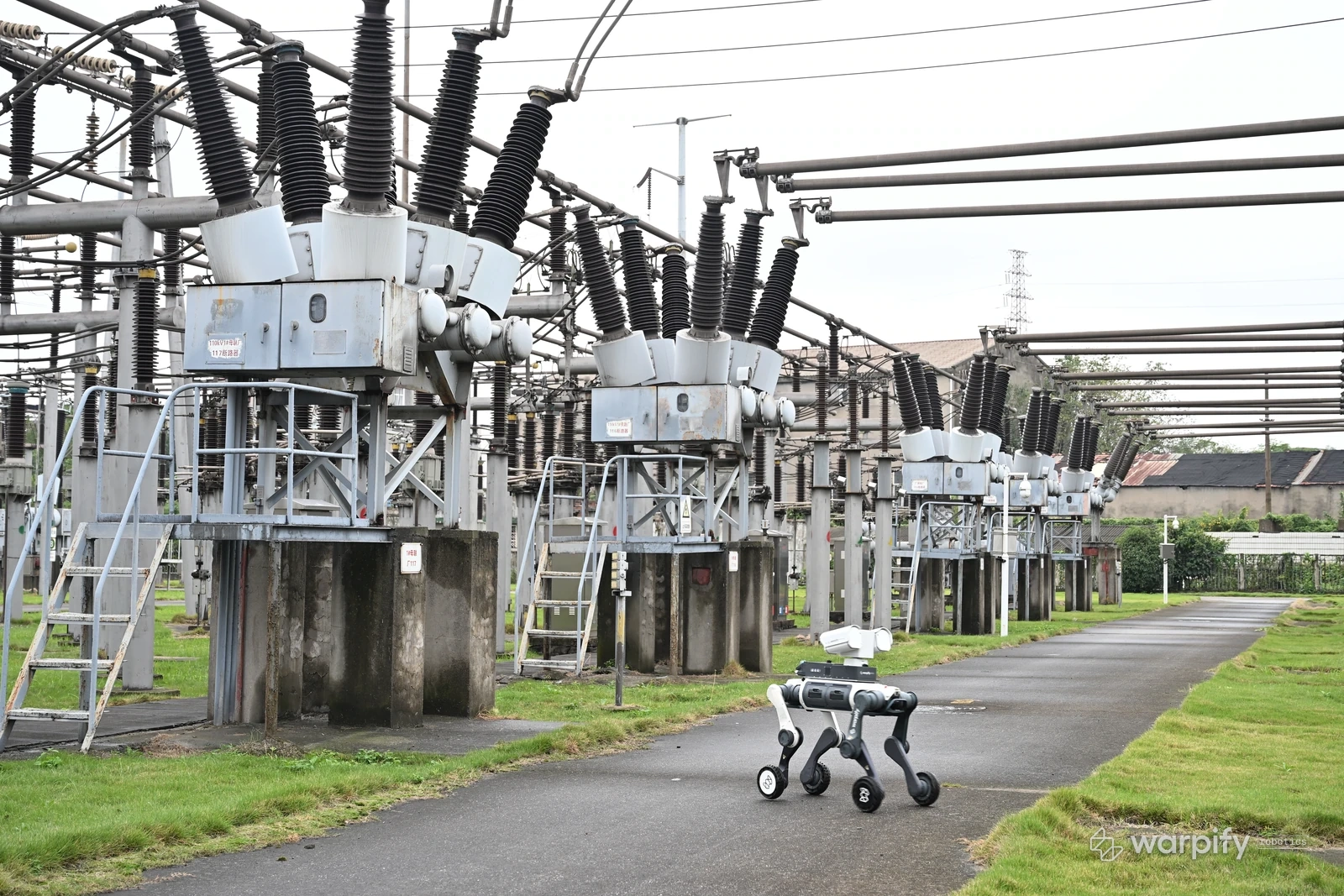
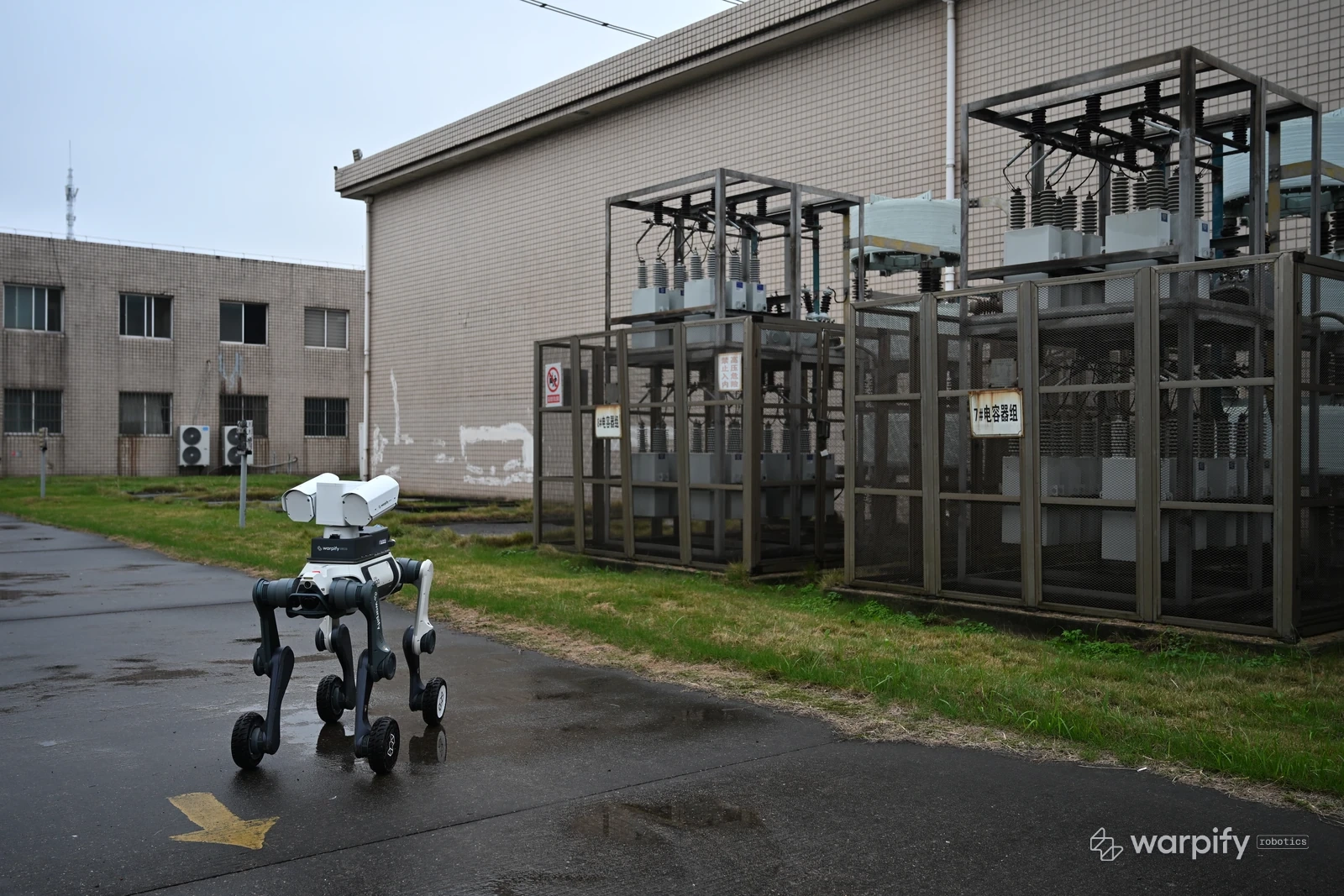
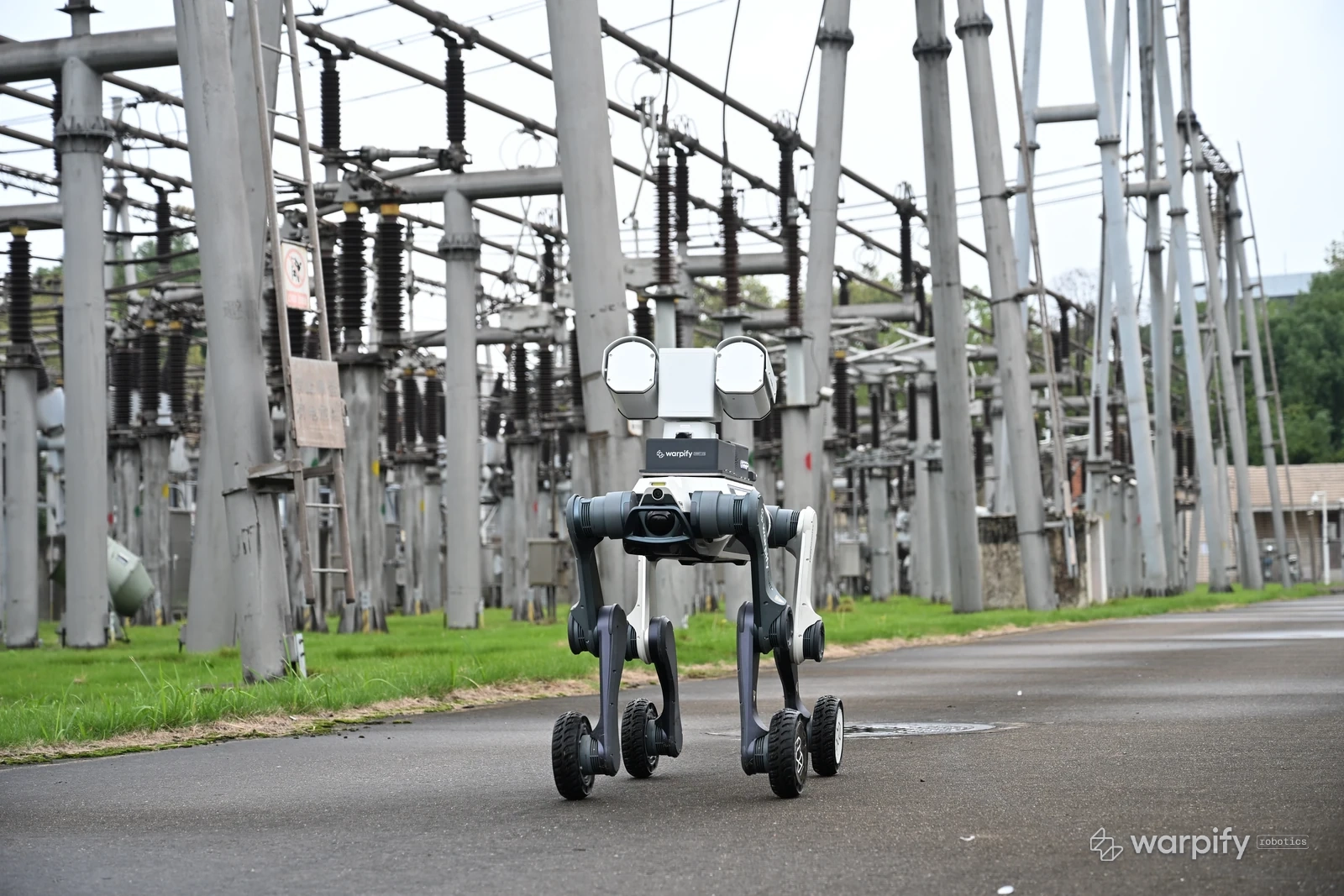
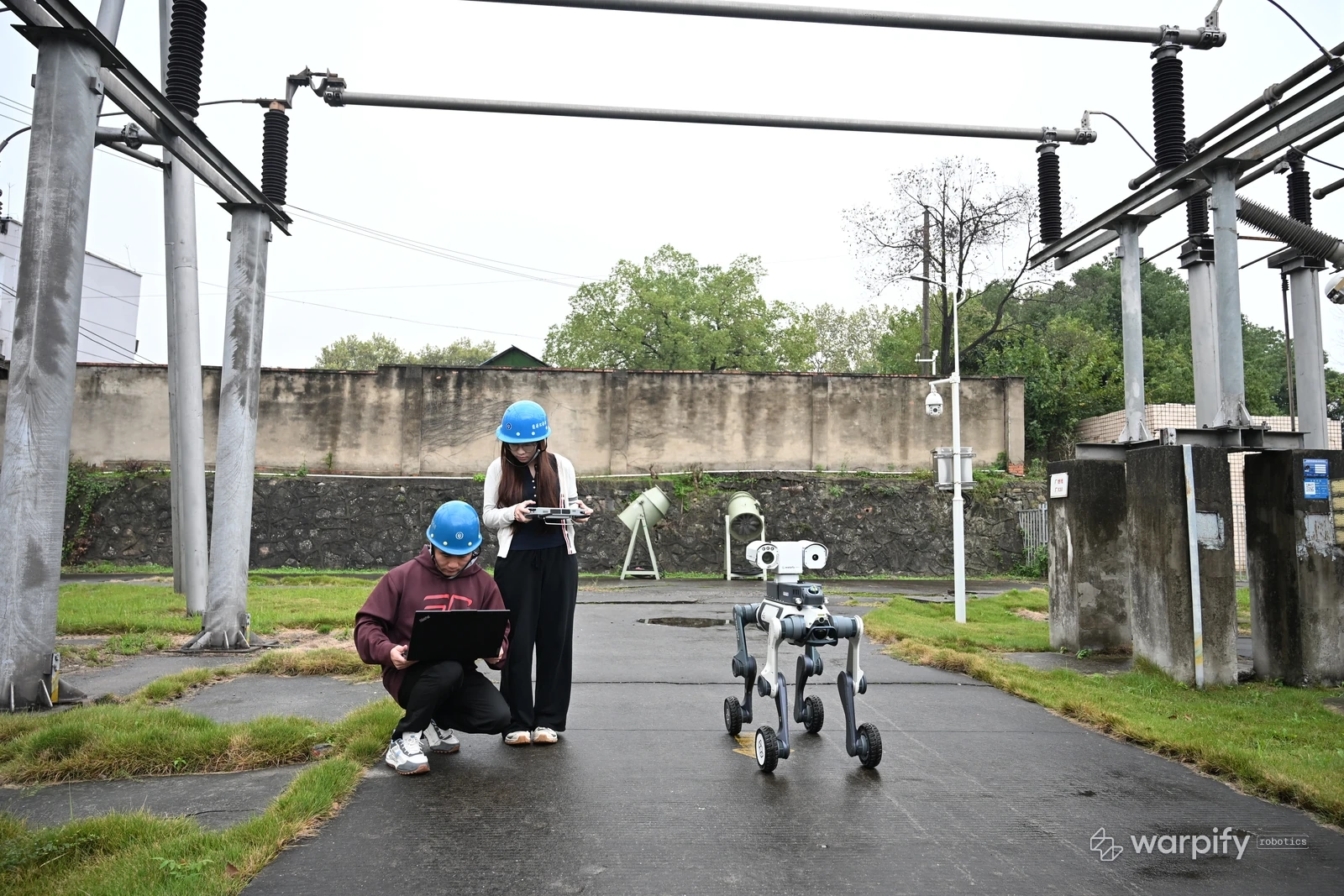
Argus M20 runs autonomous rounds at a 220 kV substation, recording equipment status, imaging transformer cooling equipment and patrolling service lanes.

October 19, 2026 field capture · Wuhan, China
Warpify Robotics deployed Argus M20 at a 220 kV steelworks substation for autonomous equipment inspection and service-lane patrol. It captures local indicators, checks equipment exteriors, and pairs visible and thermal views at the transformer bay. Site Security uses the cameras and two-way audio to review activity along the switchyard service lanes. The system entered routine operation in November 2026.
- Facility. 220 kV steelworks substation at WISCO · Wuhan, China
- Field capture. October 19, 2026 · Argus M20 visible and thermal views of a transformer area
- Review roles. Electrical Operations assesses equipment observations; Site Security verifies service-lane events.
Why the substation needed a repeatable view
An electrical operator viewing a thermometer, position indicator or transformer image remotely has to answer two questions: which asset is this, and is the observation good enough to act on? On a manual round, a technician can select a permitted viewpoint, check an indication or record the equipment state. To compare images between shifts, the next reviewer also needs the same target, viewpoint and relevant operating conditions. Site Security has a different decision on the shared service lanes: whether to verify access or arrange coverage for a blocked crossing.
The Argus M20 system at the substation
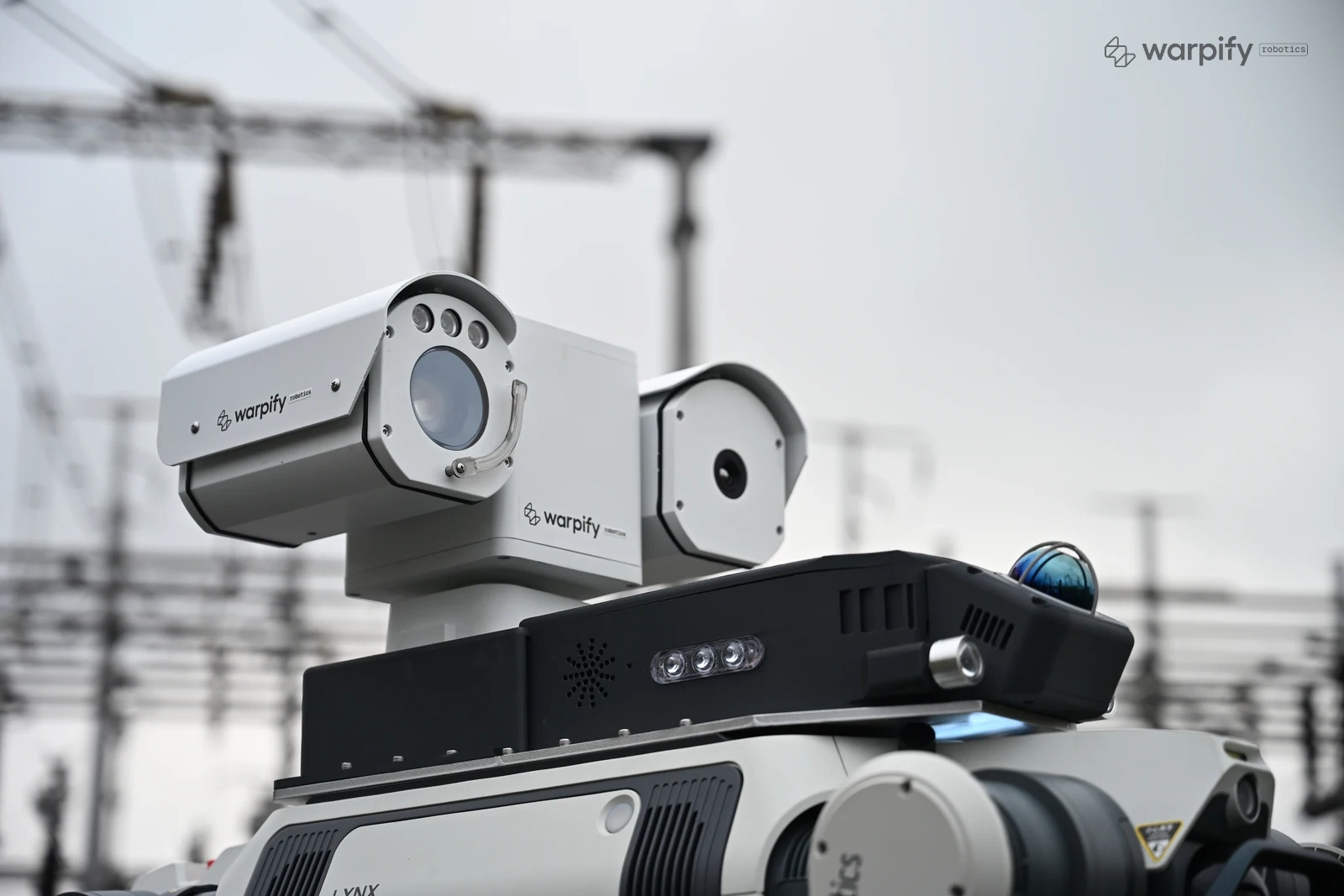
We deployed a wheeled Argus M20 with LiDAR for mapping and route navigation, an automatic charging dock, a dual-spectrum pan-tilt-zoom (PTZ) camera, two-way audio and the Argus cloud dashboard. The visible camera can frame equipment and local indicators from allowed stops. Thermal imaging can guide a closer look at an exposed surface or help locate a person in low light. Person detection, possible fire cues and unusual sound can prompt a review by the duty team.
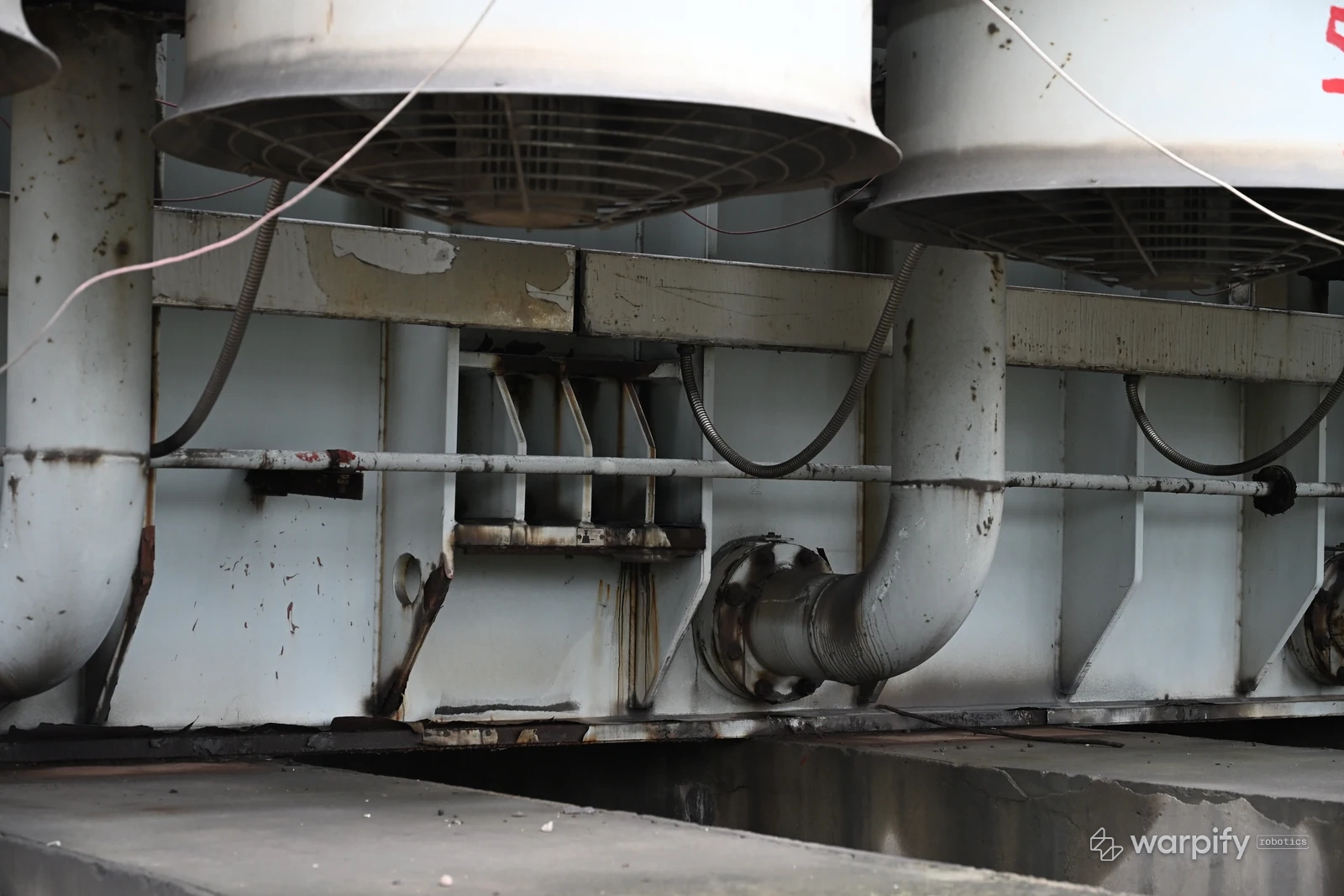
Argus M20 can carry an optional acoustic camera that detects unusual sounds and maps them onto the visible image. At a substation, maintenance teams can use it to investigate noise that may indicate a fault in a cooling fan or motor and to pinpoint possible leaks on pressurized equipment.
This gives the operator a way to look from the service lane. Site electrical authority continues to set access, working distances, operating procedures and switching permissions.
What the transformer bay capture shows
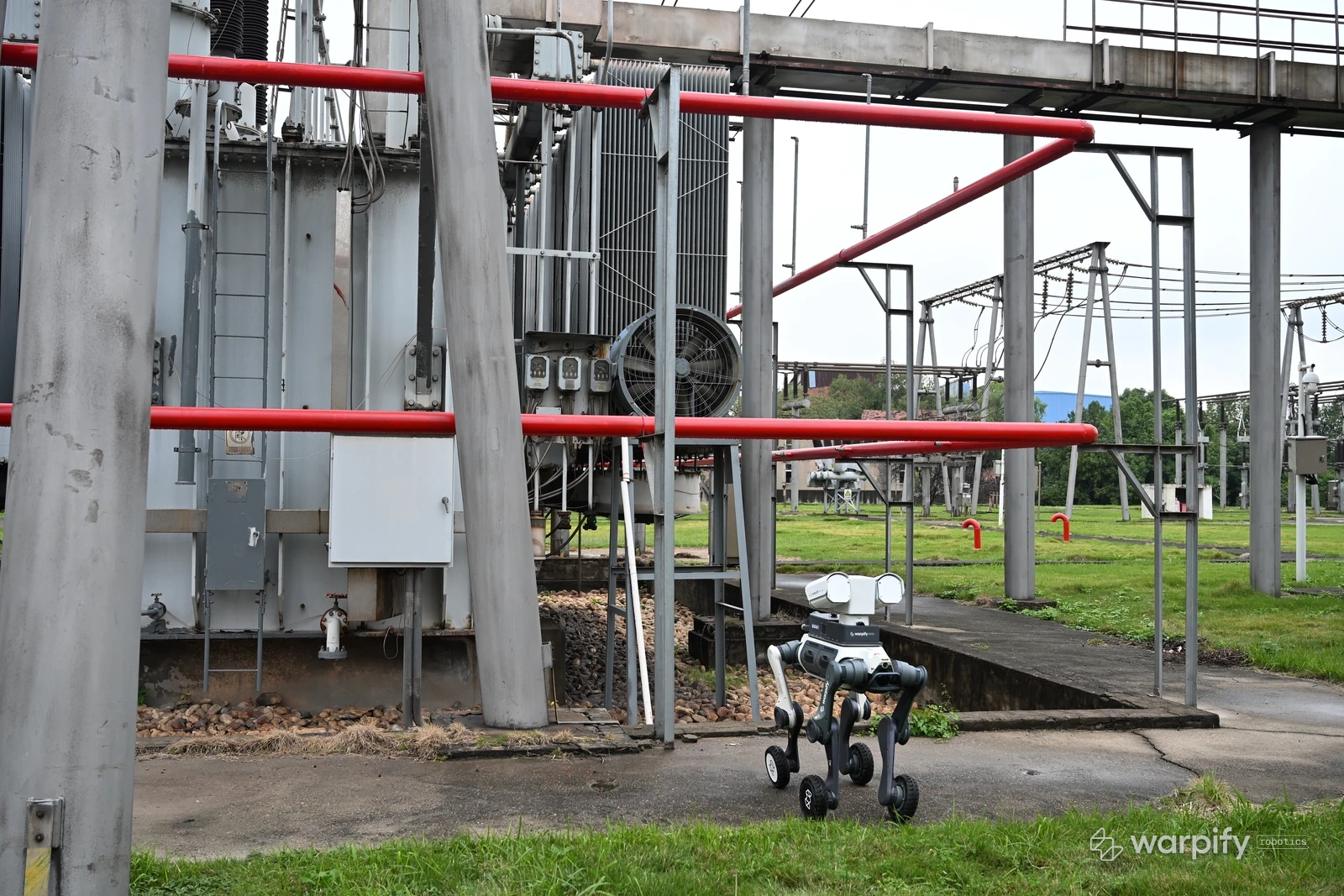
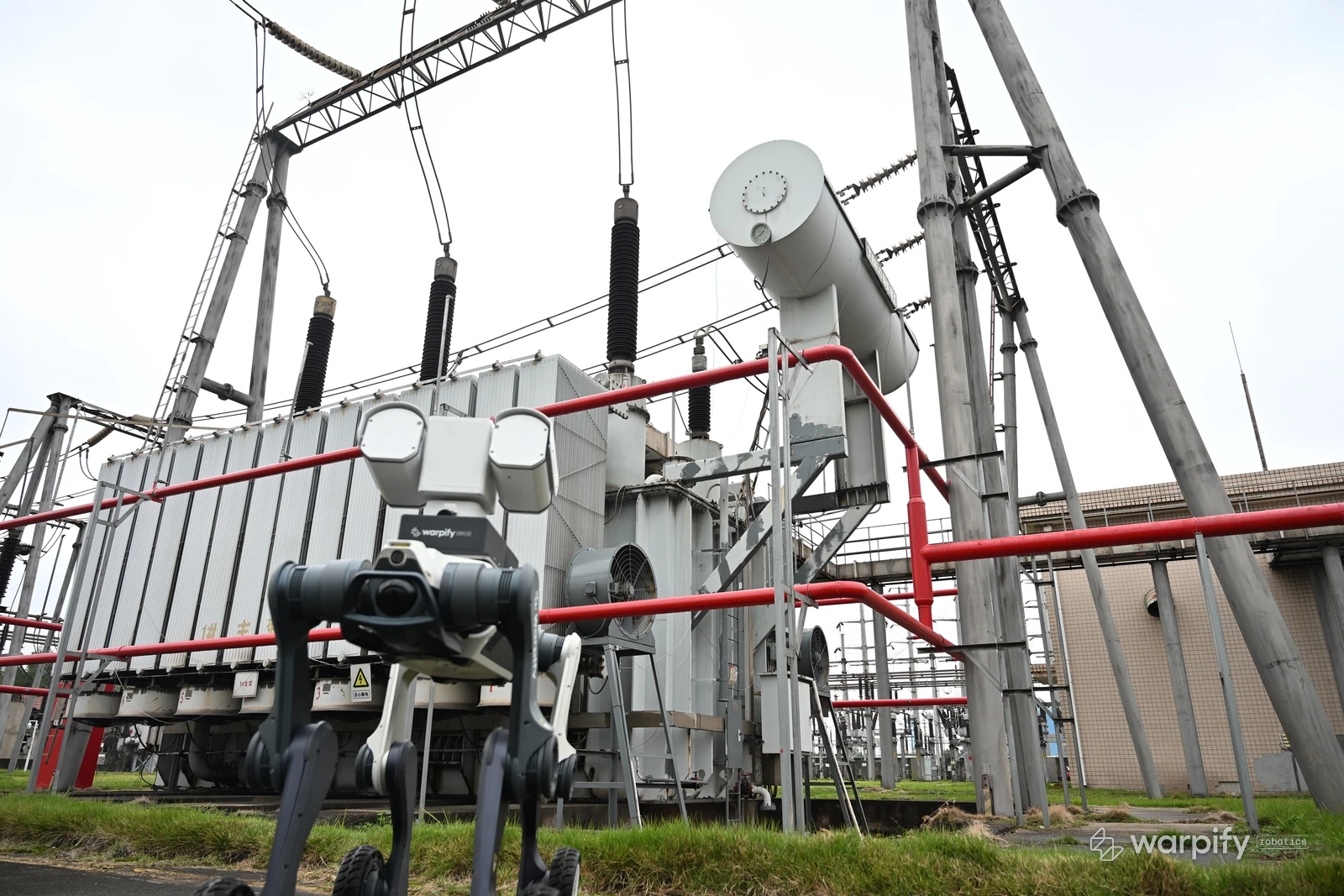
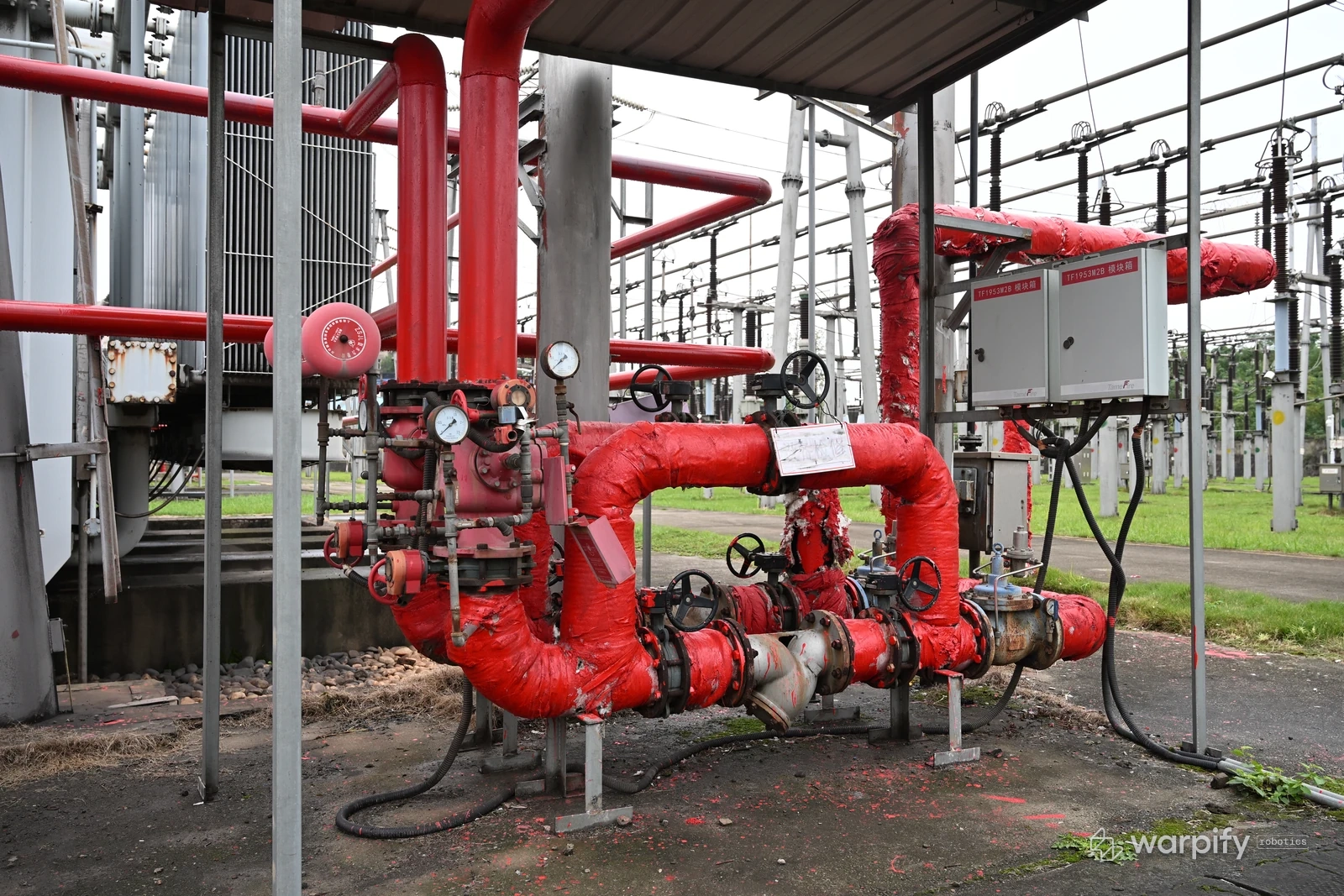
A radiator bank, red pipework and a fan help match the October 19 field photo to the recorded dashboard view. The thermal panel shows 36.8 °C as the maximum displayed for the selected image region. For repeat rounds, Electrical Operations can frame the same exterior surface from an approved stop and record the viewing geometry, thermal settings, load and cooling stage for comparison.

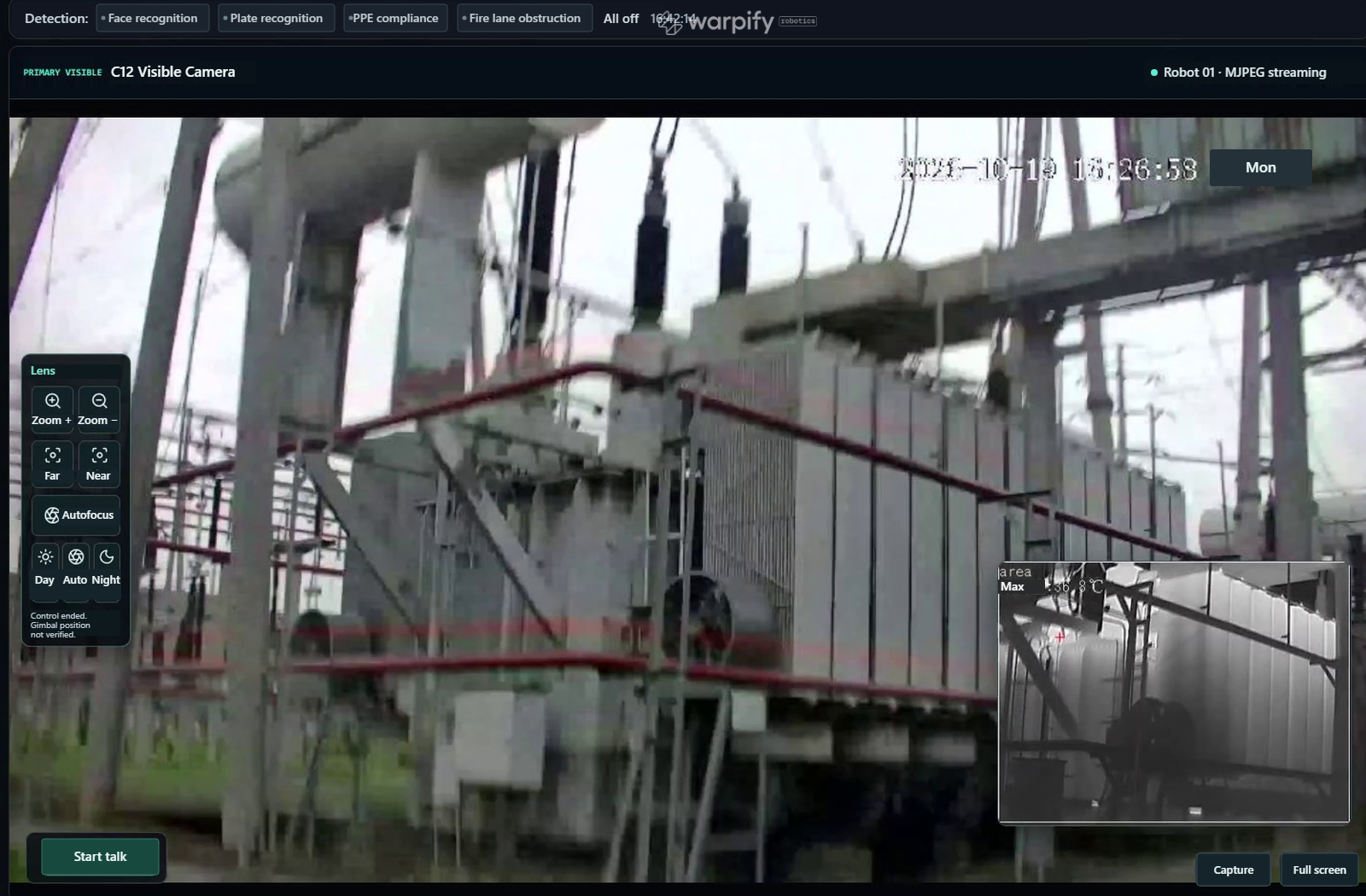
From an approved service-lane viewpoint, Argus AI can analyze visible images of exposed equipment housings and flag possible surface cracks. Electrical Operations receives the image with its checkpoint so the reviewer can return to the same view or request a technician check.
Argus on the switchyard service lanes
Field footage follows Argus along the switchyard lanes. At 0:19.5–0:27.5 the dashboard shows the transformer area in visible and thermal views. The paired October 19 still above provides a larger view of the thermal frame, where the selected region shows a maximum of 36.8 °C. Open field film (0:53).
Equipment rounds and service-lane patrols
Equipment rounds use designated stops for status indications, exterior checks and transformer bay imaging. Electrical Operations uses the visible image to identify the surface in the thermal view. Repeat comparisons use the same target and comparable load, cooling stage and viewing conditions.
Ground patrol covers the service-lane approach as a separate security task. Site Security uses the visible and thermal views to review access along the lane. The duty operator can ask for another view or use two-way audio to speak with someone on site.
Dock-to-dock inspection and patrol
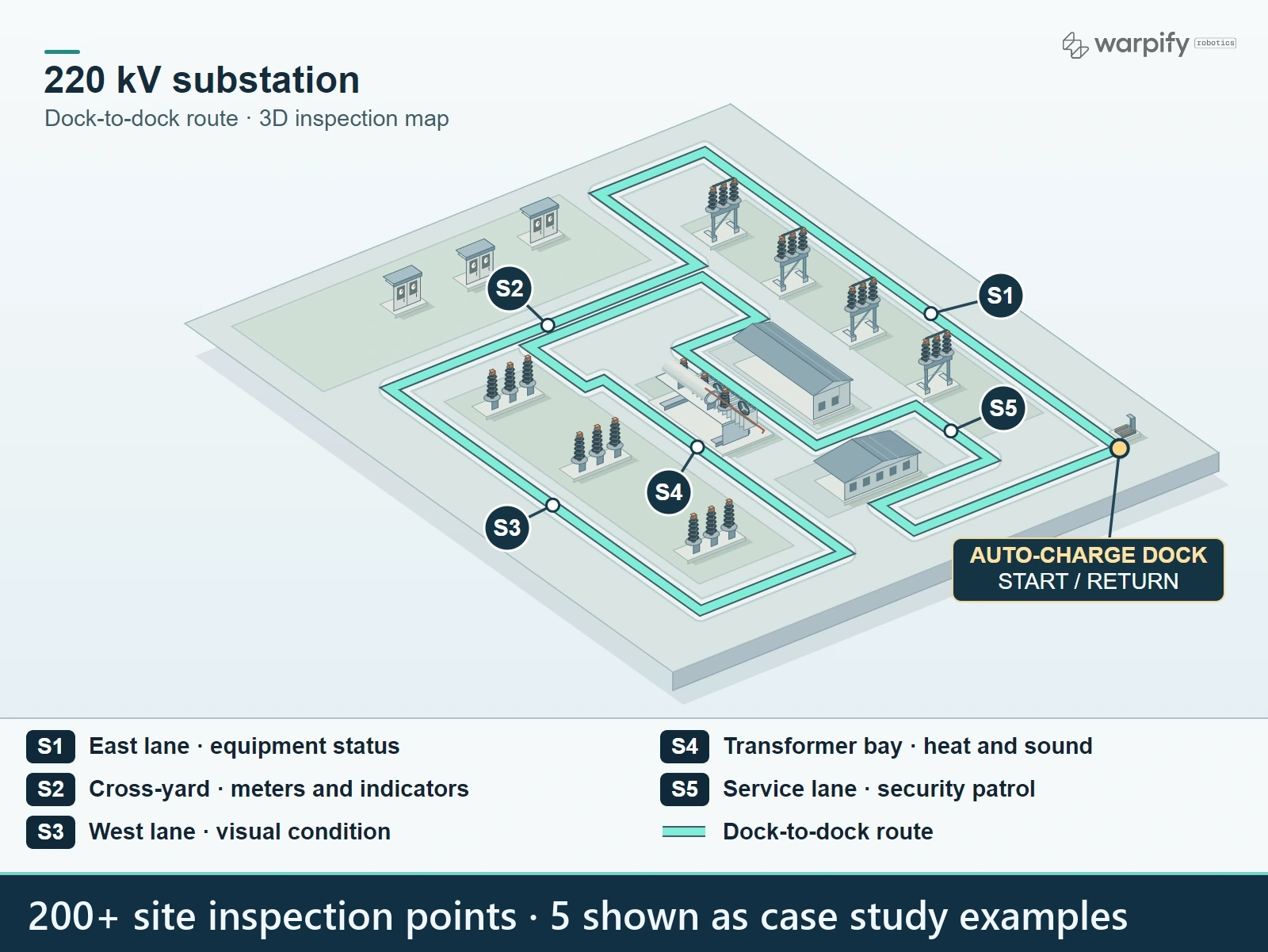
Argus starts at the east automatic charging dock, follows its assigned inspection or patrol route, and returns to the same dock to recharge. The substation has more than 200 inspection points across the site. S1–S5 show how checks are organized at five example checkpoints, from switchyard equipment lanes to the transformer bay and service lane.
What Argus checks at each stop
- S1 · East lane. Argus frames the assigned equipment position or status indicator. Electrical Operations checks the image against the expected state for that asset.
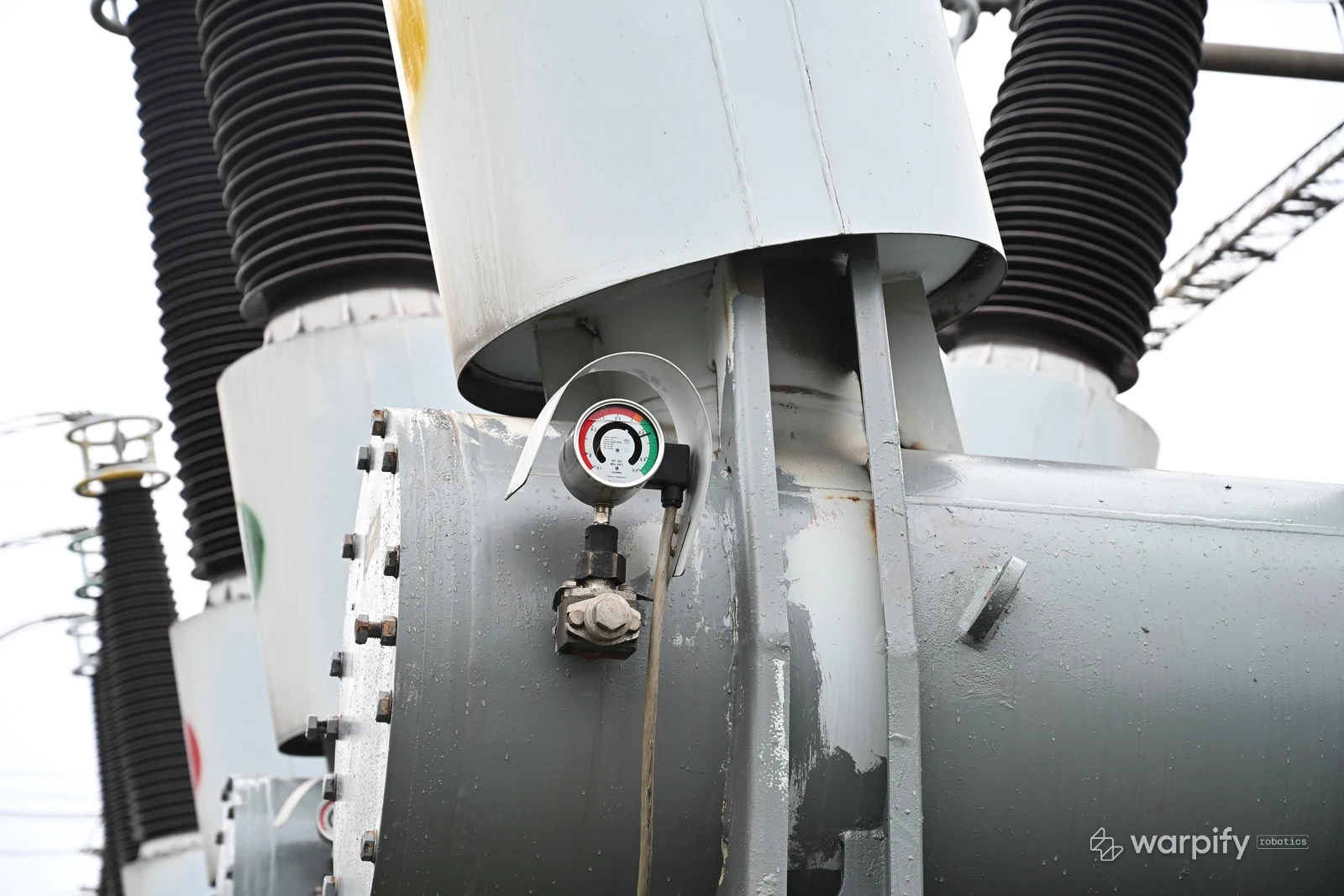
- S2 · Cross-yard lane. Argus captures the assigned local gauge or indicator and associates the image with its asset and time. Electrical Operations validates the indication and requests another view when the image is unclear.
- S3 · West lane. Argus records the exterior condition of assigned bushings, fittings or connections from the approved lane. Electrical Operations uses the image to identify places that need a closer look.
- S4 · Transformer area. Argus pairs visible and thermal views of the transformer cooling area. Electrical Operations uses the image pair to identify the surface. Load, cooling stage and viewing conditions guide comparisons. Sound screening provides another cue for review, and temperature alerts go to Maintenance.
- S5 · Service lane. Argus records the approach or crossing for Site Security. The duty operator checks access using the camera views and zone and can request a closer view or use two-way audio.
Site context
The field work took place at a 220 kV steelworks substation in Wuhan, in the WISCO steelmaking setting. The Baosteel annual report provides background on the Wuhan steelmaking base. The voltage in the case describes the facility; markings on individual devices do not establish their association with a particular inspection stop.
How Electrical Operations reviews equipment observations
At S1 or S2, keep the original close-up with the asset ID, checkpoint, time, visible state or reading and units where applicable. If the view is ambiguous, Electrical Operations checks it against the site's approved records or commissions a manual observation. At S4, a difference in the thermal view first calls for confirming the selected target, conditions and settings. An unfamiliar sound calls for checking the cooling state and requesting the appropriate follow-up. Neither observation alone establishes a fault.
Use the site's approved rule for the identified asset and measured quantity. Transformer oil temperature indicators track oil temperature. An external thermal view provides a surface observation and needs its own method of comparison. Electrical Operations owns the technical disposition and decides whether to request a repeat view or a technician visit.
How Site Security reviews a service-lane alert
The October 19 field footage shows the service-lane viewpoint. Site Security reviews person detections by location and time. The low-light thermal view helps locate the person, and the visible view provides context for checking access.
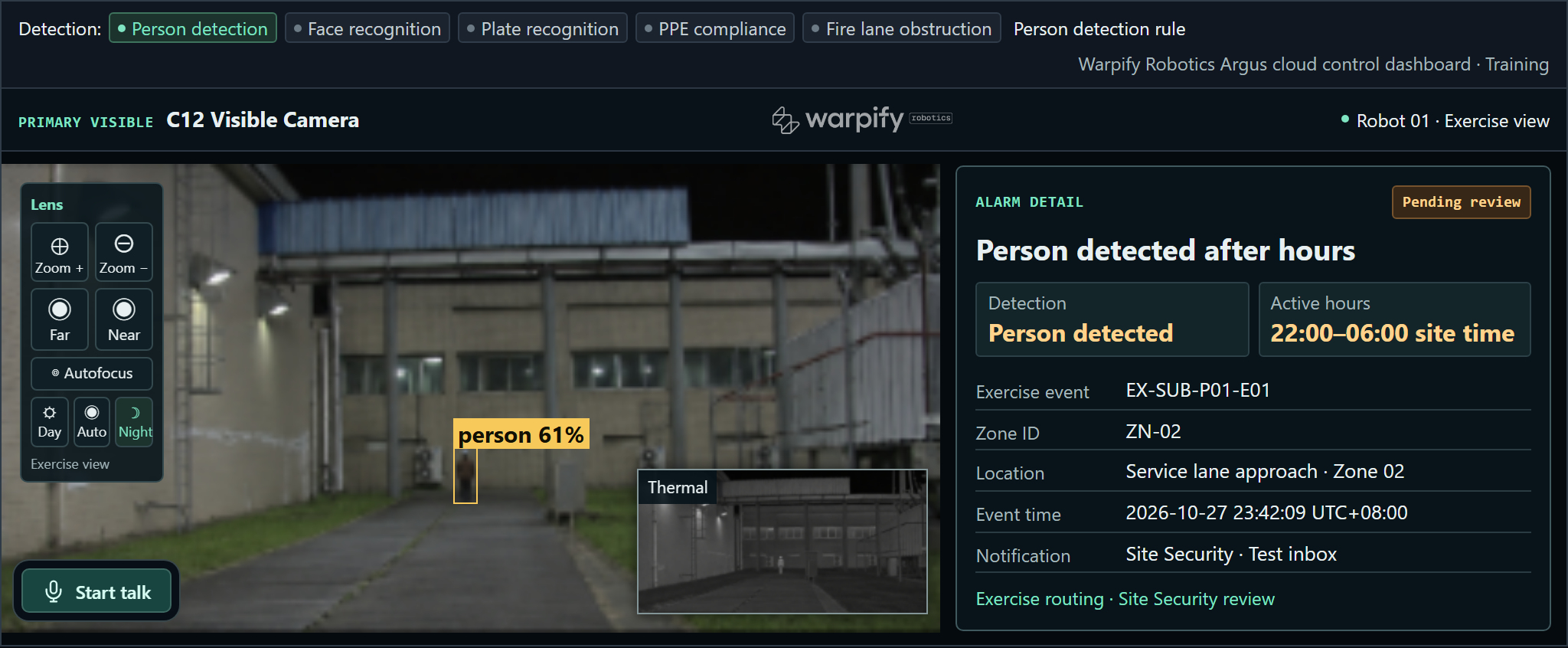
The duty operator checks the authorized-access schedule against the location and time. A closer view or two-way audio helps verify activity before dispatch. A blocked crossing can be assigned to the duty guard for coverage and kept open for shift handover until someone verifies it.
“The patrol is a full cycle. Argus covers the switchyard service lanes on its own, returns to the dock and recharges automatically. Our duty team can focus on reviewing what it saw and deciding whether anyone needs to go out.”
Electrical Site Engineer, 220 kV Substation
Deployment results
The October 19 field record links a photograph of the transformer bay to visible and thermal captures from Argus. The radiator bank, fan and red pipework help Electrical Operations locate the area to review and define a repeat capture from the service lane.
Verifying the temperature alert to Maintenance
The radiator bank is a useful target because Maintenance can compare surface temperature patterns across the cooling assembly under comparable load, ambient conditions and fan settings.
During commissioning, the field team used a low test threshold to verify alert routing because real overtemperature events were uncommon. The thermal capture showed a maximum of 36.8 °C in the selected transformer bay region, above the 36.0 °C test threshold. The alert reached Maintenance and the routing test passed.
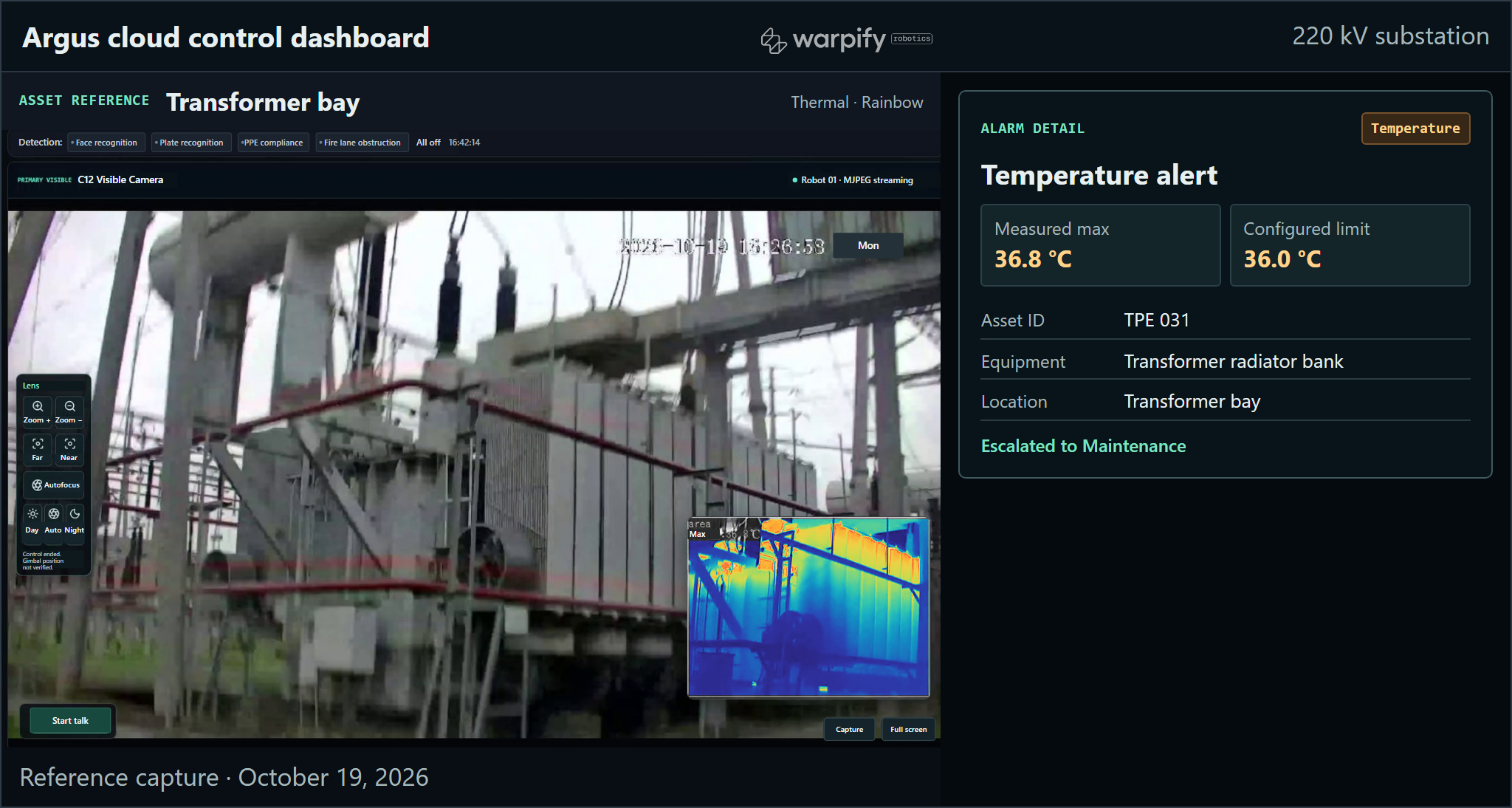
The alert gives Maintenance access to the associated image. The team can verify the surface and conditions, request a repeat capture or send a technician for a closer check.
Plan a facility inspection
Bring a permitted-lane plan, one priority indication and a transformer surface your team wants to compare. The route assessment sets the viewpoint, the evidence needed for a repeat capture and who handles a missed observation.
Request a substation route assessment
More field photos
© 2026 Warpify Robotics. Commercial use of these field photographs requires prior written permission from Warpify Robotics.
Related reading
- Substation robot inspection readiness guide
- Industrial inspection robots
- Ground security patrol robots

Iven Wang
Iven Wang is the Co-Founder of Warpify Robotics, specializing in the commercialization and deployment of robotic solutions. With a background in electrical engineering and product management, he works with manufacturers, integrators, and enterprise clients across industrial inspection, security, logistics, and Robotics-as-a-Service.
Subscribe to our newsletter today
Get practical robotics deployment insights, case studies, and planning guidance from Warpify Robotics.


