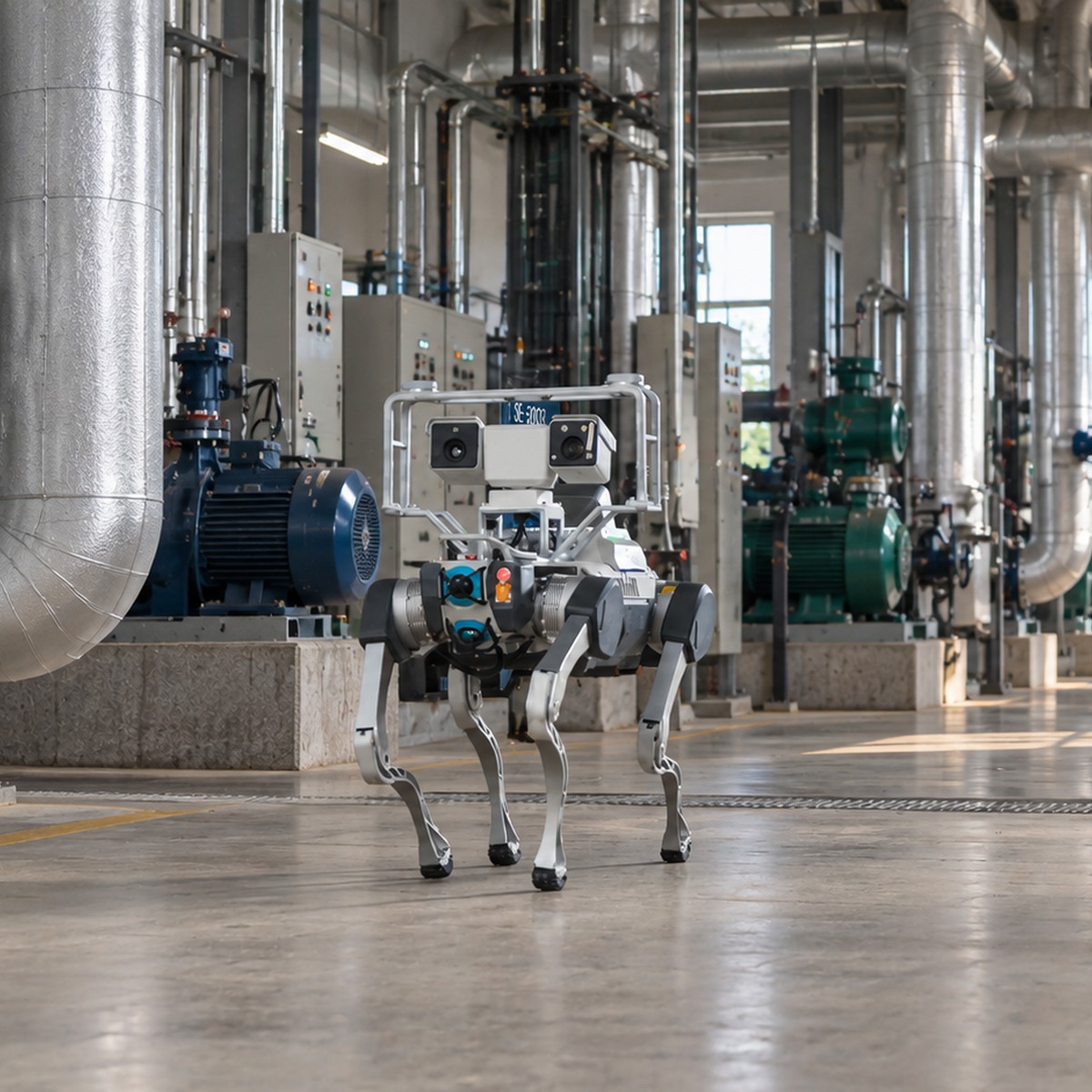
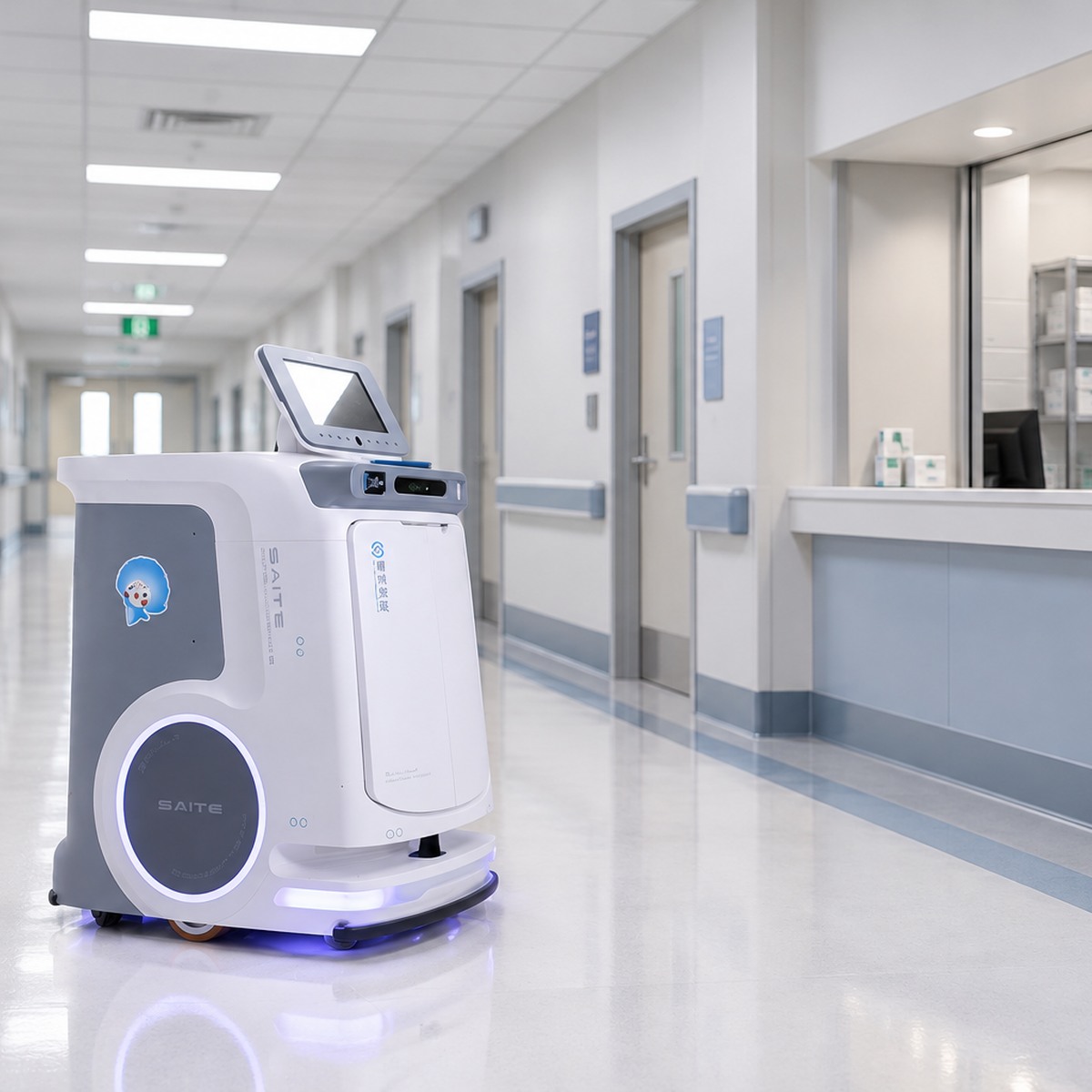
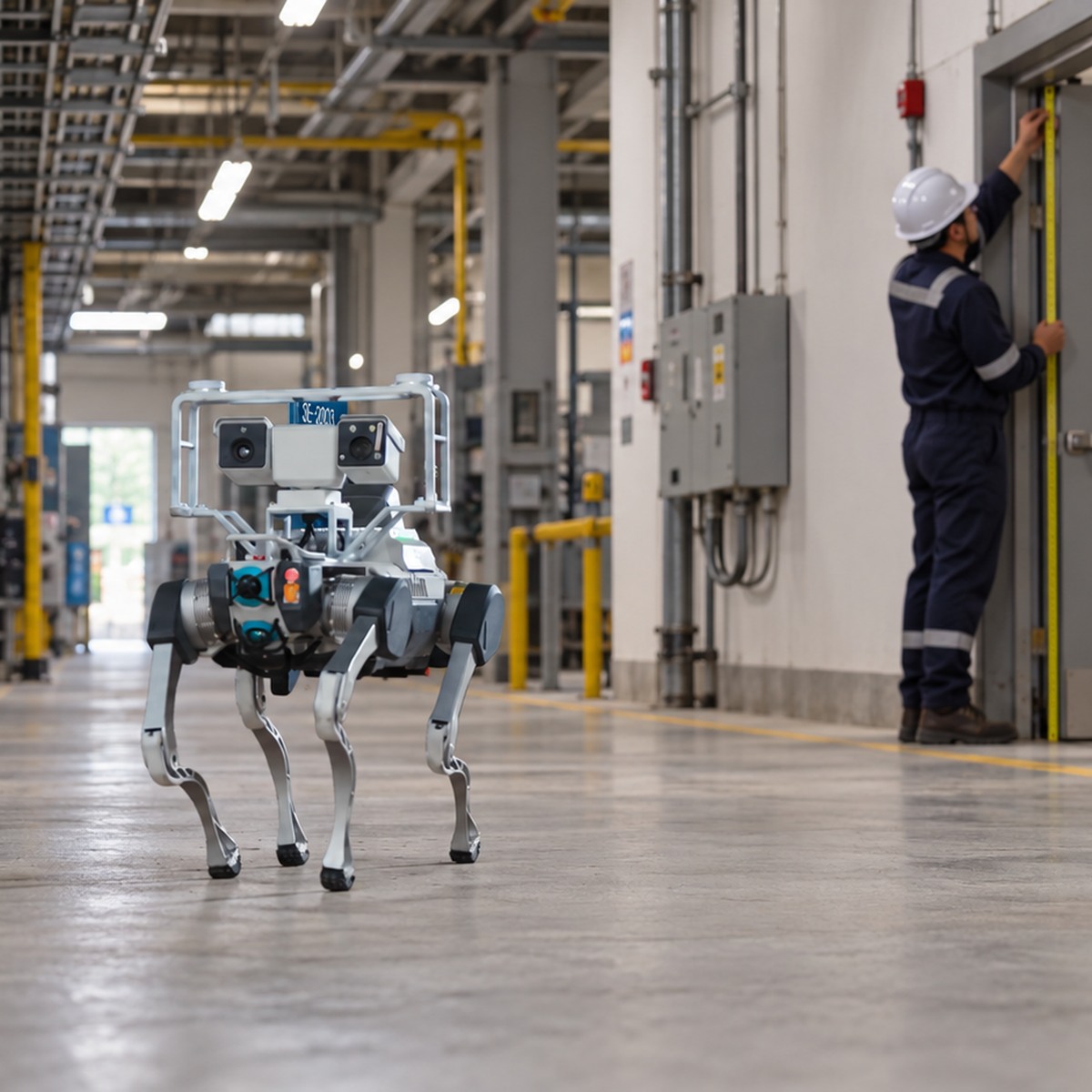
Multi-Brand Robot Integration: Designing a Maintainable Solution Stack
A maintainable multi-brand robot stack built around stable contracts, normalized events, bounded adapters and explicit ownership.
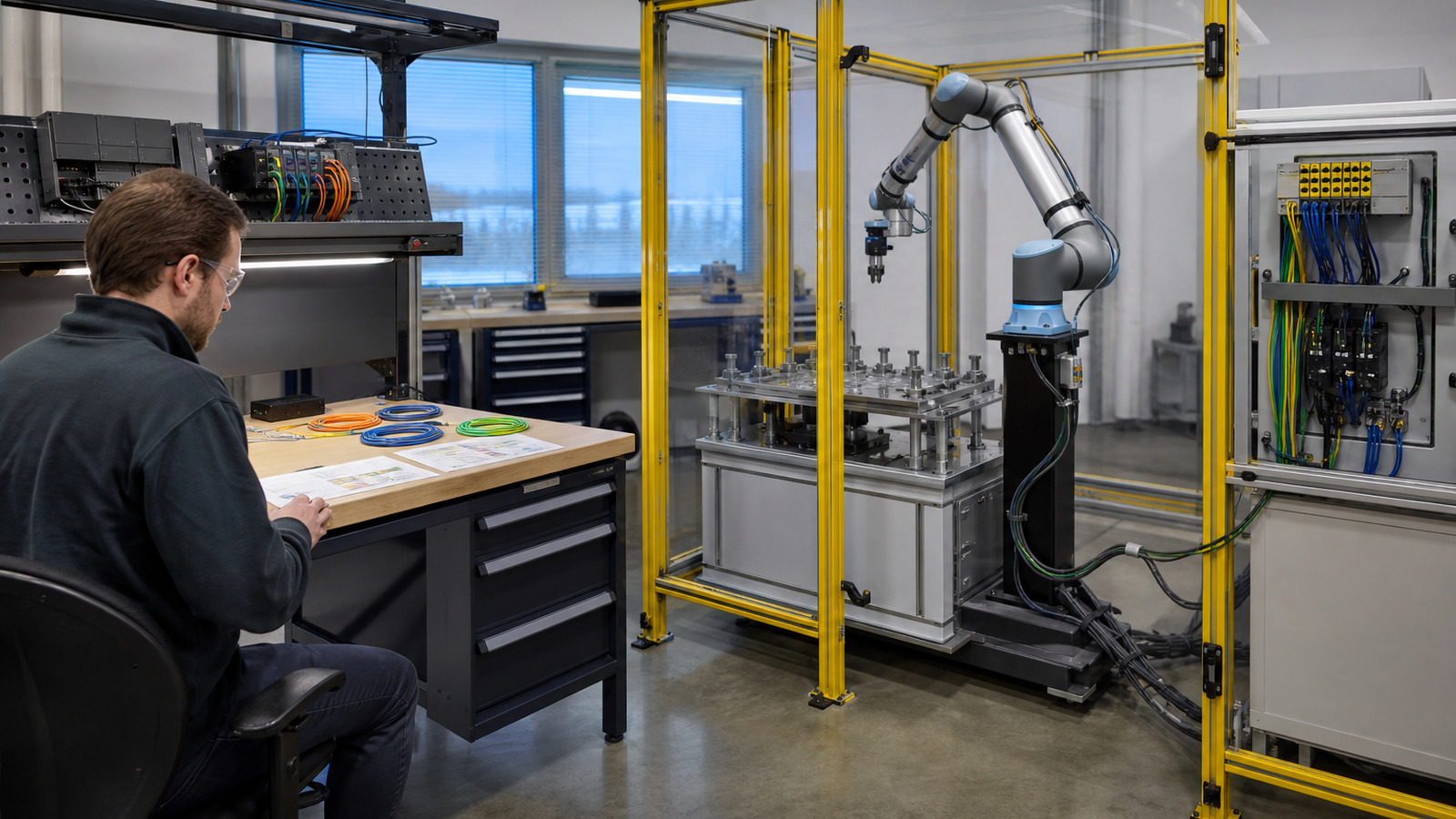
Multi-brand robot integration becomes expensive when business workflows depend directly on each vendor’s API, state names and exception behavior. The first deployment may work, but every software upgrade, fleet addition or site variation multiplies regression effort.
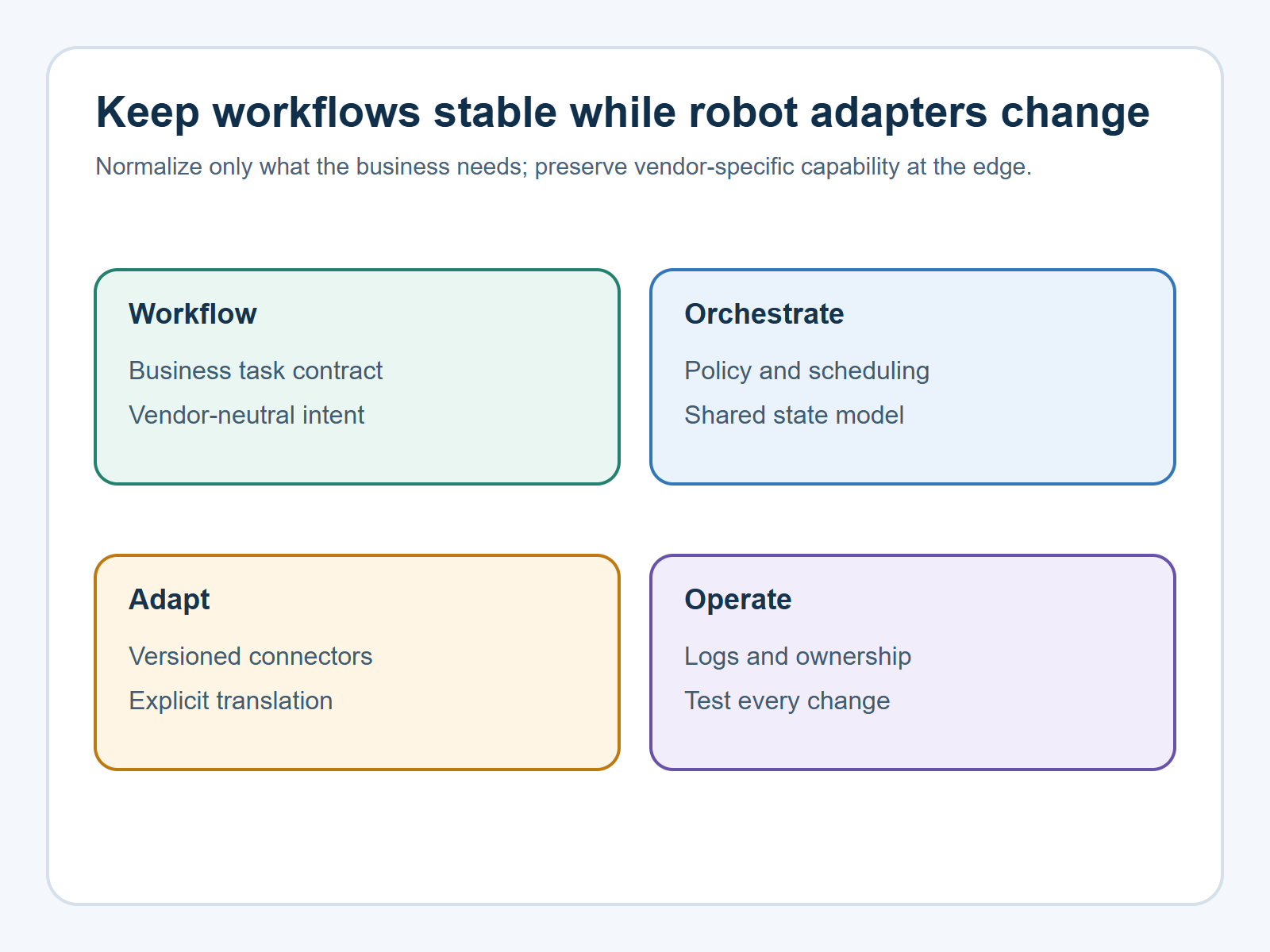
A maintainable solution stack creates stable contracts above bounded vendor adapters. It normalizes the information needed for shared workflows without pretending that all robots have identical capabilities. The goal is controlled variation, not forced sameness.
Start from the workflow contract
Describe what the business requests and what successful service means before choosing protocol fields. A workflow contract might define task type, origin, destination, payload constraints, priority, completion evidence, cancellation rules and exception ownership. It should not expose a vendor-specific mission identifier as the business concept.
Keep capability discovery separate from task intent. The orchestrator needs to know whether a fleet can serve a requested zone, payload or interface, but it should not assume every fleet handles maps, charging, traffic or recovery the same way.
Use standards as contracts, not magic interoperability
VDA 5050 defines communication between mobile robots and a central master control, while the MassRobotics AMR Interoperability Standard focuses on sharing fleet information. OPC UA companion specifications provide another pattern for shared domain models. These standards are useful boundaries, but none removes the need to design site workflows, security, semantics, exception handling and ownership.
Record which standard version and optional features each adapter supports. Treat conformance and end-to-end interoperability as separate claims. Two products can implement the same specification and still disagree on optional behavior, timing, coordinate conventions or operational recovery.
Normalize the smallest useful state model
Create a canonical model for the decisions shared services must make: availability, task lifecycle, location or zone, operating mode, blocking condition and timestamp quality. Preserve the raw vendor event alongside the normalized event for diagnostics.
Avoid a universal model that erases valuable detail. If one robot supports secure compartment state or a specialized manipulator, expose that as a declared capability rather than inventing a lowest-common-denominator field that misleads the workflow.
Bound every adapter
An adapter should translate commands and events, enforce version rules, manage authentication, handle retries and surface vendor-specific faults. It should not quietly contain business policy. If routing priority or task eligibility lives inside one connector, the same policy will be duplicated differently across brands.
Give adapters explicit timeouts, idempotency rules and circuit-breaker behavior. Define how duplicate commands, late events, reordered messages and temporary disconnection are handled. Retain correlation identifiers from workflow request through vendor command and final evidence.
Assign ownership by layer
Scroll horizontally to compare all columns.
| Layer | Stable responsibility | Typical change trigger |
|---|---|---|
| Workflow | Business intent and completion evidence | Process or policy change |
| Orchestration | Eligibility, priority and cross-fleet policy | Site operating model |
| Adapter | Vendor protocol and semantic translation | API or firmware version |
| Operations | Monitoring, incident routing and change control | Release or support change |
Make observability cross the whole stack
Dashboards should answer where a task is, why it is waiting, which component owns the next action and whether evidence is complete. Use synchronized clocks, structured events and consistent severity. Monitor adapter health, queue age, command latency, rejected tasks, intervention reasons and stale state.
Keep a replayable evidence set for incident analysis and regression tests, subject to security and privacy controls. A screenshot of a red dashboard tile is not enough to diagnose whether the workflow, orchestrator, adapter, network or robot caused the failure.
Govern versions and test contracts
Maintain a compatibility matrix covering robot software, adapter version, standard version, orchestrator release and site configuration. Contract tests should validate command shapes, state translation, fault mapping and timing assumptions. Run end-to-end tests for critical workflows and exceptions before promoting a change.
Use staged rollout and a rollback route. A vendor API upgrade should not force simultaneous changes to every business workflow. Conversely, do not preserve an unsafe or unsupported integration merely to avoid change.
Apply Warpify’s robot integration approach with the partner-program evaluation guide, the partner enablement framework and the related deployment-gate framework. If your stack boundary is unclear, map your integration boundary.

Iven Wang
Iven Wang is the Co-Founder of Warpify Robotics, specializing in the commercialization and deployment of robotic solutions. With a background in electrical engineering and product management, he works with manufacturers, integrators, and enterprise clients across industrial inspection, security, logistics, and Robotics-as-a-Service.
Subscribe to our newsletter today
Get practical robotics deployment insights, case studies, and planning guidance from Warpify Robotics.