Standalone Drone Missions vs Docked Patrol: Choosing the Operating Workflow
Compare standalone drone missions and docked patrol through recurring tasks, infrastructure, authorization, local response and complete operating cost.
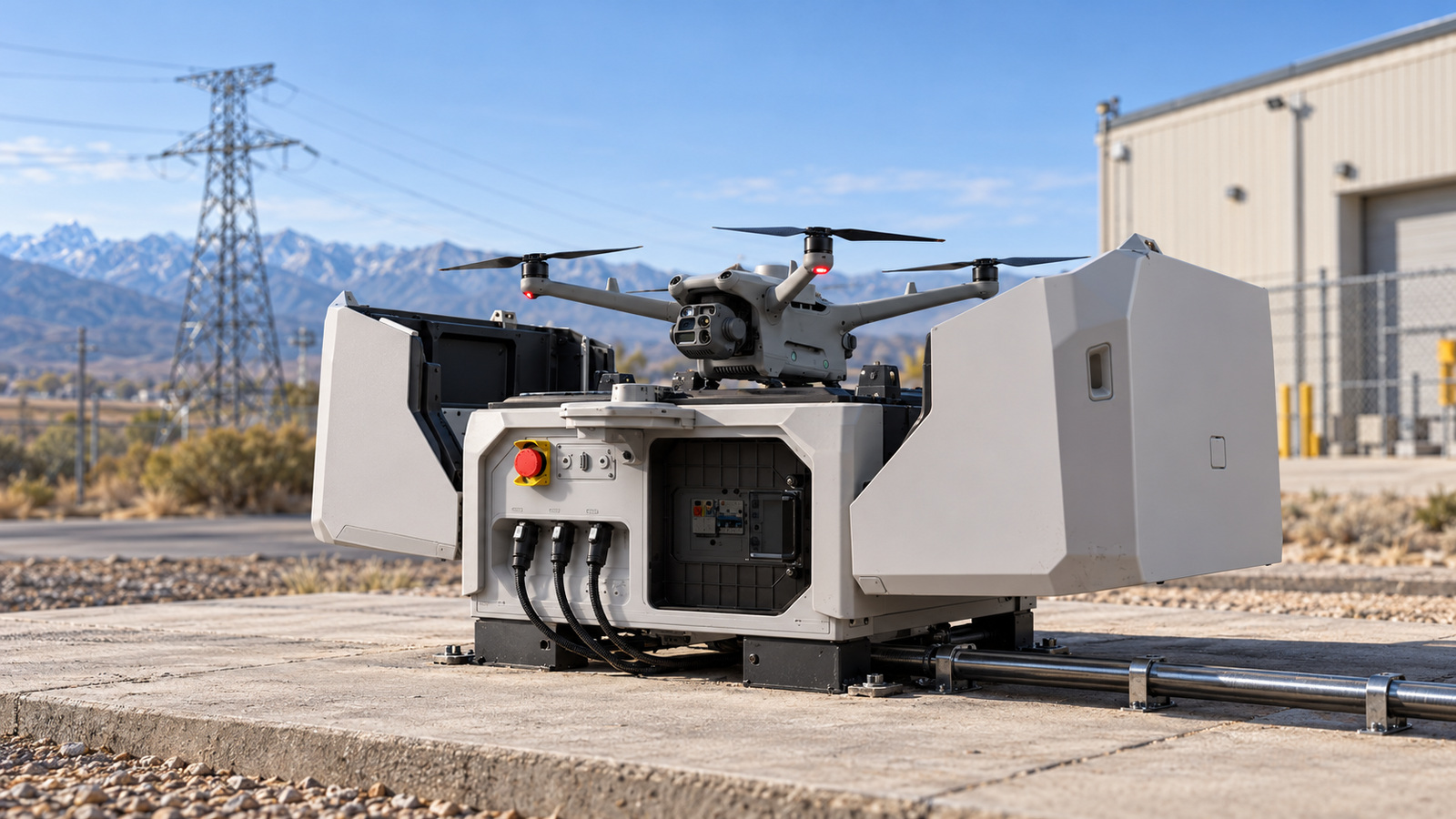
Choose standalone drone missions when the task benefits from a mobile on-site operating arrangement. Evaluate a docked workflow when recurring observations from a defined location justify fixed infrastructure, remote operation and an established response process. Compare the complete operating model rather than treating a dock as an automatic upgrade.
Warpify's drone security patrol and aerial inspection solutions can be scoped around different missions and delivery arrangements. The aircraft, payload, launch method, site integration, commissioning and support need to fit the observation the customer actually requires.
Start with mission repetition and location
List the tasks, where they happen, how often they are needed and what triggers them. Distinguish an occasional inspection visit from repeated observations around one site. Include the time when the result is useful, not just the desired flight frequency.
A standalone arrangement may be worth evaluating when equipment and an authorized operator need to move between tasks or locations. A docked arrangement may be worth evaluating where a repeatable operating area, launch location and supporting infrastructure can be established.
These are selection questions, not a universal cost ranking. A changing site or an occasional requirement can alter the value of fixed equipment; a recurring task can still require local work and authorized flight oversight.
Map the standalone workflow
Record transport, site access, preparation, checks, mission authorization, flight, data review, battery handling and packing away. Name the person responsible for each step and the resources the site must provide.
Include setup variation between locations. Different access, operating areas or permission conditions can change how a visit is organized. Record which information the operator needs before arrival and who confirms that it is current.
Assess the output handoff. If the aircraft gathers imagery for an asset reviewer or security team, include file association, review and escalation in the scope. A completed flight does not establish that the intended user received useful evidence.
Map the docked workflow beyond launch and recharge
Review mounting, access, power, communications, launch clearance and service arrangements. Identify who checks site changes, equipment readiness, mission conditions and the status of an interrupted task.
DJI's Dock 3 support documentation addresses the supported aircraft, site evaluation and system operation. Use the selected manufacturer's current documentation for the actual configuration. Do not transfer one dock's interfaces or operating envelope to another system.
Name the on-site response when equipment needs inspection, retrieval, cleaning or service. Remote access can change where supervision occurs, but the installation remains a physical asset with local access and maintenance requirements.
Keep authority separate from automation
For either workflow, identify the accountable flight operator and the applicable aviation requirements. A recurring schedule, an automated mission function or a dock enclosure does not create permission for the proposed operation.
The FAA waiver guidance is one U.S. reference for operations that cannot comply with specified Part 107 requirements. Use the relevant local authority and operator review for the actual site and mission; do not generalize a product demonstration into an operating approval.
Make launch, cancellation, takeover and incident responsibilities explicit. Include the control room or asset reviewer without confusing their observation decisions with the flight operator's authority.
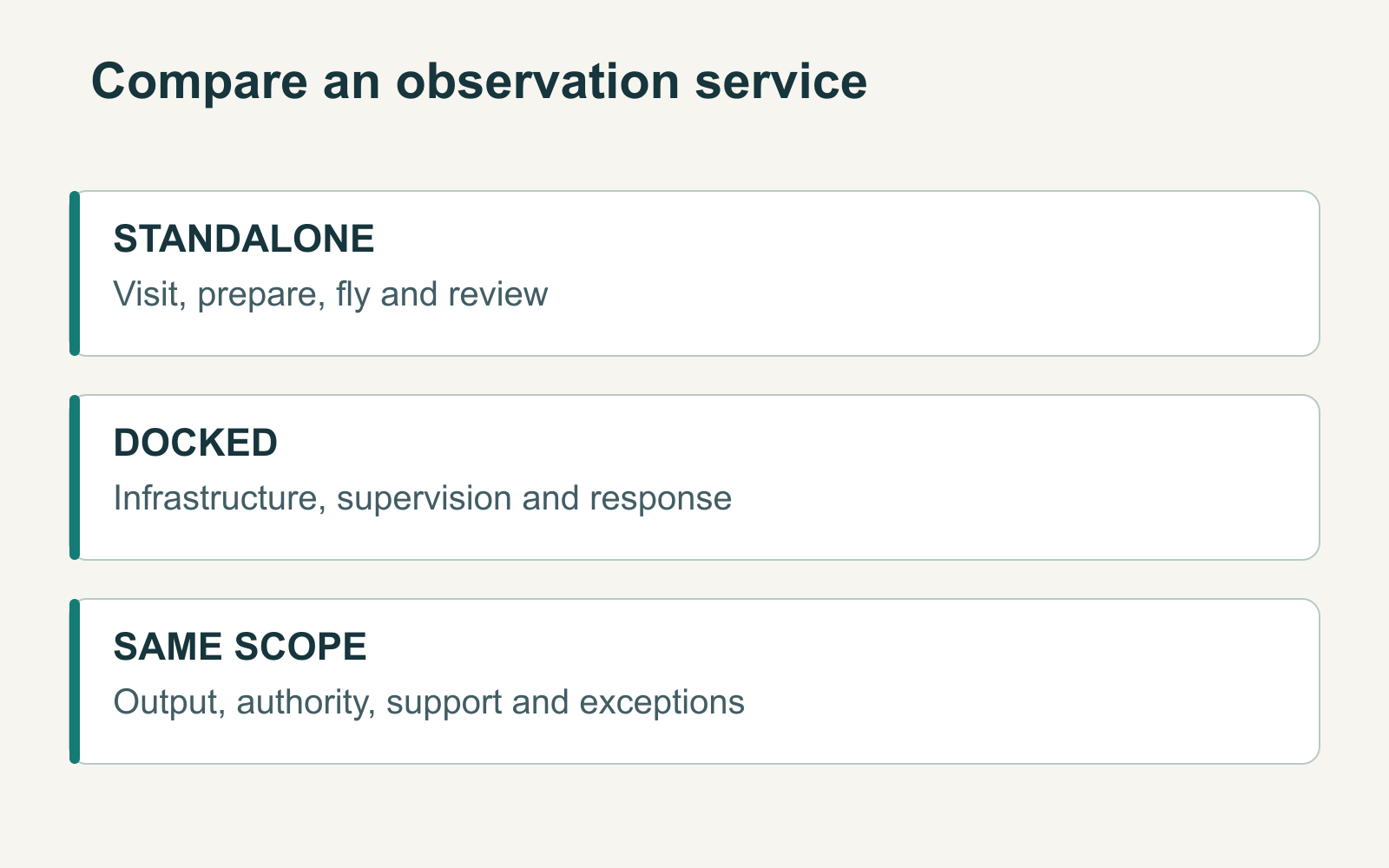
Compare the same observation service
Define a common boundary before reviewing proposals. Use the same work area, mission triggers, output-quality requirement, useful response window, operating conditions, data handling and support period.
For standalone work, include visits, mobilization, preparation and the actual staffing arrangement. For docked work, include installation, infrastructure, supervision, communications, service access and local exception response. Retain the work that both options require rather than crediting one method with its removal without evidence.
Use the commercial robot TCO method to normalize inclusions and the deployment responsibility guide to identify who performs them. Avoid a comparison between a complete service quote and a hardware-only price.
Pilot the operating model you intend to use
Choose a real observation question and test the proposed authorization, mission, evidence review, response and closure sequence. Record interventions, incomplete missions and the resources needed to recover from an exception.
For a docked proposal, test the infrastructure and local response assumptions as part of the pilot. For standalone work, test mobilization and the actual visit workflow. Keep the pilot acceptance decision tied to the intended operating model.
Request a site workflow assessment with the mission list, locations, operating frequency, current response process and known permissions. That gives a solution team a basis for comparing the two workflows on useful accepted observations.

Iven Wang
Iven Wang is the Co-Founder of Warpify Robotics, specializing in the commercialization and deployment of robotic solutions. With a background in electrical engineering and product management, he works with manufacturers, integrators, and enterprise clients across industrial inspection, security, logistics, and Robotics-as-a-Service.
Subscribe to our newsletter today
Get practical robotics deployment insights, case studies, and planning guidance from Warpify Robotics.