Substation Robot Routes: Set Approved Observation Positions and Exclusions
Plan substation robot observation positions, approved travel paths, exclusions, mission holds and recovery before commissioning a route.
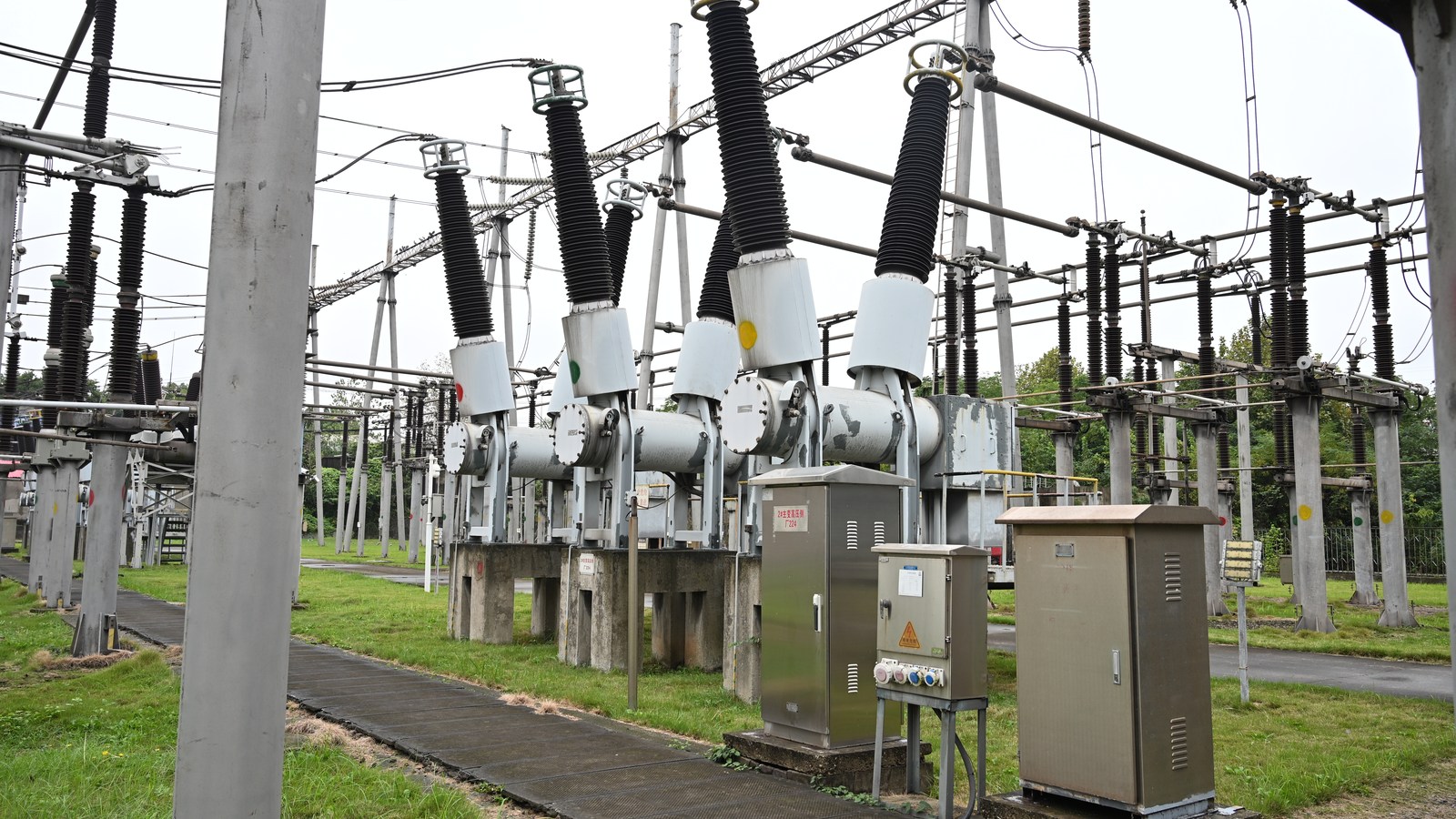
Design a substation robot route around the observations the electrical team can approve. Give each inspection target an asset identifier, a reachable position on an authorized path and a camera view that answers a specific question. Then define when the route is unavailable and who takes over if the robot stops. A route map, a readable image and authorization to operate are three separate pieces of evidence.
Ask for a view from the lane
Start with the equipment and the decision. An inspector may need a recognizable view of a transformer cooling bank, a local indicator or the exterior of a cabinet. Those tasks can require different camera height, angle, focus or zoom. Walk the candidate lane with the responsible site team and test the view from the proposed observation position. If the chosen target cannot be captured from that position, try another authorized position, change the optics or assign that check to a person under the site procedure.
The electrical authority sets boundaries and restrictions for the site. In the U.S., OSHA’s electric-power rules include minimum approach distances for qualified employees and specific provisions for substations. The site must determine which rules and operating controls apply to the robot, its payload and any recovery personnel. Record the site’s approved boundary, along with the assumptions needed to enforce it. OSHA electric power generation, transmission and distribution rules
Review the position, travel path and recovery together
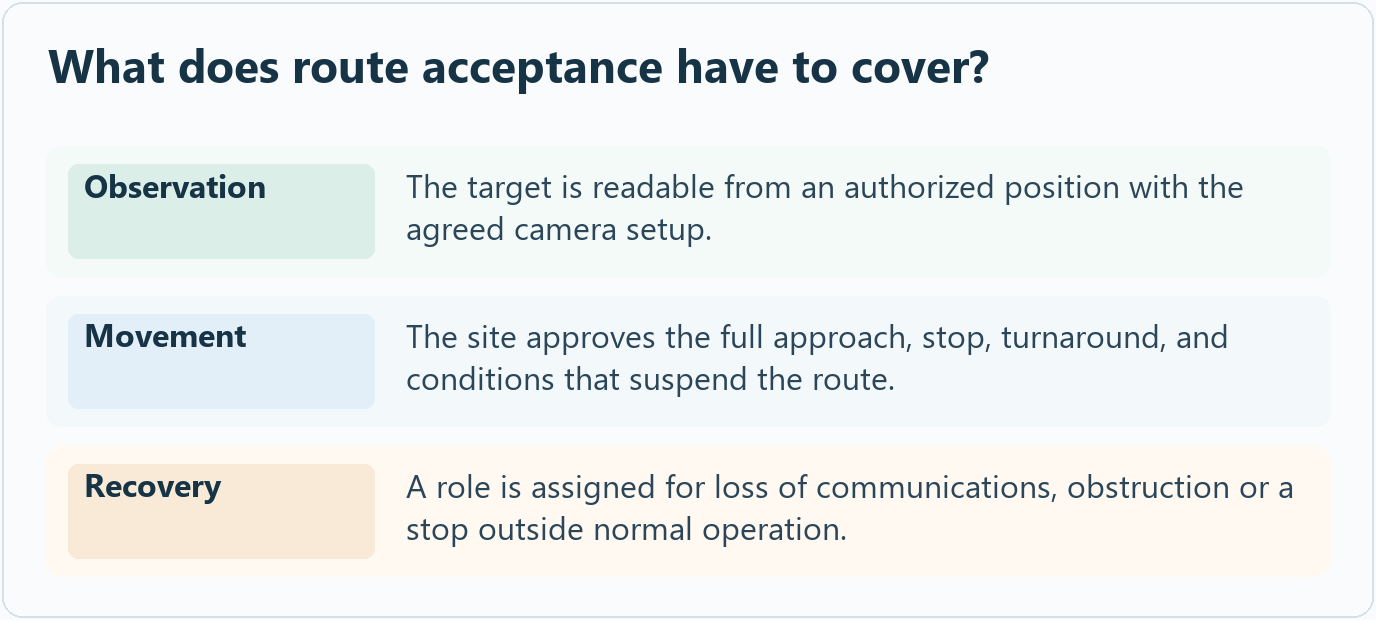
Can the team recognize the target?
- What to record. Asset, camera direction, sample frame, and what counts as a readable capture.
- What to do when the condition changes. Have the reviewer reject an ambiguous image. Reassign an obstructed or unreadable view.
Is the stop authorized?
- What to record. Site-approved position, allowed direction of approach, restrictions and payload configuration.
- What to do when the condition changes. Hold the point if its access conditions change.
Is the whole approach usable?
- What to record. Approved travel path, turns, permitted stop area and alternatives already authorized by the site.
- What to do when the condition changes. Stop the mission or use the authorized alternative when the route is blocked.
Can the robot stop and be recovered?
- What to record. Expected behavior after loss of communication, obstruction or low charge. Include who authorizes recovery.
- What to do when the condition changes. Assign the event to the designated operator and use the site-approved recovery procedure.
Is the yard available for this mission?
- What to record. Operational holds, affected zones, release authority and revision of the route map.
- What to do when the condition changes. Pause the affected route and wait for clearance under the site procedure.
Test these conditions before routine use. Adapt test categories from NIST’s response-robot program, including maneuvering, sensing and communications, to the actual mission. Keep an observation test for readability separate from a navigation test. Retest affected stops when the route or sensing setup changes. A published Thailand high-voltage substation pilot reported uneven readings or failures on equipment the system had not been trained to recognize. Include unfamiliar equipment and an unreadable target in the local review. NIST robot test methods · CIGRE substation pilot
Mark off what the diagram can prove
The 220 kV substation route illustration shows selected stops on a dock-to-dock loop. It lets readers see the relationship between the lane, an observation and the return journey. Keep the details that authorize travel in the site’s controlled route records. For example, an illustrative work order may require skipping a stop during temporary yard work. Record the skipped observation, hold the affected loop segment, and resume only under the assigned release procedure.
The power plant and substation inspection readiness guide covers the broader deployment decision. Use it alongside the industrial inspection workflow. If your team is ready to plan a facility inspection, bring one asset, the lane it can be viewed from, a sample capture and the role that can approve the route.

Iven Wang
Iven Wang is the Co-Founder of Warpify Robotics, specializing in the commercialization and deployment of robotic solutions. With a background in electrical engineering and product management, he works with manufacturers, integrators, and enterprise clients across industrial inspection, security, logistics, and Robotics-as-a-Service.
Subscribe to our newsletter today
Get practical robotics deployment insights, case studies, and planning guidance from Warpify Robotics.