Underwater ROV Inspection Payloads: Cameras, Sonar and Useful Evidence
Choose underwater inspection payloads around the asset question, visibility, positioning, coverage and evidence your reviewer needs to accept.
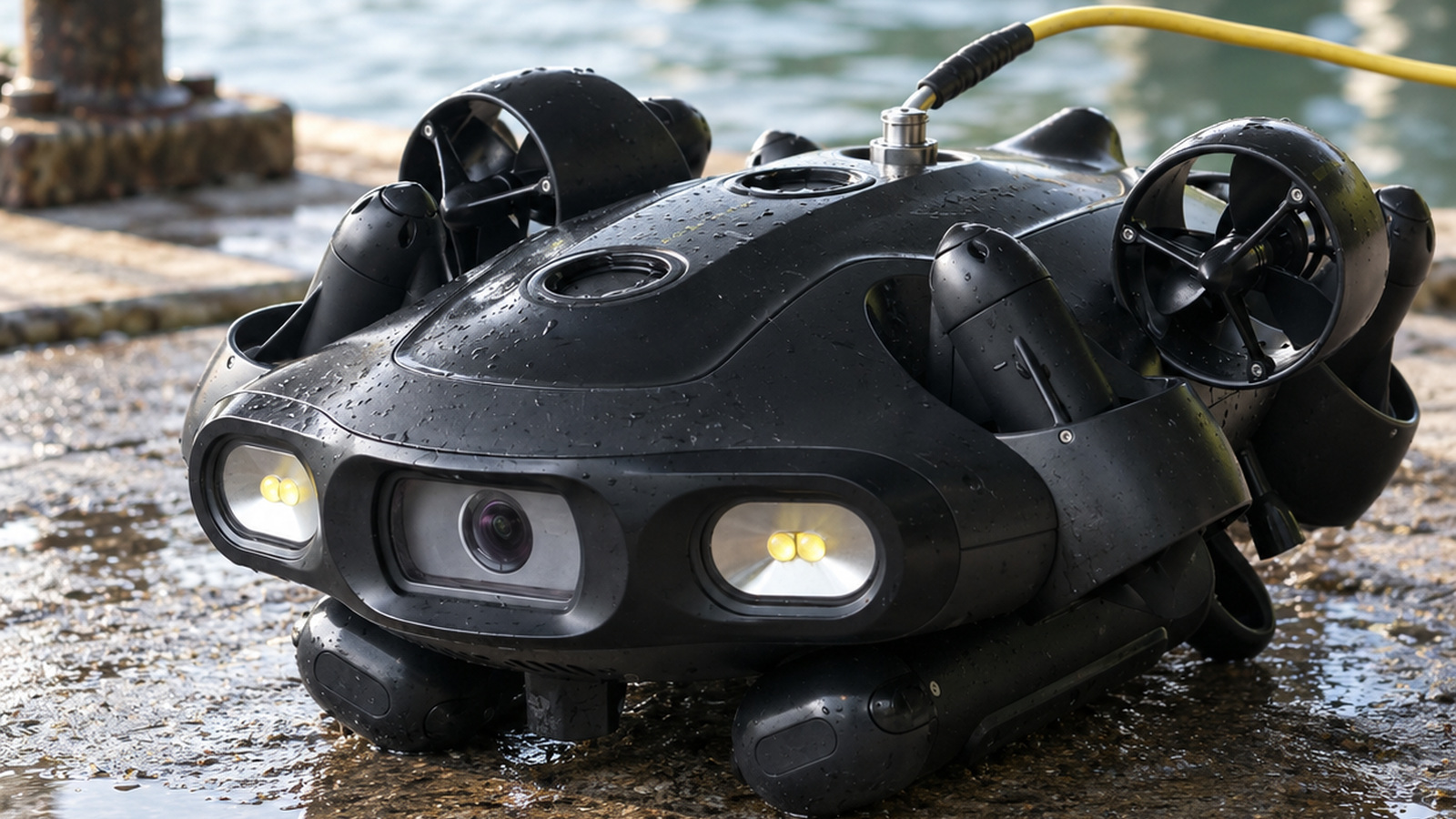
Choose an underwater ROV payload by the observation or measurement the asset team needs, then work backward to the sensor, positioning, platform and review method. A larger equipment list does not automatically produce better inspection evidence. The useful question is whether the configured system can obtain interpretable, traceable output under the mission's conditions.
A remotely operated vehicle, or ROV, gives the team a way to direct underwater observation from a topside position. NOAA describes the tether as carrying commands and returning data including live video. Payload selection determines what that connection allows the asset reviewer to see or evaluate.
Start with the inspection question
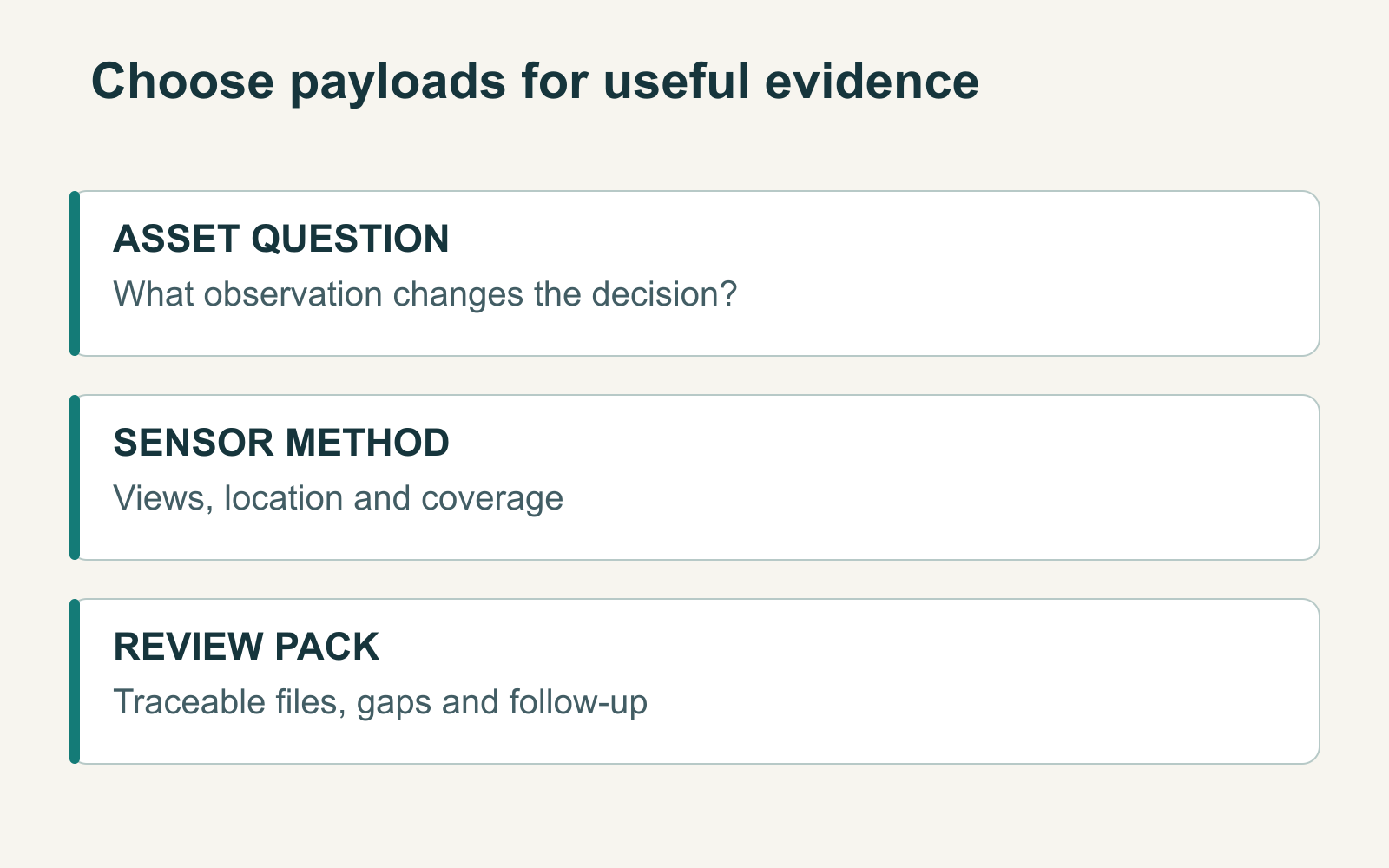
Describe the asset, the suspected condition and the decision the inspection should inform. Separate locating an object, documenting visible condition, measuring a dimension and determining whether a defect needs specialist investigation. They require different evidence.
Ask the reviewer to define an acceptable output before choosing accessories. A video with attractive imagery may still be unusable if the asset, observation point or relevant detail cannot be identified. Conversely, a simple set of controlled views can be more useful than a large collection with unclear coverage.
The mission scope behind Warpify's surface and underwater robotics solutions connects those output requirements to platform and payload selection, deployment, training and support. Keep the required evidence and the exact configuration together in the proposal.
Specify what the camera must show
Define the required views, approximate observation relationship, coverage sequence and how the subject will be lit. Ask how the team will review detail, recognize an obscured area and record a view that could not be obtained.
Camera capability should be assessed with the surrounding conditions and platform control. A headline video resolution does not establish the detail visible at an asset in the proposed water conditions. Request representative output for the question rather than selecting solely from the image specification.
Record whether a still, video segment or both are required. Include a useful asset reference, mission identifier and observation notes so another person can understand the record after the operator leaves the site.
Add sonar for a defined purpose
State what the sonar is expected to contribute: navigation support, locating a target or an observation needed by the inspection. Confirm the actual sensor type, mounting, field of view and output format with the provider.
QYSEA's FIFISH E-GO information lists an equipment ecosystem with configurable accessories. Treat an optional accessory as an option to verify, not standard equipment on every ROV. The physical mount, power, data path and compatibility belong in the selected configuration.
Do not treat a sonar contact as a complete material diagnosis. Define the interpretation needed and the follow-up when the output does not establish the condition. A separate measurement or non-destructive testing requirement needs its own supported instrument, method and competent review.
Match positioning and coverage to the deliverable
Ask how an observation will be associated with the asset. Depending on the task, the reviewer may need a repeatable view of a named component, a route record, a location reference or a defined survey coordinate requirement. These are different deliverables.
Do not substitute the position of the topside equipment for the underwater sensor's location. Confirm how location is established and recorded for the selected mission. Where the location is uncertain, carry that uncertainty into the evidence review rather than hiding it in a tidy file name.
Plan coverage before launch. Identify the views that must be obtained, the areas likely to be obscured and the order that supports interpretation. Record incomplete coverage explicitly so an unobserved area does not look like an inspected area with no finding.
Test the payload as a complete system
Before a wider mission, check the configured platform, sensors, tether, recording and review workflow together. Confirm that the intended reviewer can open and interpret the exported files. Test asset identifiers, timestamps, retained notes and any required data processing.
Ask what happens when visibility, platform control or communications prevent a useful observation. Define the escalation and the point where another method is required. Keep the selected operating instructions and qualified mission planning responsible for actual operation.
Build an evidence pack the asset team can use
Include the mission scope, equipment configuration, sensor settings that affect interpretation, coverage record, observations, data files and known gaps. Separate what was seen from what was inferred and what still requires investigation.
Use the pilot acceptance method to decide which outputs a trial must demonstrate. The purpose is to establish usefulness for the asset decision, not to collect the maximum number of accessories or hours of video.
Request a marine workflow assessment with the inspection question, asset drawings, water conditions and the format your reviewer needs. That makes payload selection a testable mission decision.

Iven Wang
Iven Wang is the Co-Founder of Warpify Robotics, specializing in the commercialization and deployment of robotic solutions. With a background in electrical engineering and product management, he works with manufacturers, integrators, and enterprise clients across industrial inspection, security, logistics, and Robotics-as-a-Service.
Subscribe to our newsletter today
Get practical robotics deployment insights, case studies, and planning guidance from Warpify Robotics.