Commercial Cooking Robot Workflow Fit: Menu, Volume and Human Roles
Assess cooking robot fit through menu processes, peak demand, full station cycles, chef and operator roles, cleaning and service handoffs.
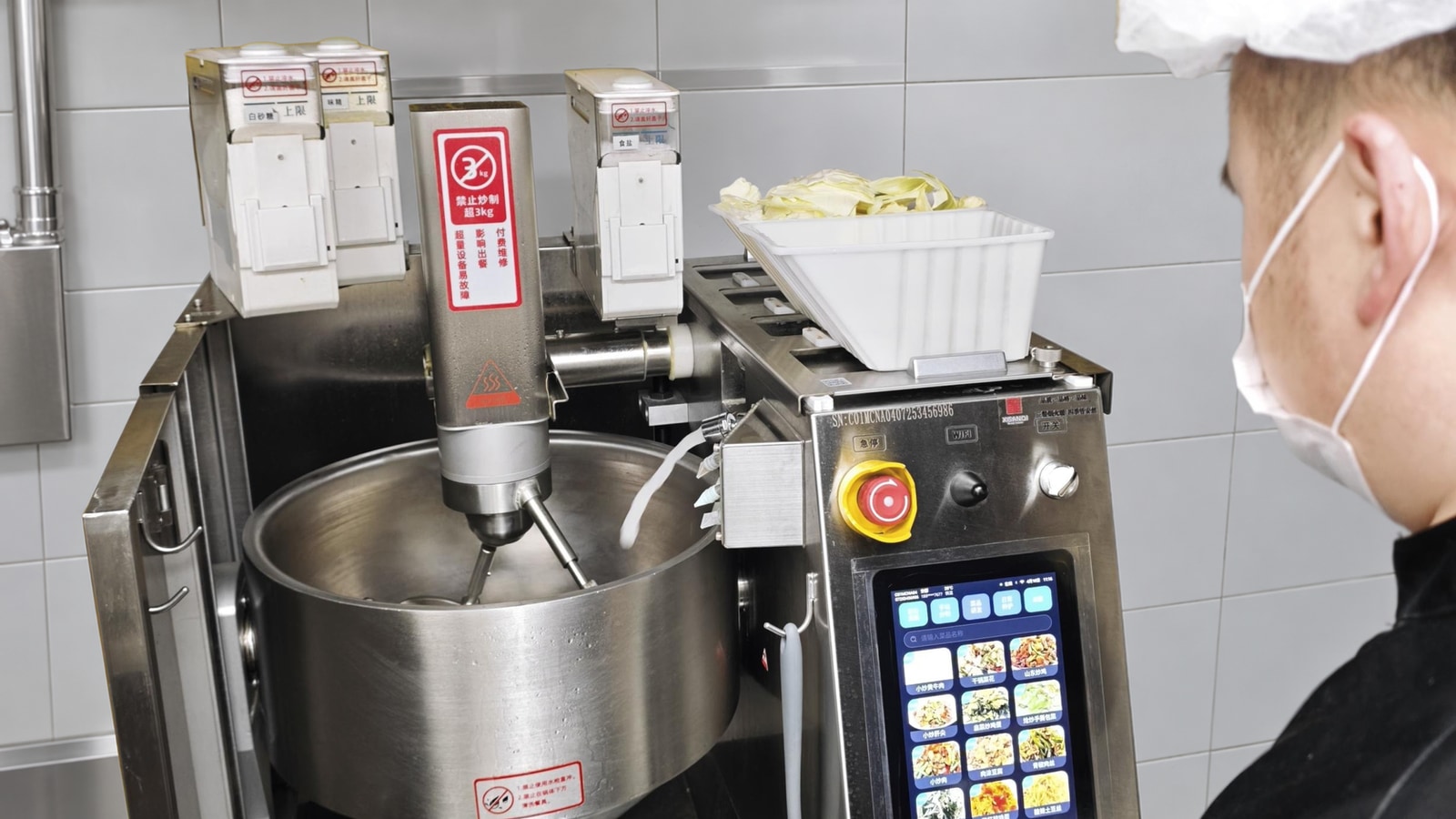
A commercial cooking robot fits a kitchen when its supported cooking process matches a repeatable part of the menu and the surrounding prep, service and cleaning work can support it. The robot’s advertised recipe library is not a capacity plan. The useful decision is which dishes and service periods the proposed station can handle while maintaining the kitchen’s quality and operating controls.
Begin with the scope of commercial cooking robotics. The Singapore wok-cooking case provides application context; the current kitchen still needs its own recipe, staffing and service assessment.
Screen dishes by process, ingredients and variation
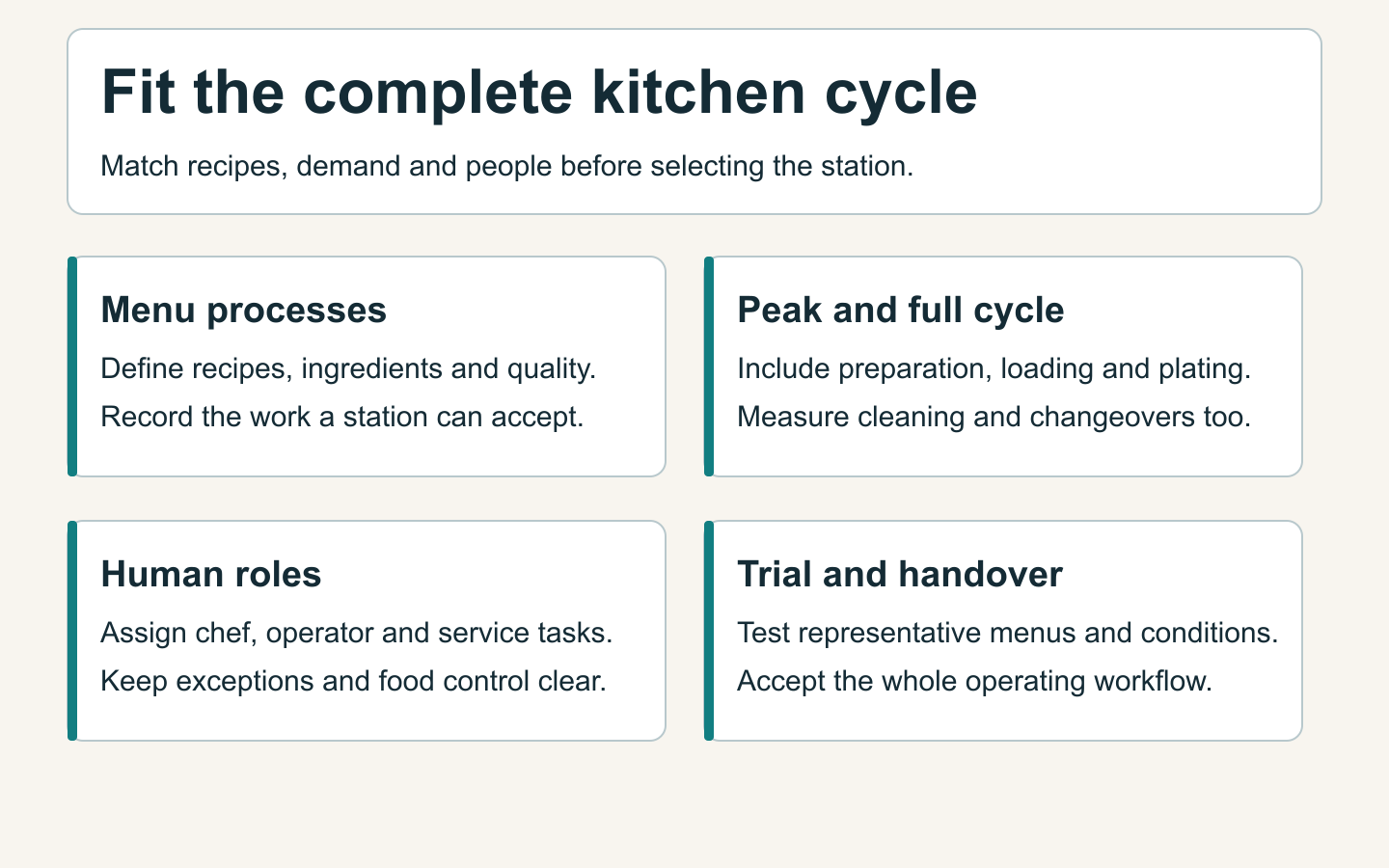
List the dishes considered for the station. Record ingredient preparation, portion size, sequence, cooking method, finish requirements, quality checks and allowed variation. Identify dishes with frequent customization, delicate manual finishing or a process outside the selected equipment’s documented capabilities.
The MSS2K product information describes a wok-cooking system with controlled cooking and seasoning functions. That supports evaluating a specific cooking process; it does not establish that every dish in a mixed menu can be automated successfully.
Choose representative recipes for testing and name the chef or kitchen owner who decides whether the result is acceptable. Keep recipe ownership and changes under the kitchen’s control.
Follow one order through the whole station
Map ingredient storage, preparation, weighing, loading, cooking, unloading, finishing, plating and handoff. Include where staff stand, how ingredients reach the station and where completed food waits. The cycle begins before the machine starts and ends after the next service stage can receive the dish.
Record who replenishes seasoning, verifies ingredient availability, selects the correct recipe, checks the result and handles an exception. If a person must remain beside the station, include that work in the proposed staffing pattern.
Inspect the physical arrangement for clear access, cleaning and safe movement. A compact machine can still create a bottleneck if prep or finished-food space is inadequate.
Model peak demand and menu mix
Use order records for the intended service periods. Identify the arrival pattern and the mix of dishes competing for the station. Separate average demand from short peaks and observe whether upstream prep can supply consistent ingredients at that rate.
Measure a full cycle for each accepted recipe, including loading, unloading and necessary cleaning or changeover. Calculate usable capacity from the actual mix and the complete process. Do not assume the shortest advertised cooking time applies to every order.
Check the downstream handoff. Faster cooking provides limited benefit when finishing, plating or order collection already constrains service. Define what the kitchen does when the station is unavailable or demand exceeds its accepted capacity.
Keep chefs and operators in defined roles
The chef sets recipe intent, acceptable quality and menu changes. Operators prepare and load ingredients, select the authorized program, check output and perform the documented cleaning and replenishment tasks. Maintenance responsibilities belong to trained people with an appropriate support route.
Define who may edit a cooking program and how a revised recipe is approved. Protect against selecting the wrong recipe, loading an incorrect portion or using unsuitable ingredients. Record the verification step in ordinary language the shift team can follow.
Avoid assuming reduced manual cooking time means the kitchen can immediately remove a role. Assess the remaining prep, quality, service and cleaning work first.
Include cleaning, allergens and utilities in the fit decision
Use the selected model’s installation, operating and cleaning instructions, together with the kitchen’s applicable food safety procedures. Review utilities, ventilation, drainage, space and access with the responsible site team. Confirm the configuration offered rather than assuming every model has the same requirements.
Record how food-contact surfaces, dispensing lines and removable parts are cleaned and verified. Assess recipe changeovers and allergen cross-contact through the kitchen’s established controls. An automatic cooking program does not establish an automatic validated cleaning process.
Include the time needed to replenish, inspect and clean the station in service planning. Keep the fallback process usable during maintenance or a fault.
Run a recipe and workflow acceptance test
Test selected dishes using controlled ingredient preparation and the intended loading method. Have the kitchen owner assess taste, texture, temperature, consistency, portion and presentation using its approved method. Record rejected results and the changes made before retesting.
Run an approved service trial with a representative order mix. Observe queueing, staffing, exceptions, replenishment, changeovers and the final handoff. The pilot versus production guide helps keep recipe success separate from complete operating readiness.
The decision packet should list accepted recipes, measured complete cycles, operator roles, cleaning requirements, utilities, fallback procedures and open limitations. Request a cooking workflow assessment with the menu, peak order pattern, kitchen layout and current process so the proposed station can be evaluated against real service work.
Sources

Iven Wang
Iven Wang is the Co-Founder of Warpify Robotics, specializing in the commercialization and deployment of robotic solutions. With a background in electrical engineering and product management, he works with manufacturers, integrators, and enterprise clients across industrial inspection, security, logistics, and Robotics-as-a-Service.
Subscribe to our newsletter today
Get practical robotics deployment insights, case studies, and planning guidance from Warpify Robotics.