Drone Security Site Feasibility: Airspace, Permissions and Operating Boundaries
Assess drone security feasibility through authorized flight, useful observations, site conditions, communications and the human response workflow.
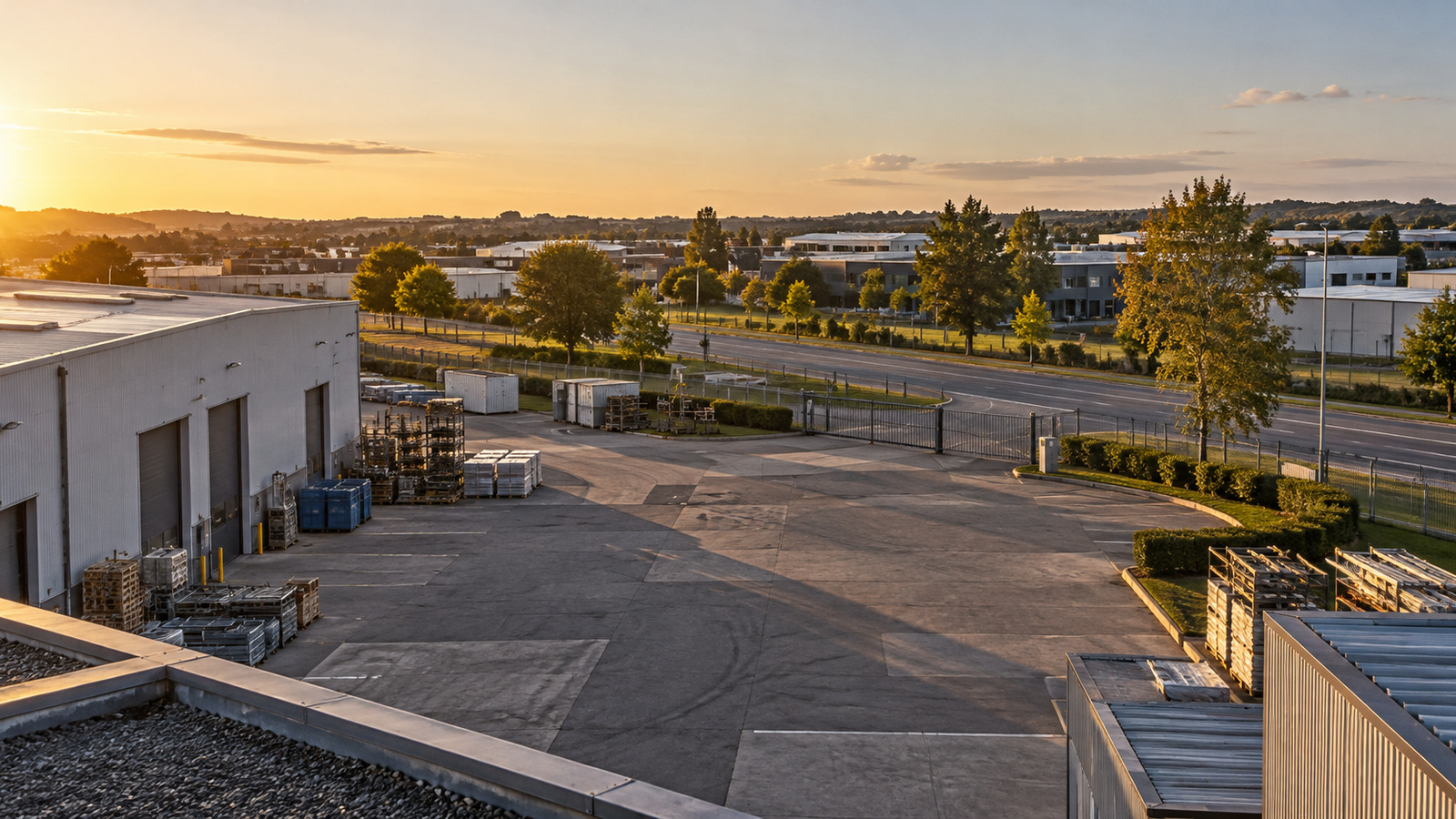
A security drone is feasible at a site when an authorized flight operation can obtain useful observations and the team can act on them. Aircraft capability is one part of that decision. Airspace, site access, neighboring activity, operating responsibilities, communications, weather and the response workflow belong in the same assessment.
Start with a defined security task: observing a fence section, reviewing an alarm location or checking a changing outdoor area. Warpify's drone security patrol and aerial inspection solution connects aircraft, payloads and mission planning with site integration, commissioning and support. The feasibility review determines the scope appropriate to this site.
Define the observation that changes a decision
Describe the information missing from the current workflow. Record where fixed cameras already provide an adequate view, where the view is obstructed and what an authorized aerial observation would add. Avoid treating every camera gap as a drone mission.
Name the person or control-room role that reviews the observation and decides the next action. An additional viewpoint is useful only if the image, location and timing support that decision. Clarify whether the mission is a scheduled patrol, a requested observation or an alarm-verification task.
Keep asset-condition inspection separate from security response. The same broad aircraft category can support both, but the viewing question, data output and acceptance criteria differ.
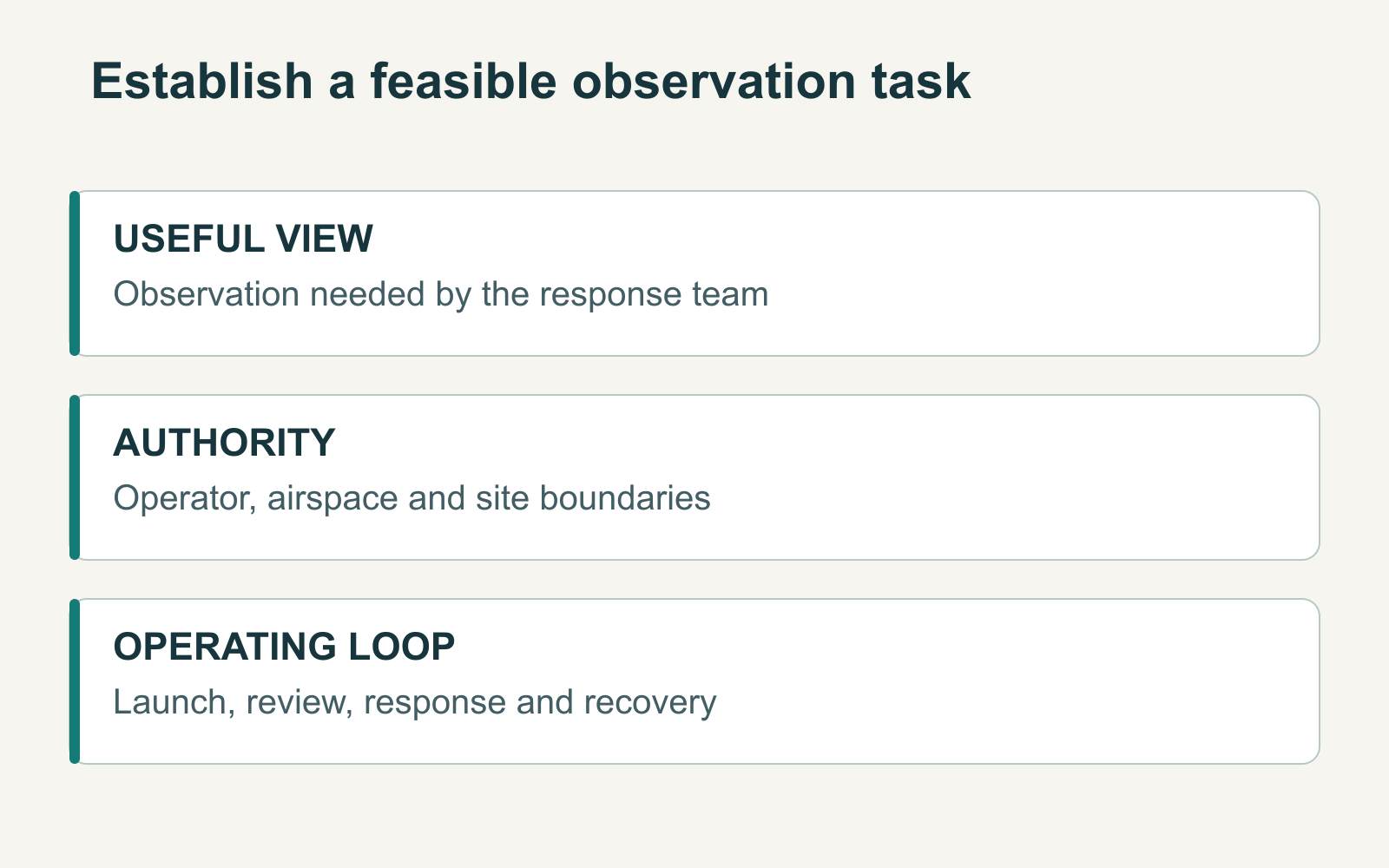
Establish authority for the actual operation
Record the country, applicable aviation authority, proposed operating area and intended method. Identify the accountable flight operator and ask that operator to establish the required permissions, pilot qualifications and operating conditions. Site ownership does not by itself establish airspace permission.
For a U.S. example, the FAA's Part 107 waiver guidance identifies operations requiring a waiver when the operation cannot comply with the listed rules. Its guidance includes visual-line-of-sight limitations. That is a jurisdiction-specific example, not permission for a remote or beyond-visual-line-of-sight mission elsewhere.
Separate the permission question from the hardware question. Installing a dock or enabling automated mission software does not establish that the planned flight operation is authorized.
Map the operating area and its changing boundaries
Mark the intended observation points, takeoff and recovery area, nearby roads, occupied spaces, neighboring property, obstacles and temporary work. Include the areas the camera should avoid and the conditions that require the mission to stop.
Check the site's change process. Construction, cranes, stored material and new structures can change a route that looked reasonable during the original survey. Decide who updates the mission information and who confirms that a changed site remains within the agreed scope.
A useful feasibility output is an annotated operating map with the uncertainties visible. Keep an unverified route as a proposal, not an operational instruction.
Review the launch site, connections and recovery
For a standalone operation, identify where the team prepares the aircraft, manages equipment and maintains the required operating access. For a docked operation, also review mounting, clear launch space, power, network availability, service access and the site's ability to respond when automation cannot complete a task.
Manufacturer documentation is configuration-specific. DJI's Dock 3 support information includes site-evaluation and operating guidance for its supported system. Use the current selected-system instructions rather than transferring another site's layout or limits.
Test communications at the proposed operating locations. Agree how the team recognizes interrupted video or mission status, who can stop or take over a task and what recovery resources remain available.
Define privacy and the evidence handoff
Record which areas may be viewed, what is recorded, who can access it and how retention is decided. Include nearby public and neighboring areas in the review. Restrict the mission to the observation the authorized task requires.
If video or alarms will connect to an existing control room, identify the supported interfaces and the people who own them. Test the full sequence: request, authorization, mission, observation, human review, response and closure. A successful video stream alone is not a completed security workflow.
Use feasibility to design the first pilot
Select one observation task with a clear baseline and a responsible reviewer. Agree the required viewing detail, location context, timeliness, operator intervention record and response handoff. Include an interrupted or incomplete mission in the review plan.
Use robot pilot acceptance to define evidence for the next decision, and the responsibility guide to make ownership explicit.
Request a site workflow assessment with the task, annotated site plan, current camera coverage, accountable operator and known permission constraints. Those inputs support a scoped proposal and avoid a dock purchase becoming the first step in an unresolved operating model.

Iven Wang
Iven Wang is the Co-Founder of Warpify Robotics, specializing in the commercialization and deployment of robotic solutions. With a background in electrical engineering and product management, he works with manufacturers, integrators, and enterprise clients across industrial inspection, security, logistics, and Robotics-as-a-Service.
Subscribe to our newsletter today
Get practical robotics deployment insights, case studies, and planning guidance from Warpify Robotics.