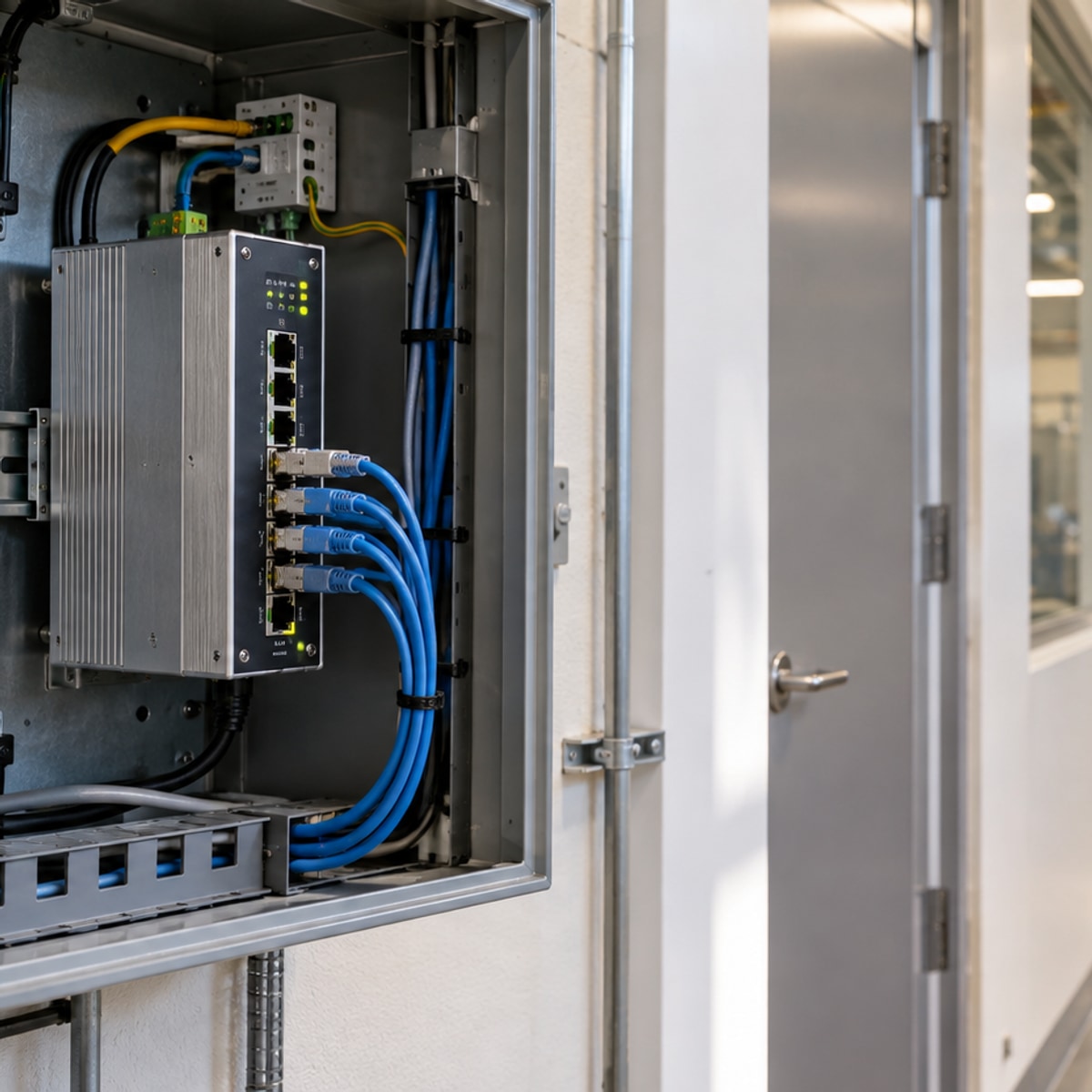
Robot Integration Architecture: APIs, Events and Facility Systems
Design robot integrations around task states, commands, events, facility boundaries and recovery so physical results and business records agree.
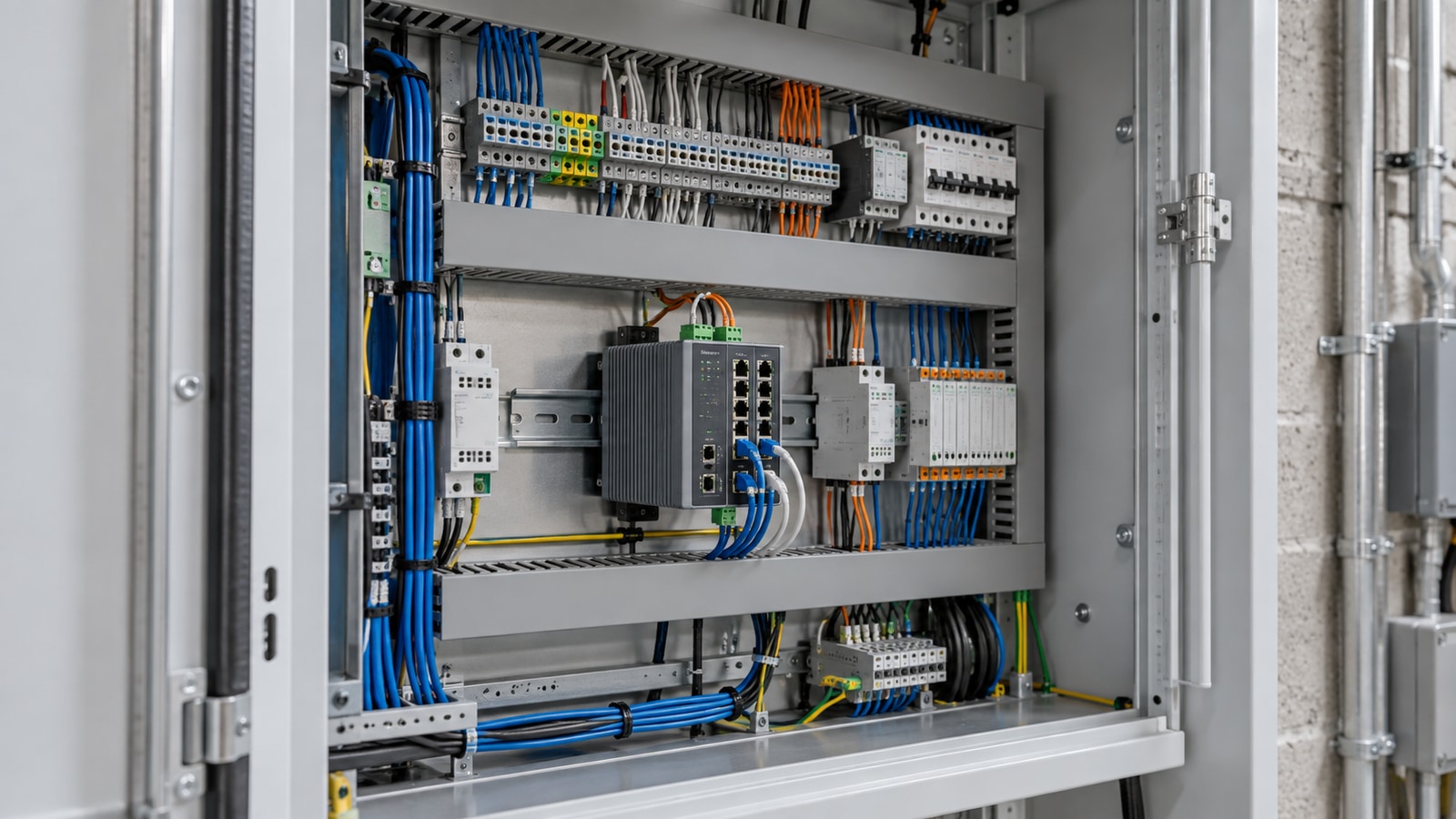
A robot integration architecture should describe how a business task becomes a robot mission, how external systems authorize actions, and how the site knows the task actually finished. The presence of an API does not answer those questions. Successful integration depends on state, responsibility and recovery across every handoff.
Begin with the unit of work in the workflow assessment method. Then map the business application, integration service, fleet manager, robot and facility interfaces. Warpify’s solution portfolio provides the application context; each deployment still needs its own verified interface boundary.
Draw the task path before selecting middleware
Identify the system that creates the request, the system that schedules the mission and the party that confirms receipt or completion. A transport request may end with an authorized recipient accepting a load. An inspection request may end with a usable observation stored against the correct asset. Arrival at a waypoint is not automatically business completion.
Record the identifiers connecting those steps: business request, mission, robot, destination, payload or asset, and event correlation. Define who is authoritative for each state. Otherwise a cancelled order in one system can remain an active robot mission in another.
Keep facility actions in their own boundary. A fleet manager may request door access, but the facility system should retain its approved authorization and local operating rules.
Treat commands and events differently
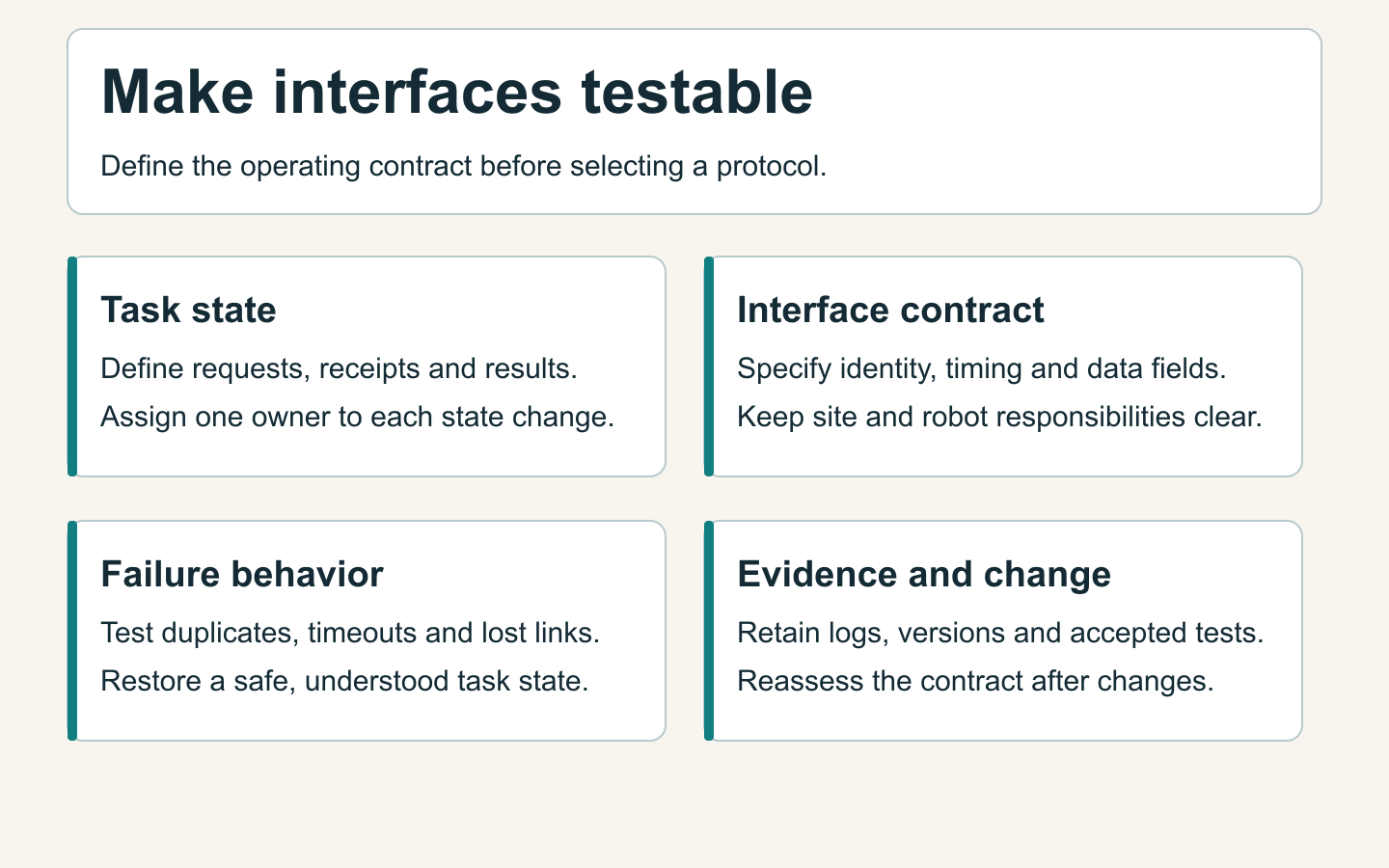
A command asks a system to do something. An event reports that something has happened. Document command validation, acceptance, rejection and completion separately. An HTTP success response may confirm request receipt without confirming physical execution.
CloudEvents defines a common structure for describing events across services. It can help standardize an event envelope, but it does not define the meaning of a delivery, the robot’s state machine or a safety response. Confirm the selected products support the intended format and semantics rather than assuming compatibility from a specification name.
For each event, record its meaning, producer, schema, timestamp, correlation identifiers and consumer behavior. Decide which events are notifications and which are required evidence of completion.
Design for duplicate, delayed and missing messages
Define a stable request identifier and a policy for repeated submissions. The receiving system should be able to distinguish an intentional new mission from a retry of the same request. Ask how long duplicate protection lasts and what happens after a restart.
Specify timeout behavior at each handoff. A missing acknowledgement leaves an uncertain state, not necessarily a failed task. Before retrying a physical action, reconcile the last known state with the system responsible for execution. Define who may resolve conflicting records and how that intervention is logged.
Plan for events arriving out of order. Consumers should use the agreed state model and version information rather than treating the latest received message as the latest physical truth.
Keep ordinary integrations outside local safety functions
Review network boundaries and access privileges with the site’s OT and information security teams. NIST’s OT guidance emphasizes that security decisions must consider physical operation, reliability and safety. A business integration should not bypass a local machine protection or substitute a cloud response for a required local control.
Document what happens when an elevator gateway, door controller or production interface becomes unavailable. Identify the authorized recovery action, waiting location and escalation owner. Confirm facility-system suppliers participate where their interface or operating policy changes.
Version the contract and test recovery
Maintain an interface contract covering authentication, permissions, schemas, limits, state meanings, errors, retries and supported versions. Name the owners who approve changes on both sides. Include certificate expiry, credential rotation and software upgrades in maintenance planning.
Test normal completion and representative exceptions: rejected requests, duplicate submissions, interrupted connectivity, unavailable destinations, cancelled missions and service restarts. Inspect the business application, gateway and fleet records together. A test passes when the physical result and all authoritative records agree, with uncertainty clearly escalated.
Make acceptance an operational handover
- Keep the architecture diagram, interface contract and configured versions together.
- Assign monitoring and incident response for each integration boundary.
- Record the safe recovery procedure and the person authorized to use it.
- Test backup restoration and reconciliation before unattended operation.
- Define a change process for routes, destinations, schemas and facility controls.
Use the pilot versus production acceptance guide to distinguish a successful demonstration from a supportable operating service. Request a workflow assessment with your task system, facility interfaces and completion requirements so integration effort is included in the deployment scope.
Sources

Iven Wang
Iven Wang is the Co-Founder of Warpify Robotics, specializing in the commercialization and deployment of robotic solutions. With a background in electrical engineering and product management, he works with manufacturers, integrators, and enterprise clients across industrial inspection, security, logistics, and Robotics-as-a-Service.
Subscribe to our newsletter today
Get practical robotics deployment insights, case studies, and planning guidance from Warpify Robotics.