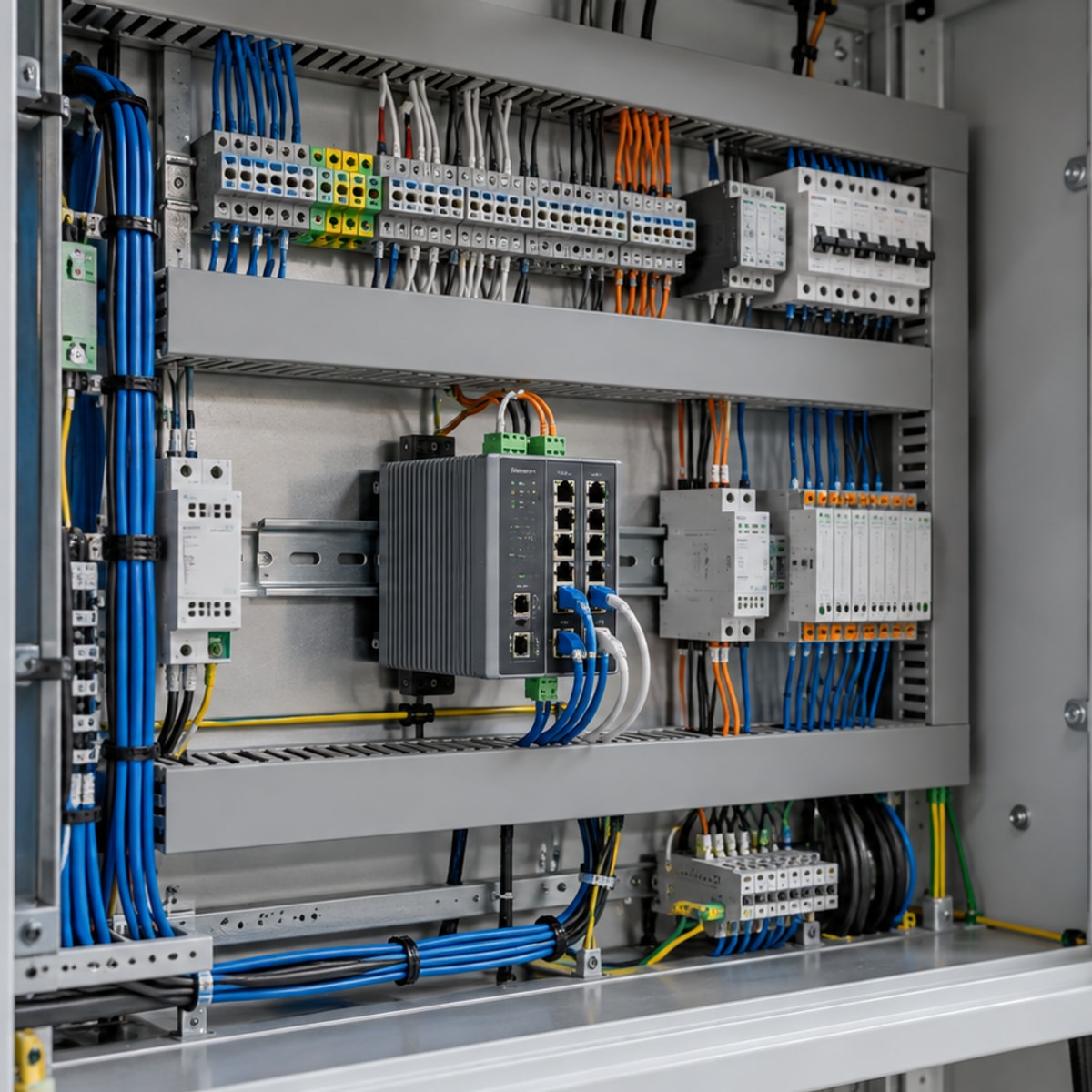
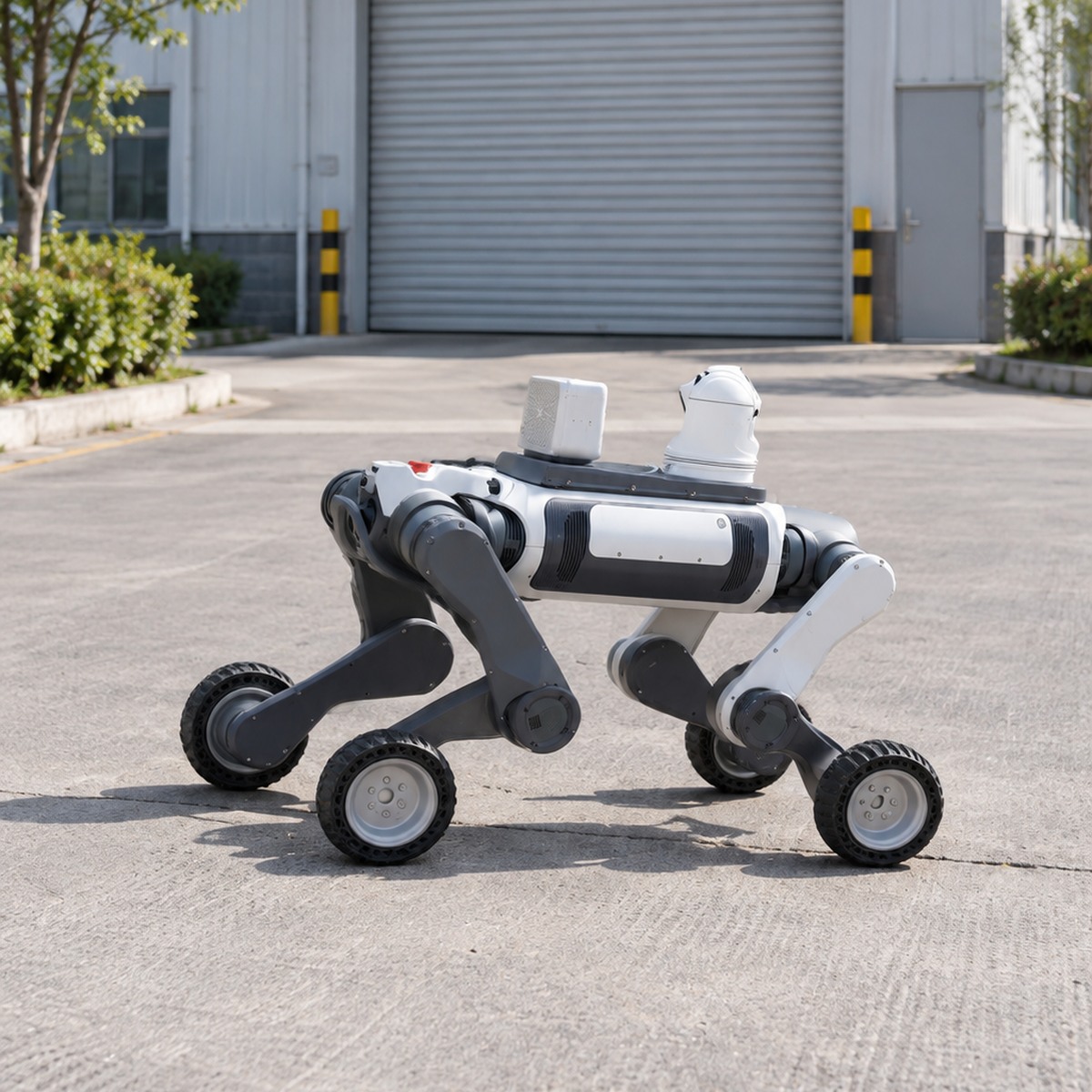
Robot Network and Cybersecurity Readiness Checklist
Plan robot connectivity, network access, remote support, updates and recovery with a checklist that links cybersecurity to the operating workflow.
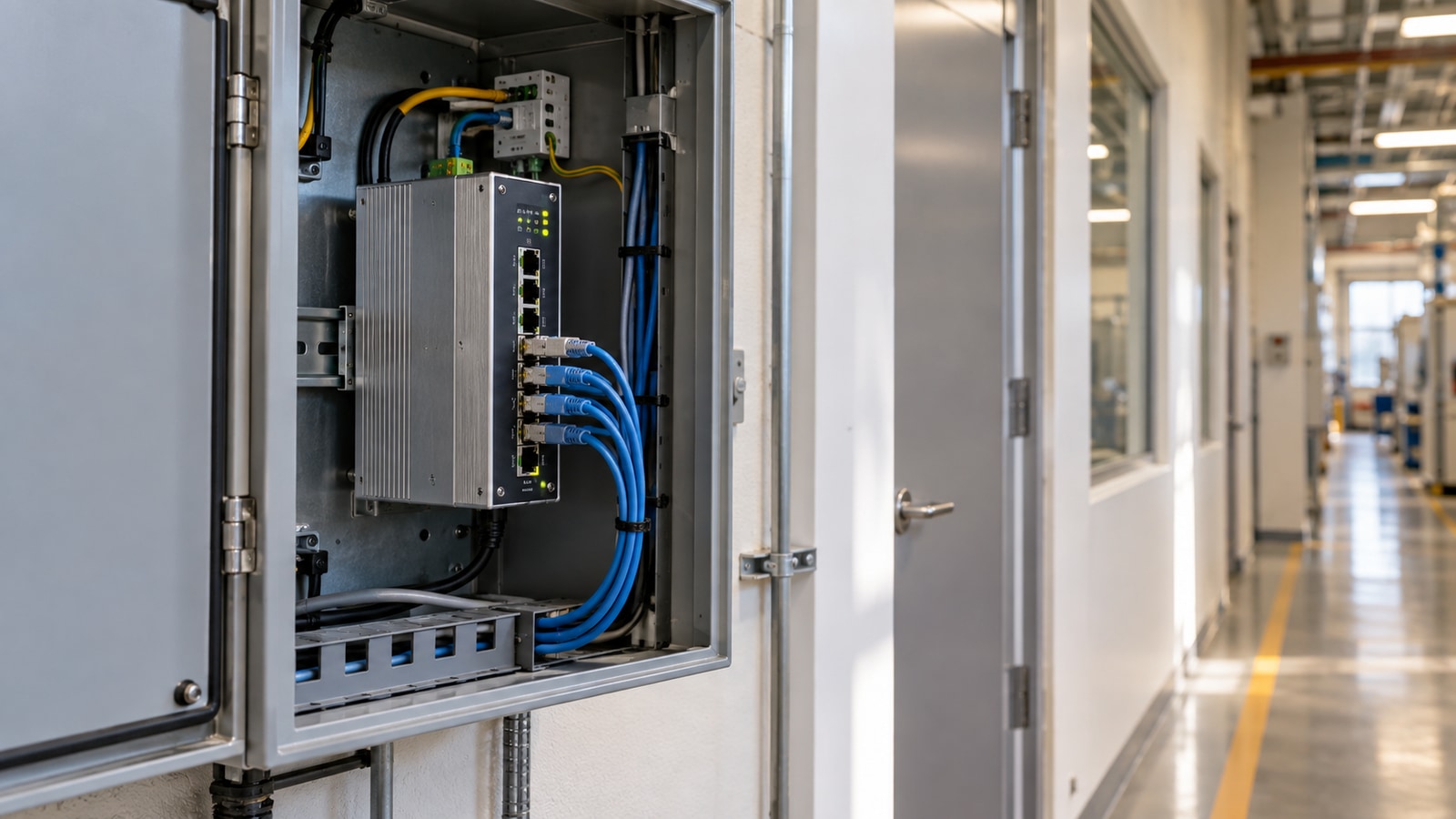
A robot network readiness review should establish which connections the application needs, who controls them, and how the workflow behaves when a connection fails. A strong Wi-Fi signal alone does not establish readiness. The robot, fleet software, facility interfaces, remote support and cloud services may each have different dependencies and access privileges.
Start with the operating task and its approved boundaries. Warpify’s robotics solutions span different workflows, so an inspection observation, a delivery task and a remote support session should not automatically receive the same network permissions. Use the workflow assessment method to define what the connected system must accomplish.
Create an asset and connection register
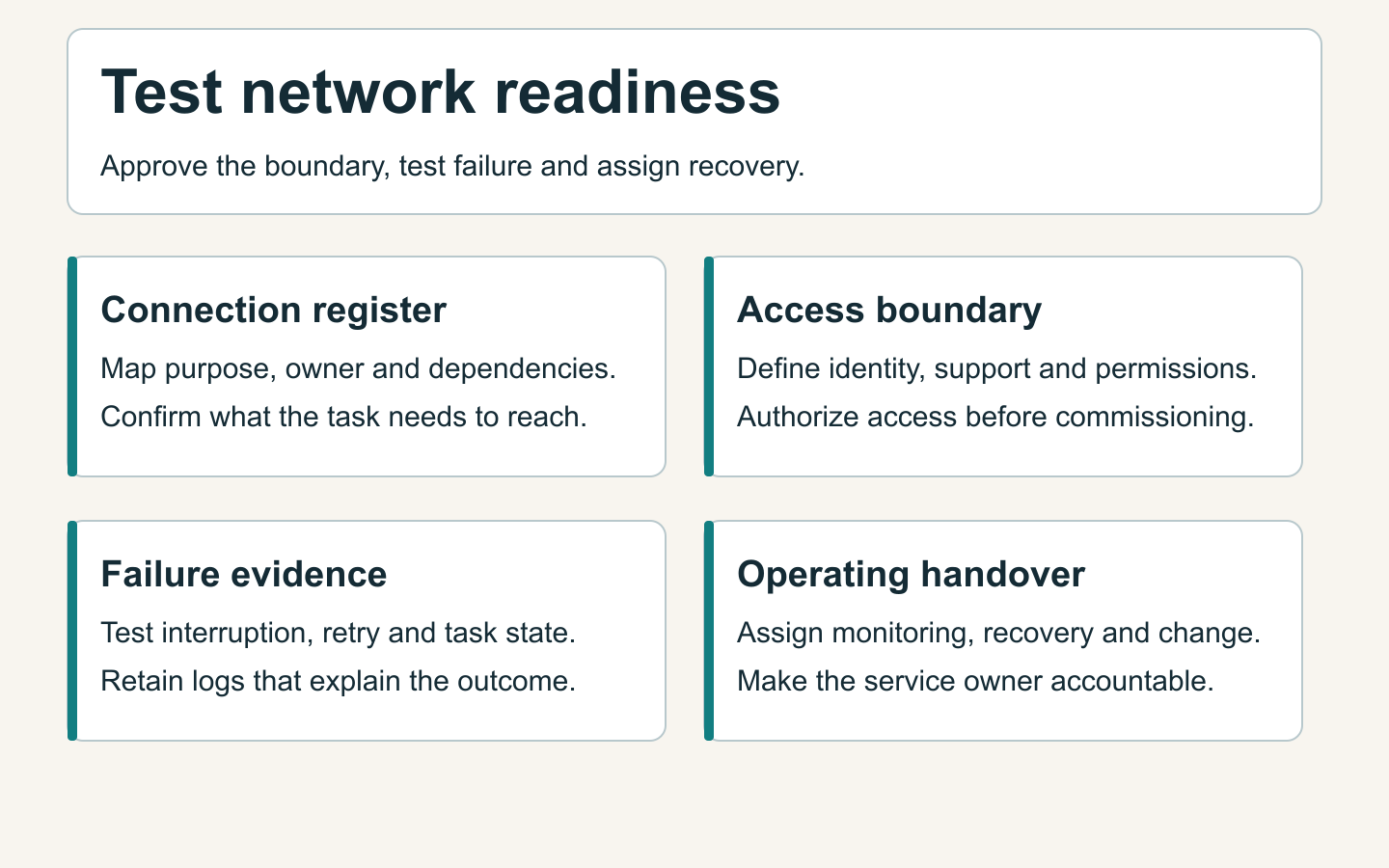
List the robot controller, fleet manager, docking equipment, facility gateways, operator devices and external services. For each component, record its owner, software version, update mechanism, authentication method and support contact. Include equipment supplied by the site as well as equipment included in the robot proposal.
Create a separate row for every required communication flow. Record the initiator, destination, protocol, port, purpose, direction, data category and behavior if unavailable. Distinguish control commands from telemetry, software downloads, video and maintenance access. Ask the supplier to identify which flows are essential for safe operation and which support optional features.
The output should let the site network team configure access intentionally. A diagram showing a robot connected to the internet is too broad to support that decision.
Define boundaries between robot, enterprise and facility networks
NIST’s OT security guidance addresses segmentation while accounting for operational performance and safety. Apply that principle to the proposed architecture: decide which systems may communicate, through which controlled interfaces, and with what permissions. A network label alone does not enforce those boundaries.
Avoid giving the fleet system unrestricted access to the facility network simply because it must exchange a task or status message. Review the gateway used for doors, elevators, access control or production equipment. Document the approved commands and the facility system that authorizes them. Local machine and facility protections must remain effective when upstream services fail.
Have the site team verify routing and firewall behavior against the connection register. Record the actual configuration and the person responsible for keeping it current.
Test the route, including transitions and recovery locations
Survey connectivity along operational routes, waiting positions, loading points and charging locations. Inspect transitions between access points and areas affected by doors, dense shelving, equipment or temporary congestion. Record the conditions of the test so a quiet building test is not mistaken for evidence during a busy shift.
Agree which application functions are expected to continue during a loss of connectivity. The supplier should demonstrate its documented behavior for interrupted commands, delayed acknowledgements and reconnection. Separate a robot’s local safe response from the fleet manager’s ability to reconstruct a task history.
An apparently successful reconnection is insufficient if the operator cannot tell whether the original task completed, failed or was duplicated.
Control remote support and privileged accounts
Give each support role an identified account and an approved scope. Define who may enable access, how long it remains available, what activity is recorded and how the site can revoke it. Include contractor changes and staff departures in the process.
Ask how credentials, certificates and service accounts are managed. Check whether a supplier’s support channel bypasses the site’s intended network boundary. Document unattended access separately from a supervised troubleshooting session. The operating team should know how to disconnect support access without creating an uncontrolled physical response.
Plan updates, logs and incident handling together
Record the supported software versions, update approval process, rollback method and availability of security fixes. Coordinate maintenance windows with operations. Restoring a configuration file does not necessarily restore task state, interface compatibility or credentials.
Choose logs that answer operational questions: who issued a command, whether it was accepted, what the system did, and who intervened. Synchronize the relevant clocks and restrict access to logs containing personal or sensitive site information. Set ownership for monitoring, investigation and supplier escalation before the pilot begins.
Use a readiness decision that operations can act on
- Ready for a bounded pilot: required connections are documented, access is approved, failure behavior is demonstrated and named owners can respond.
- Ready with conditions: a limited operating scope is acceptable, with explicit restrictions and an owner for each unresolved item.
- Hold: essential communication, privileged access, safe failure behavior or incident responsibility remains unknown.
Keep the accepted connection register, test records, configuration versions and outstanding conditions together. Recheck them when a route, interface, software version or remote support arrangement changes. Request a workflow assessment with the task, route plan and existing network constraints so deployment and IT teams can review the same scope.
Sources

Iven Wang
Iven Wang is the Co-Founder of Warpify Robotics, specializing in the commercialization and deployment of robotic solutions. With a background in electrical engineering and product management, he works with manufacturers, integrators, and enterprise clients across industrial inspection, security, logistics, and Robotics-as-a-Service.
Subscribe to our newsletter today
Get practical robotics deployment insights, case studies, and planning guidance from Warpify Robotics.