Solar Cleaning Robot Pilot and Acceptance Plan
Plan a solar cleaning robot pilot around cleaning quality, module condition, operator effort and recovery, with clear acceptance evidence.
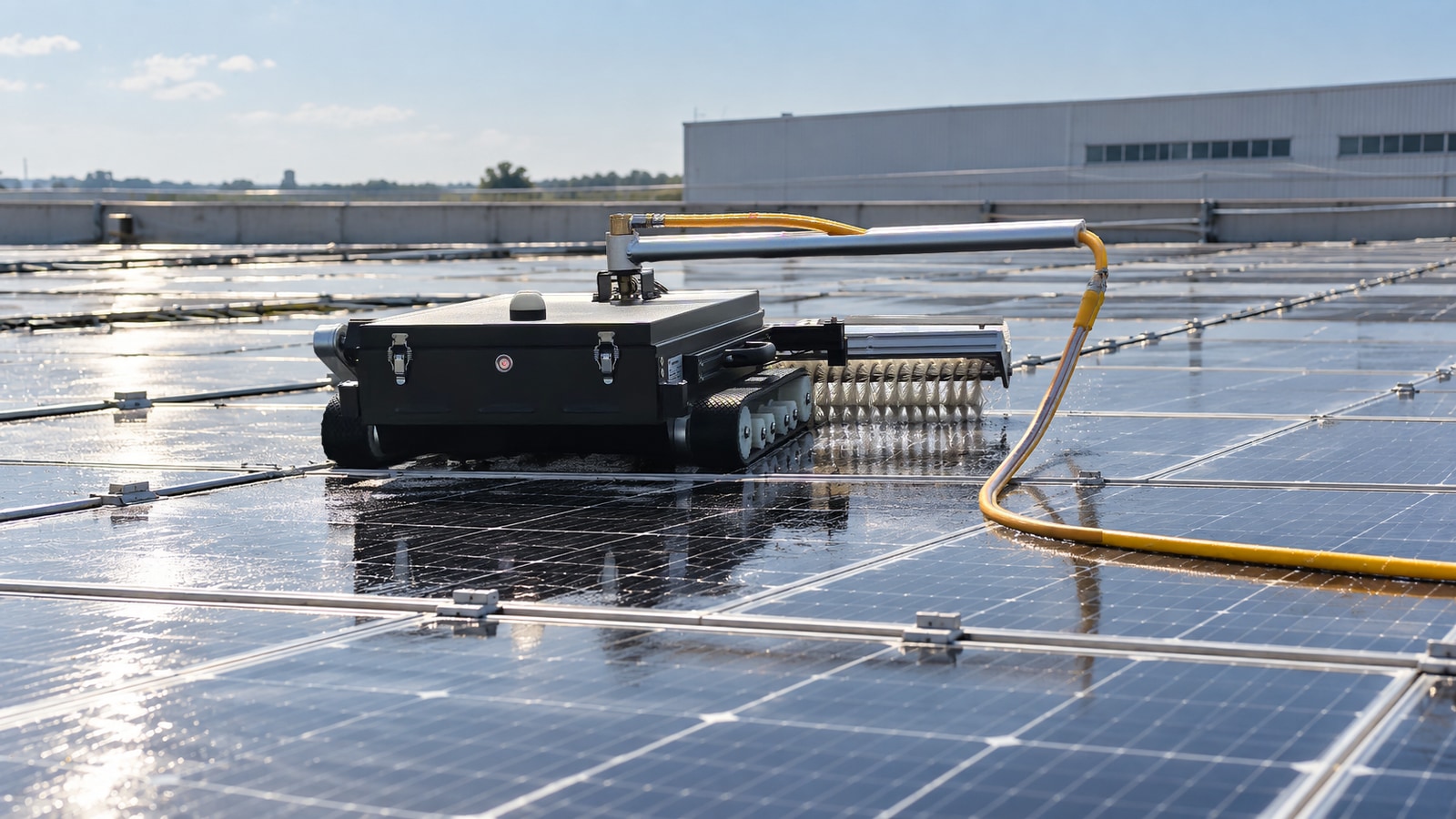
A solar cleaning robot pilot should establish whether the proposed cleaning process can deliver an acceptable result on defined array sections, within module limits and with a workable operator workload. A polished demonstration does not establish seasonal coverage, energy recovery or production readiness.
Start with the section map and operating boundaries for solar panel cleaning robotics. Agree the trial configuration, participating sections, permitted conditions and acceptance owners before placing equipment on the array. The pilot versus production guide explains why evidence from a bounded test must remain tied to its conditions.
Write the acceptance question for each outcome
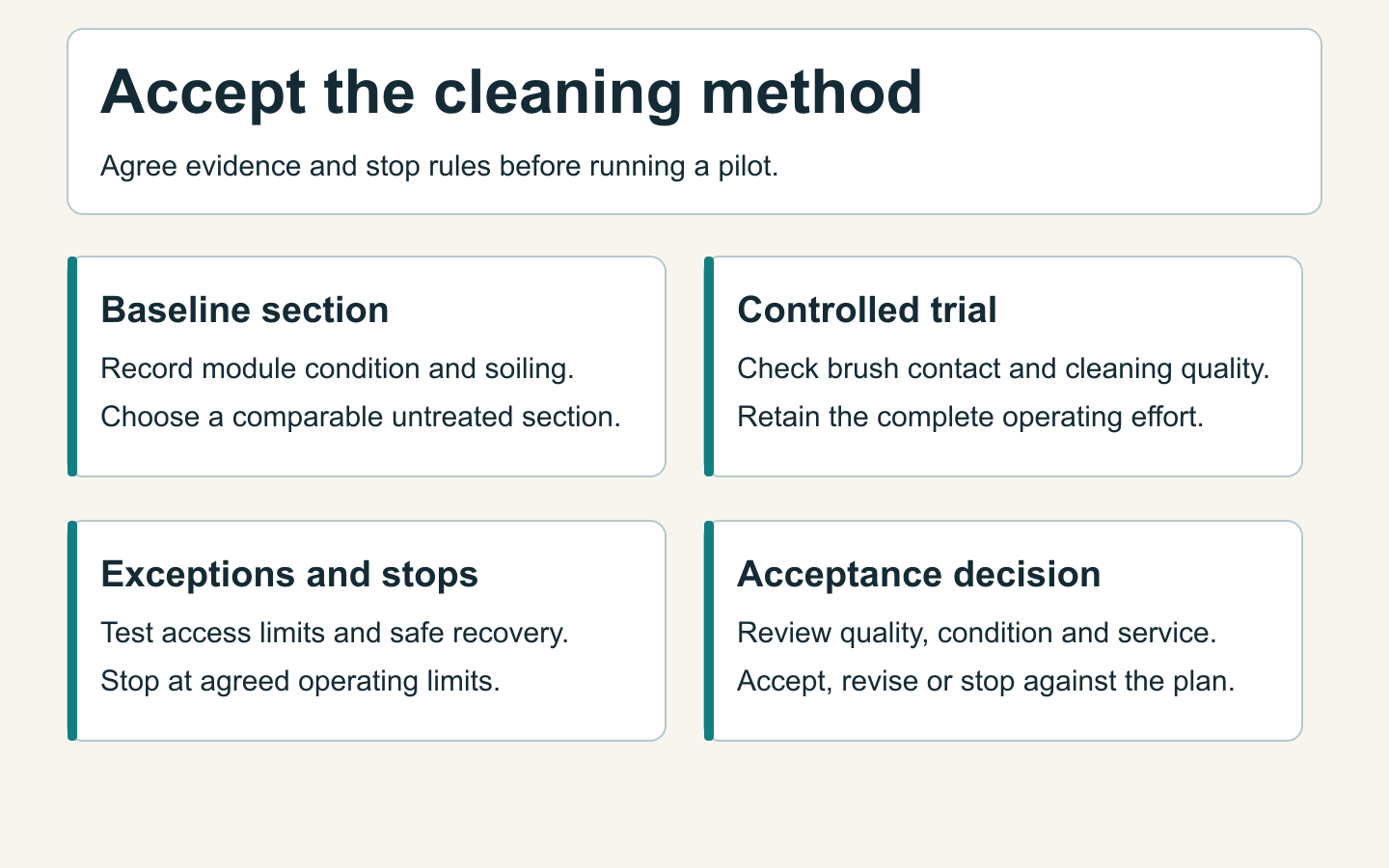
Separate cleaning quality, module condition, operating effort, recovery and economic inputs. For each, define the evidence required, the assessment method and the person who signs the result. Keep safety and equipment compatibility as entry conditions rather than trading them against a faster cleaning rate.
The trial plan should identify the module and mounting constraints, approved brush configuration, water arrangement if used, handling method and stop conditions. The Trinasolar Vertex manual includes specific robot-cleaning conditions; use the current documents for the installed modules and obtain the relevant supplier approvals.
Do not set acceptance thresholds from a brochure simply because they are available. Define the quality and workload the site actually needs, then ask whether the test can measure them reliably.
Choose sections that answer the site’s uncertainty
Select sections by geometry, contaminant type, access and operating relevance. Record why each was chosen and which sections it does not represent. A smooth, easily accessible row may be useful for initial commissioning, but insufficient for a decision about difficult areas.
Where a comparison with the existing method is planned, define comparable areas and conditions. Record contamination before cleaning, weather, prior cleaning, observation times and the equipment used. Keep a change log for brush settings, travel settings and operator procedures so results from different configurations are not combined without explanation.
Measure cleaning quality and condition together
Document the same defined module areas before and after cleaning. Use a repeatable inspection method for residual contaminants and newly observed damage. Capture exceptions such as persistent fouling, streaking, interrupted contact or inaccessible edges.
If the trial seeks to estimate generation benefit, involve the site’s monitoring specialist. Raw output before and after cleaning is affected by irradiance, temperature, operating state and other losses. Use an appropriate comparison or normalization method and record its uncertainty. Cleaning evidence and energy evidence should remain separate until the analysis supports connecting them.
Time the whole workflow and record operator work
Measure preparation, transport, placement, cleaning, row changes, replenishment, retrieval and final storage. Record every intervention with its cause and duration. Distinguish a planned operator activity from recovery after a fault.
Report completed area against elapsed operating time and the area originally scheduled. Record excluded sections and interruptions instead of hiding them inside an average. Keep productive cleaning time separate from total service time. The full-cycle result is the useful input for later scheduling and cost decisions.
Test exceptions within the approved procedure
Plan controlled demonstrations of a blocked cleaning path, loss of a required service and a stopped machine requiring recovery, where the suppliers and site team approve those tests. Agree the expected response before testing.
Check that operators can identify the condition, stop or isolate the process as required, recover the machine and preserve a useful record. Do not create unsafe edge, electrical or structural conditions just to observe an automatic protection feature.
Close the pilot with a decision and limits
- Proceed: the agreed outcomes are supported for the tested configuration and operating envelope.
- Proceed with conditions: specific restrictions, additional training or unresolved tests remain, with named owners.
- Revise and retest: the workflow or configuration changes before acceptance.
- Stop: compatibility, safety, cleaning result or practical handling does not support the proposed use.
Retain the accepted section map, raw observations, intervention log, settings, module-condition review and remaining limitations. Use measured full-cycle inputs in the commercial robot cost framework, and plan seasonal verification where the initial trial does not represent it. Request a solar pilot assessment with the site constraints and the decisions the pilot must resolve.
Sources

Iven Wang
Iven Wang is the Co-Founder of Warpify Robotics, specializing in the commercialization and deployment of robotic solutions. With a background in electrical engineering and product management, he works with manufacturers, integrators, and enterprise clients across industrial inspection, security, logistics, and Robotics-as-a-Service.
Subscribe to our newsletter today
Get practical robotics deployment insights, case studies, and planning guidance from Warpify Robotics.