How to Write a Robotics Requirements Specification Before Vendor Selection
Define the task, operating conditions, interfaces, acceptance evidence and responsibilities before comparing robot vendors.
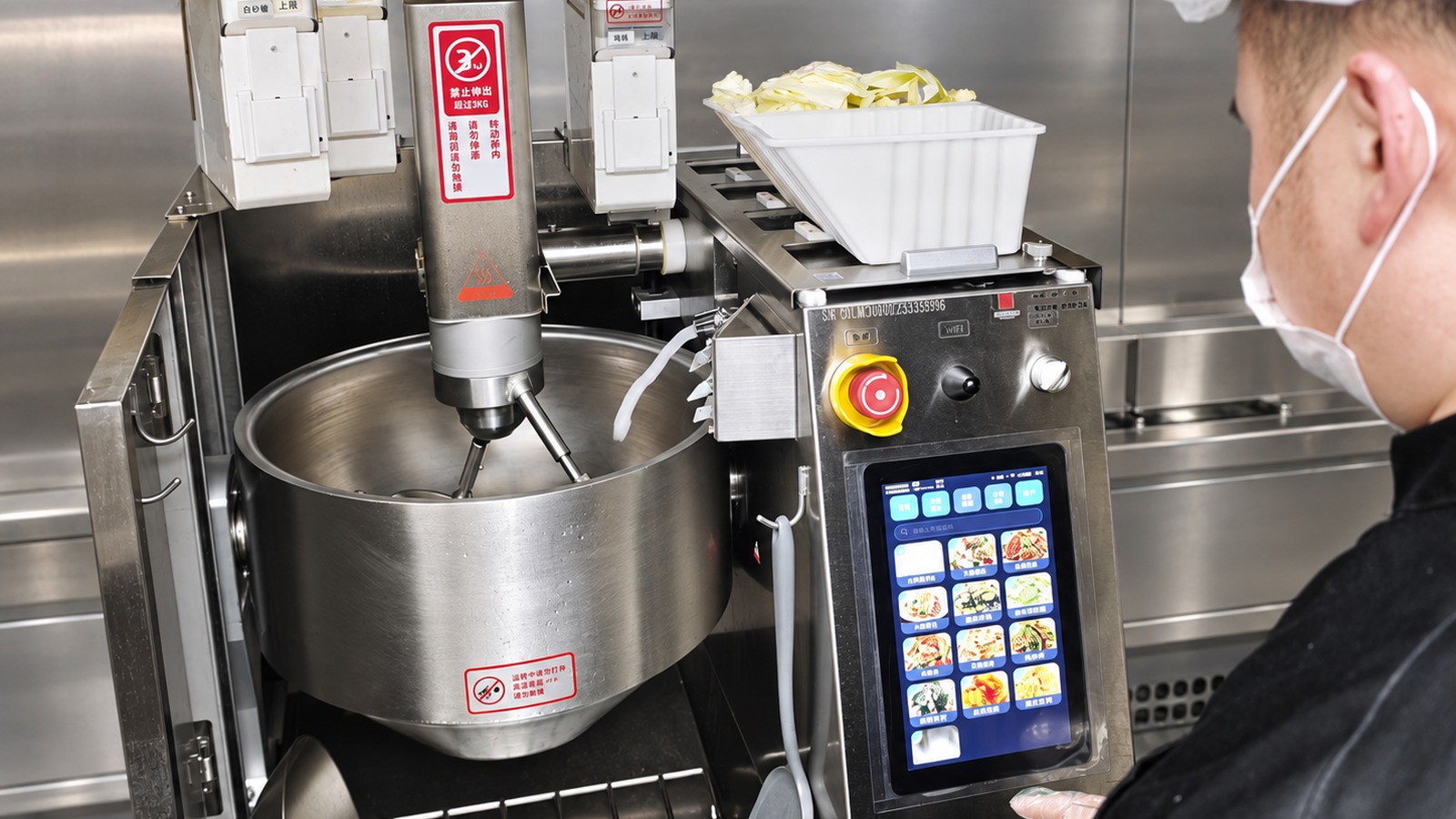
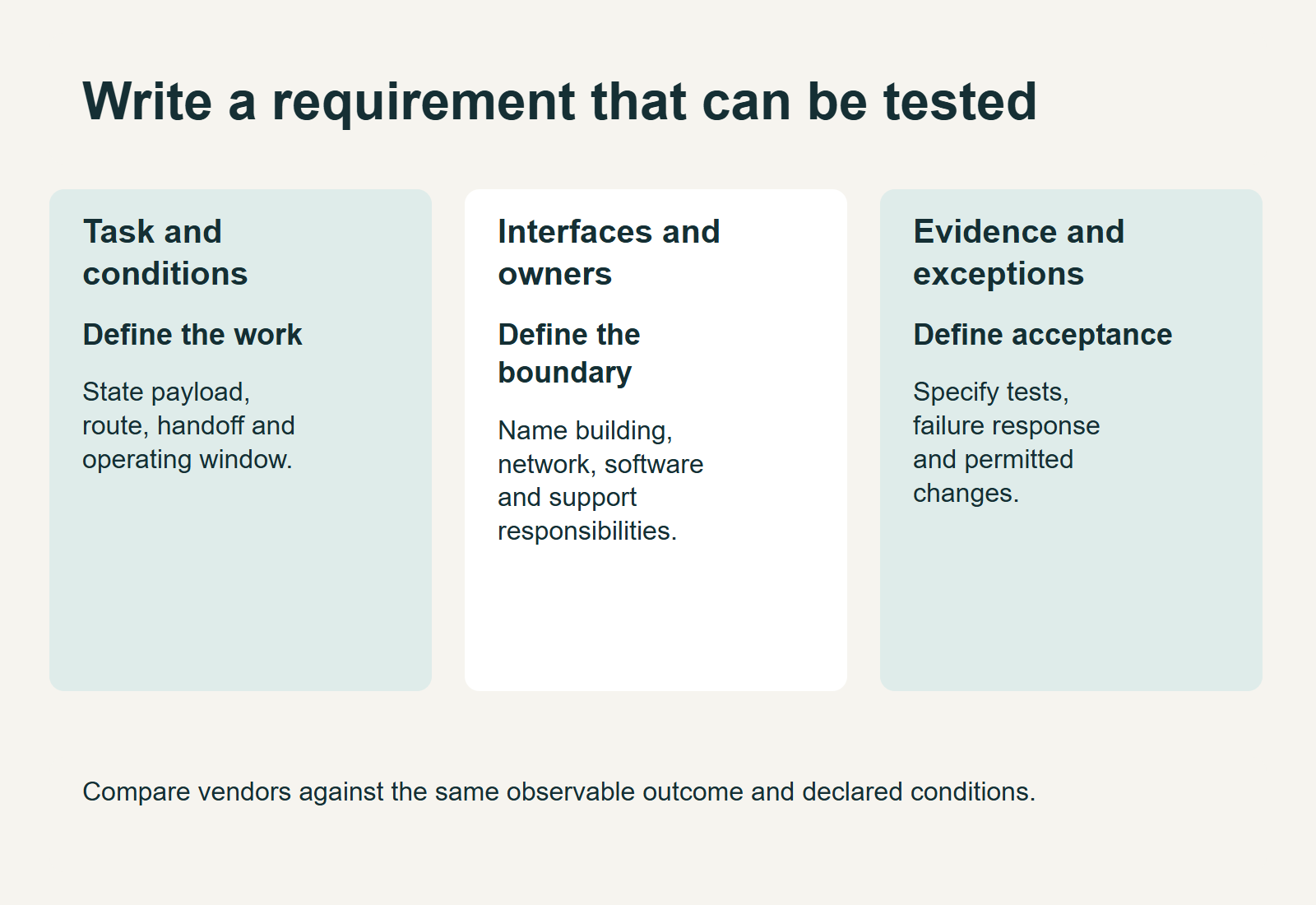
A robot requirements specification should let different suppliers propose different designs against the same operational test. It starts with the work to be completed, the environment and the evidence needed for acceptance. Beginning with a preferred robot model can hide the integration and service assumptions that later determine whether the solution works.
The most useful specification is a controlled decision document. It tells procurement what is mandatory, gives engineering a testable problem and tells operations what it will inherit. Use Warpify’s workflow assessment approach to establish the scope before turning it into requirements.
Describe one unit of completed work
Define the trigger, inputs, start state, actions, handoff, completion evidence and exceptions. For a delivery task, completion might mean the correct load is received at the authorized destination. For inspection, it might mean a usable observation is attached to the correct asset record. Merely reaching a waypoint is insufficient unless that is the actual purpose of the task.
Record the existing process and what is intended to change. Keep assumptions about staffing, demand, site access and receiving behavior separate from measured facts. Suppliers should be able to identify which inputs need verification before committing to a design.
Turn each requirement into an acceptance row
Give every requirement a stable identifier, plain-language statement, rationale, evidence source, owner, priority and test method. Include the operating conditions under which it must hold. A requirement that says reliable navigation is difficult to compare; one that names the accepted routes, representative traffic conditions and recorded exception behavior is much more useful.
An illustrative requirement might read: the system shall identify an unavailable destination, preserve the task record and notify the nominated operator using the agreed escalation path. The acceptance plan would specify how that condition is safely simulated, what records are inspected and who signs the result. The actual timing and success thresholds must come from the workflow owner.
Avoid embedding an arbitrary numerical threshold simply because it is easy to measure. Ask what decision the threshold protects and how the test represents real operation.
Separate mandatory constraints from preferences
Mandatory requirements define eligibility: the payload fits, required interfaces are supported, the application can be approved, and the operating service can be maintained. Preferences help compare eligible solutions, such as convenience of reporting or a preferred maintenance arrangement.
Keep a third category for unresolved assumptions. Assign an owner and resolution date to each. Treating an assumption as a requirement can cause suppliers to price different scopes; treating it as a fact can produce an unsuitable design.
Do not allow a weighted score for attractive features to override a failed mandatory condition. Where a supplier proposes an alternative, require it to identify the affected requirement and demonstrate how the same operating need is met.
Specify interfaces and failure states
List every external dependency: machines, doors, elevators, access control, identity systems, fleet software, maintenance systems and human handoffs. For each, define the authoritative system, exchanged information, timing, acknowledgements, unavailable state and recovery owner.
Ask who implements and tests both ends. A named protocol is not proof that a particular message set, version or action is supported. Require an interface schedule and a joint acceptance method. Keep normal and failure behavior in the same row so the latter cannot disappear into a separate supplier assumption.
Include the work required after commissioning
Specify training, operating instructions, preventive maintenance, parts, escalation, configuration backup, software changes and removal or transition requirements. State the service window and local response expectations without presenting them as existing supplier commitments.
The robot maintenance and support plan explains the operational information a site needs. A specification should identify who will maintain that information and how changes will be handed over.
Build a traceable test plan
NIST’s robotics measurement research develops metrics and test methods for evaluating capability. Apply that evidence-oriented approach by connecting each requirement to a demonstration, inspection, analysis or test. The specification remains site-specific; citing NIST does not make the proposed acceptance plan a certified standard.
Use representative load, route, traffic and exception conditions. Record software, map and payload versions with results. An accepted demonstration under one configuration should not silently approve a later configuration with different behavior.
Issue a response schedule that exposes differences
Ask suppliers to return compliant, partially compliant, non-compliant or clarification required for every mandatory row. Require the proposed implementation, supporting evidence, exclusions, customer responsibilities and cost implications. Leave a place for deviations instead of encouraging an unqualified yes.
Evaluate unresolved dependencies before comparing headline price. A low proposal can reflect a narrower scope, a customer-supplied interface or an unpriced support obligation. Resolve those differences in writing and update the specification baseline.
Bring the resulting task definition, requirement register and open questions to a robotics workflow assessment. The goal is a procurement package that makes design choices comparable and acceptance demonstrable.
Explore Warpify's robotics solutions to connect these requirements with workflow assessment and deployment planning.
Sources and scope
- NIST: Mobility Performance of Robotic Systems — Task-oriented measurement methods; no accreditation or universal pass threshold.

Iven Wang
Iven Wang is the Co-Founder of Warpify Robotics, specializing in the commercialization and deployment of robotic solutions. With a background in electrical engineering and product management, he works with manufacturers, integrators, and enterprise clients across industrial inspection, security, logistics, and Robotics-as-a-Service.
Subscribe to our newsletter today
Get practical robotics deployment insights, case studies, and planning guidance from Warpify Robotics.