Suction vs Cable-Supported Facade Cleaning Robots: How to Choose
Compare suction and cable-supported facade cleaning methods through surface fit, access, setup, cleaning quality, recovery and accepted work.
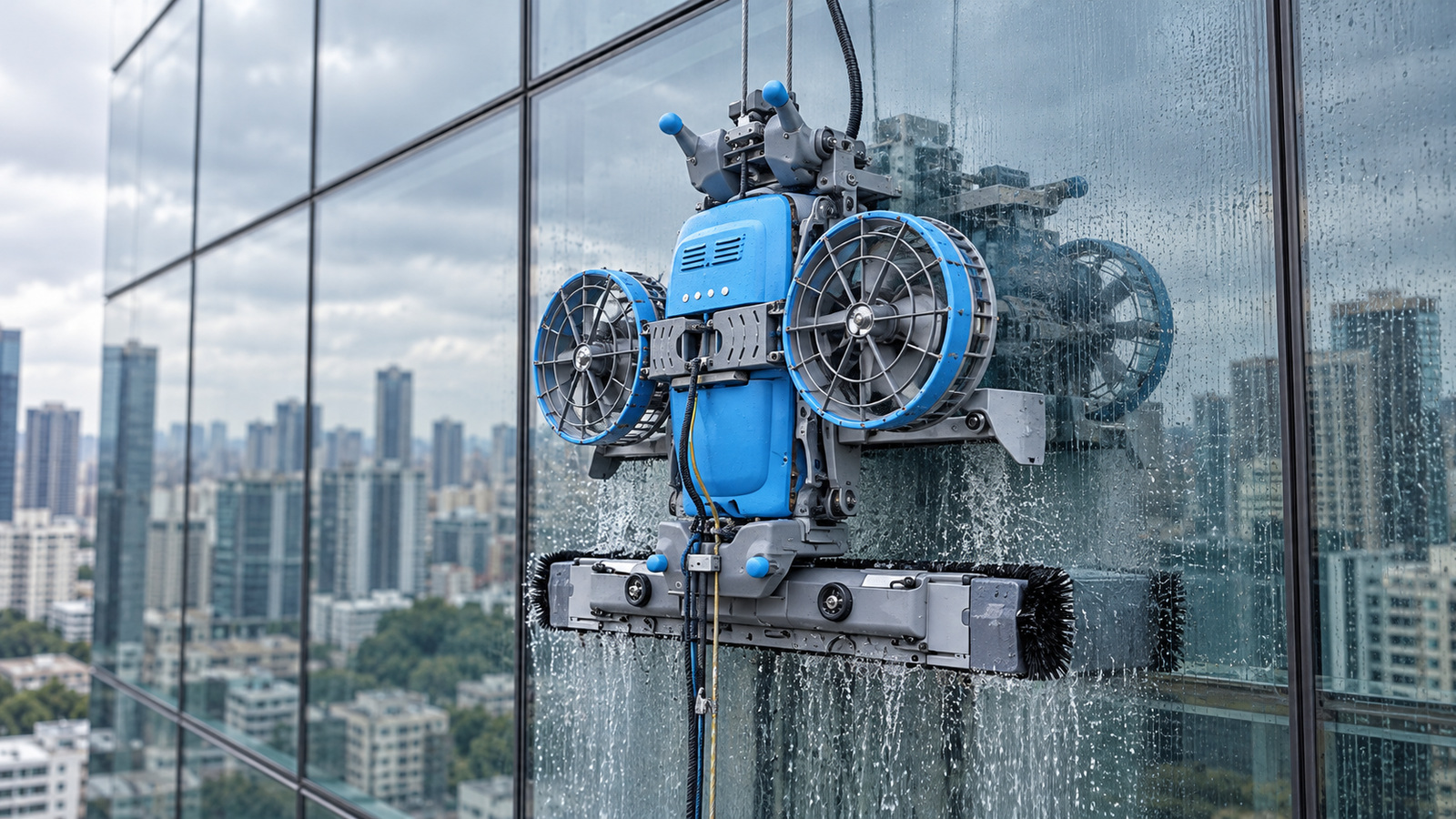
Choose a facade cleaning method by how the selected system is supported, how it maintains contact and how its cleaning assembly reaches the building's surfaces. Suction and cable support are useful comparison terms, but they are not mutually exclusive safety categories. A platform that adheres to glass can still require overhead lines, service hoses and a recovery arrangement.
The better choice is the method that fits a surveyed elevation and can be prepared, operated, checked and recovered within a defined scope. Compare the complete facade cleaning solution, including the access and human work around the machine.
Separate movement, contact and support
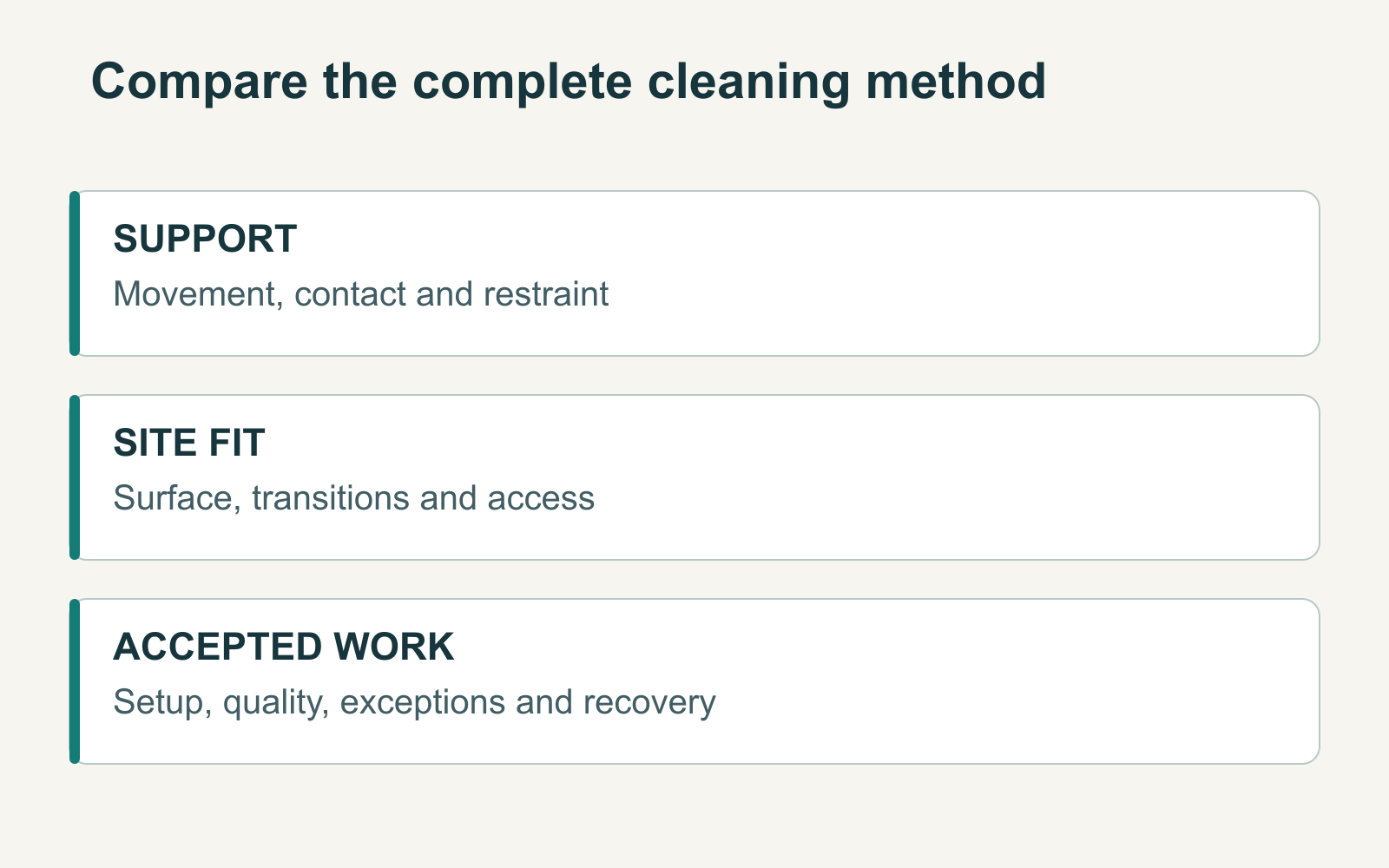
Ask three questions before comparing specifications. What moves the system along the route? What keeps the cleaning assembly in useful contact with the surface? What supports or restrains the system during normal operation and an interruption?
Different architectures answer those questions differently. X-Human's K3 product information describes suction-based movement on suitable flat facades. Robot++ describes a cable-supported cleaning system using dual-rope movement, rotor-assisted wall contact and a spray-and-brush cleaning process.
These manufacturer descriptions establish examples of architectures. They do not establish that either method fits an unsurveyed building or removes the need for a site-specific access review.
Evaluate the surface before comparing autonomy
For a suction-based candidate, gather the information the supplier needs to assess continuity, contact and transitions. Record glass geometry, joints, frames, gaps, surface condition and any feature that affects the approved route. Ask what the system does at a transition it cannot complete.
For a cable-supported candidate, examine the support and movement route together with the contact assembly. Include roof geometry, cable travel, changes in facade plane, projections and the way the cleaning head approaches the surface. A reachable panel may still have edges or recesses outside the cleaning assembly's useful reach.
Do not translate a single obstacle-height claim into a route approval. Shape, approach, spacing and the rest of the system's envelope also belong in the assessment. Request a configuration-specific explanation of the proposed transition.
Compare access and setup as operating work
List the tasks required before a useful cleaning pass can begin: transporting equipment, obtaining roof access, preparing supports, routing services, setting the ground work zone and completing checks. Record the people and equipment needed for each task.
Ask what changes when the system moves to the next elevation. Include the handling of hoses and lines, access restrictions, repositioning and the method for completing areas outside the robotic route. Repeated setup can materially affect a site's operating plan even when the cleaning pass itself looks efficient.
An existing building maintenance unit or roof feature is an input for review. Compatibility needs confirmation for the selected configuration and proposed method; it should not be inferred from the presence of access equipment alone.
Test the cleaning outcome separately from mobility
A robot moving across a facade demonstrates movement. Cleaning acceptance needs its own evidence. Agree what the reviewer will inspect: residual dirt, streaking, edges, frames, material condition and any rework required.
Test the complete proposed cleaning process on representative surfaces. Record settings and consumables so the result can be repeated. Where the building includes different materials or finishes, do not extend a glass result to stone or coated metal without the relevant assessment.
The first comparison can therefore produce two answers: one platform may have a plausible route, while its cleaning method still needs a sample-area trial. Keep those decisions separate until both are supported.
Require an interruption and recovery explanation
Ask the provider to explain how the proposed system responds to a route obstruction, loss of a required service, a weather interruption and a need for retrieval. Identify who makes the decision and which equipment or access must remain available.
Use the selected operating instructions and qualified access review for the actual procedure. A general blog or specification comparison cannot substitute for an approved work method. The deployment responsibility guide helps organize who owns each input and handoff.
Make the final comparison on accepted work
Compare the alternatives using the same elevation, accepted cleaning area, quality criteria, work window, staffing boundary and exclusions. Include setup, transitions, inspection, rework, recovery and maintenance inputs alongside the hardware.
Use the commercial robot cost method to keep the scope consistent. Avoid selecting a winner from a headline speed, staffing claim or purchase price that excludes work included in the other proposal.
Bring the resulting route map and unresolved questions to a building workflow assessment. The useful next step is a method and trial scope that the building team can inspect and accept.

Iven Wang
Iven Wang is the Co-Founder of Warpify Robotics, specializing in the commercialization and deployment of robotic solutions. With a background in electrical engineering and product management, he works with manufacturers, integrators, and enterprise clients across industrial inspection, security, logistics, and Robotics-as-a-Service.
Subscribe to our newsletter today
Get practical robotics deployment insights, case studies, and planning guidance from Warpify Robotics.