Robot SLA Guide: Uptime, Response, Restoration and Exclusions
A practical guide to robot SLAs covering scope, uptime, response, restoration, resolution, exclusions, reporting, remedies and customer responsibilities.
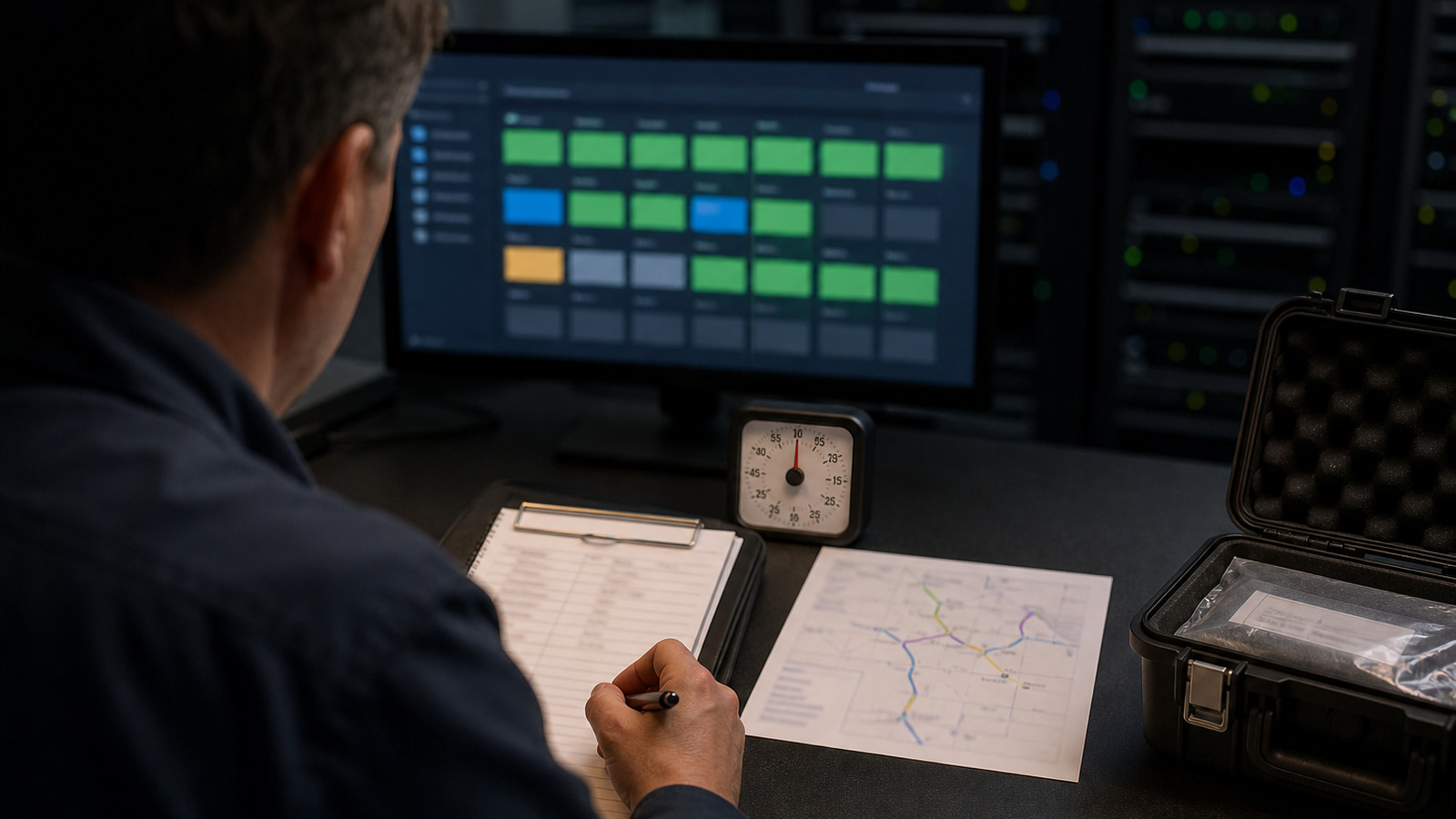
A robot service-level agreement (SLA) is useful when operations, procurement and the provider can calculate the same result from the same incident record. Start with the workflow and service boundary inside Warpify's Robotics-as-a-Service model, then define uptime, response, restoration, resolution, exclusions, reporting and remedies in operational terms.
NIST's glossary describes an SLA as a commitment covering responsibilities, service details, expected performance, reporting, resolution and termination. A percentage without those surrounding definitions is not enough to operate the service.
Define the service boundary first
List the covered robot configuration, payloads, charging, fleet software, integrations, remote monitoring, site, operating window and provider/customer responsibilities. Distinguish:
- robot availability from workflow availability;
- one robot from a fleet or service capacity;
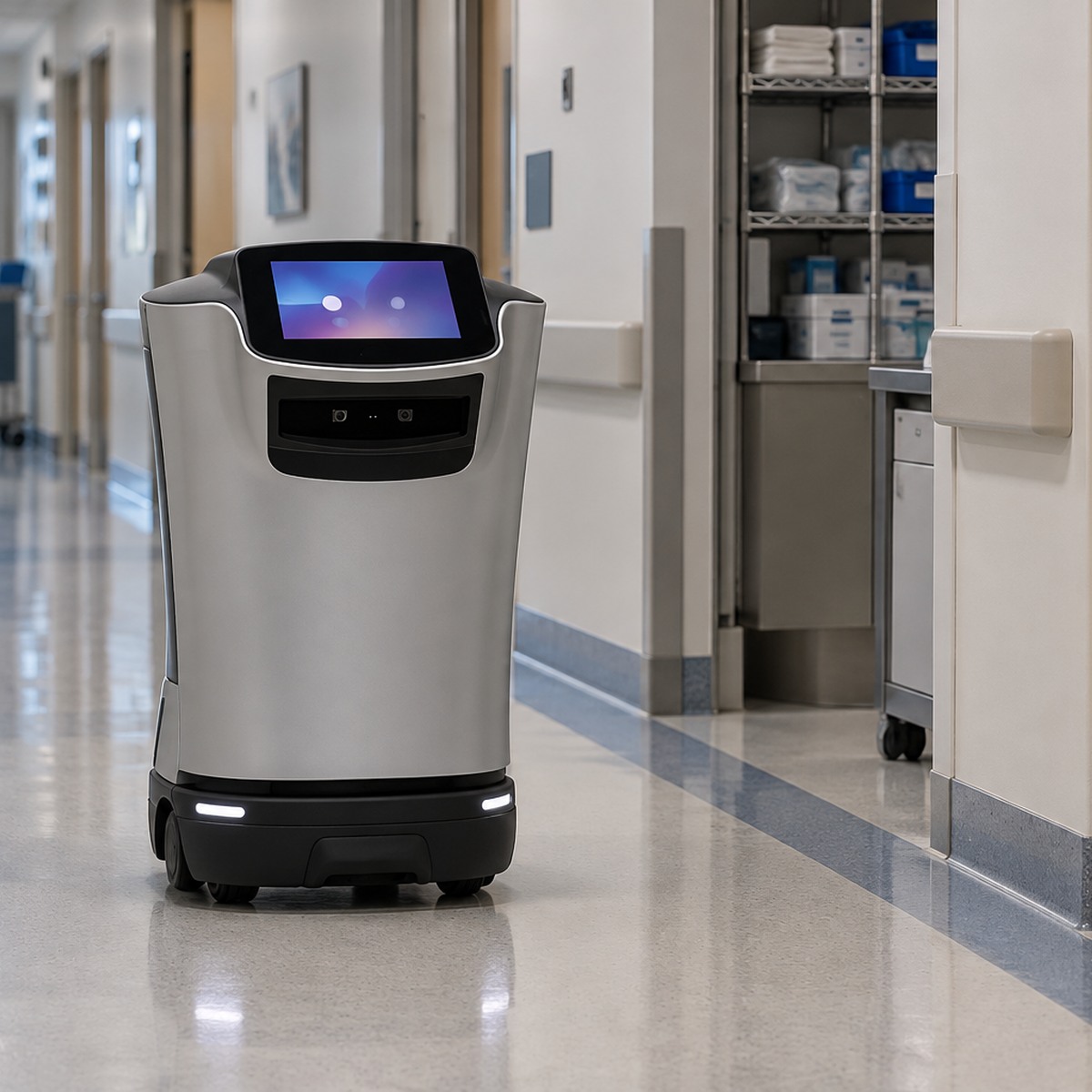
- provider-controlled components from hospital, factory or third-party systems;
- planned maintenance from unplanned interruption;
- remote recovery from on-site restoration;
- temporary restoration from permanent resolution.
Use a shared service-level dictionary
Scroll horizontally to compare all columns.
| Term | Operational definition to agree |
|---|---|
| Eligible service time | The contracted operating window and assets included in the denominator |
| Available | The exact functions that must be usable for the service to count as available |
| Unavailable | Qualifying loss of function, start/stop timestamps and aggregation rule |
| Acknowledgement | Provider confirms receipt and incident identity |
| Response | Qualified work begins—not an automated email unless agreed |
| Restoration | Covered service returns to an agreed usable state, possibly temporary |
| Resolution | Root cause or permanent correction is completed and documented |
| Maintenance | Approved planned work, notice, window and treatment in the denominator |
| Exclusion | Event outside the commitment, with evidence and approval rules |
Make the uptime equation inspectable
A common form is:
Availability = (eligible service time − qualifying unavailable time) ÷ eligible service time.
The contract must still define the unit and aggregation. Is one unavailable robot a fleet outage? Does reduced payload capability count? Is a mission blocked by a customer door excluded? Are short interruptions rounded? Which time source is authoritative? Can incidents overlap? Show worked examples for normal, boundary and disputed cases.
ISO/IEC 19086-1 is a cloud-specific SLA framework, not a robotics standard, but its central comparison lesson is useful: providers and customers need common concepts, while actual objectives and structures can vary.
Separate response, restoration and resolution
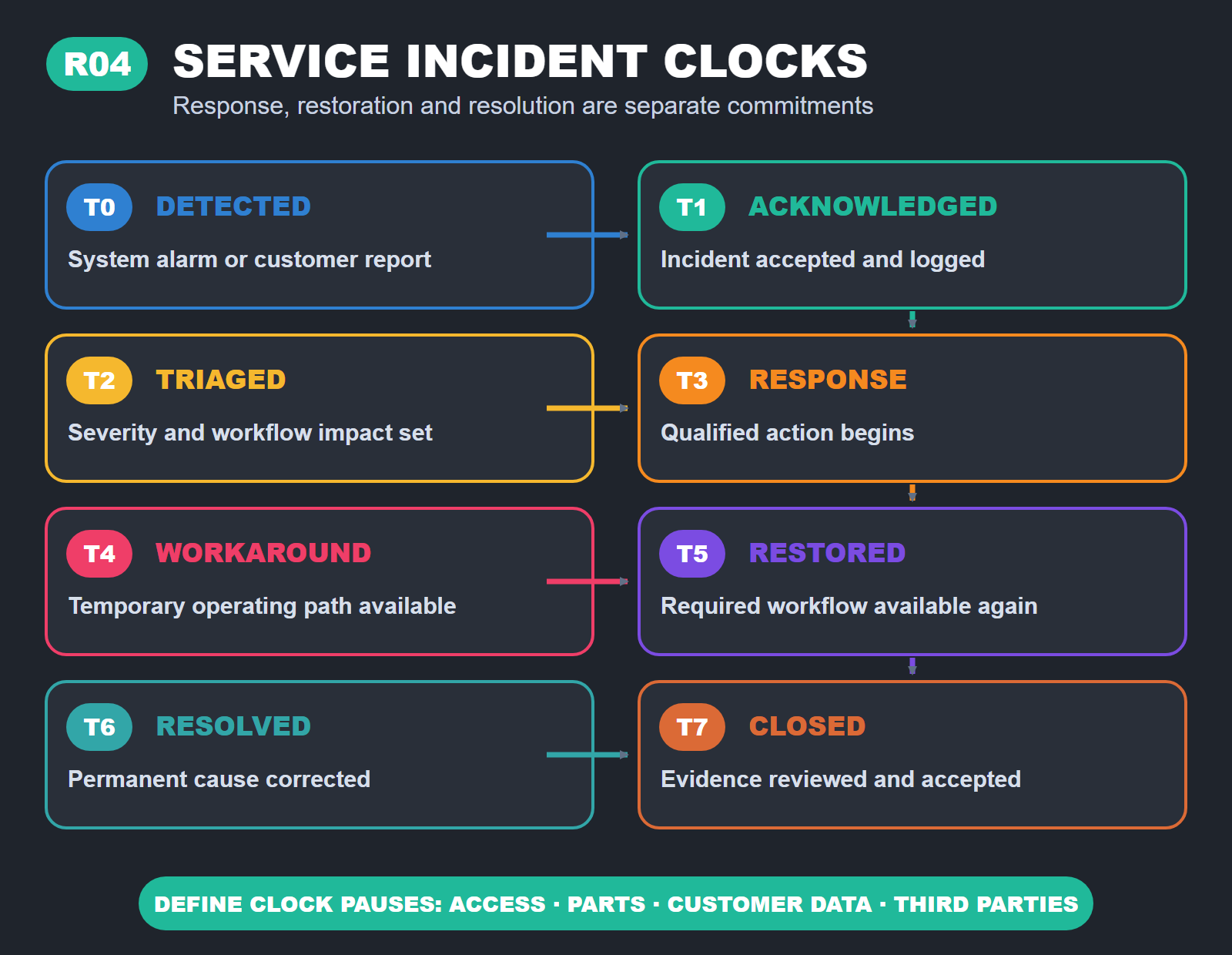
Use an incident timeline with timestamps for detection, customer report, acknowledgement, triage, qualified response, workaround, restoration, permanent resolution and closure. Define whether clocks pause while access, parts, customer information or third-party action is awaited.
A fast response does not guarantee a fast restoration. A restored mission does not prove the root cause is resolved. Track each commitment separately and connect it to a severity model based on workflow impact.
Build severity around business impact
Scroll horizontally to compare all columns.
| Severity input | Questions |
|---|---|
| Service scope | One function, one robot, one site or the complete workflow? |
| Operational impact | Can work continue at reduced capacity or by manual fallback? |
| Safety/security | Is there a hazard, access, data or control concern requiring isolation? |
| Time sensitivity | Which delivery, inspection or production window is affected? |
| Recurrence | Is this an isolated event or a repeating condition? |
Do not let the provider and customer classify severity independently after the incident. Define classification authority, evidence, change and escalation in advance.
Measure the service, not one blended score
NIST IR 8177 shows that robot and network performance can be decomposed into separate measures such as latency, travel time, accuracy, repeatability, job time and dropped packets. Those are examples, not universal SLA targets. Select measures tied to the contracted workflow: eligible time, mission acceptance, restoration, repeat incidents, support responsiveness, data completeness or spare availability may each need separate definitions.
Make exclusions evidence-based
Exclusions may cover approved maintenance, customer-caused conditions, force majeure or unsupported changes, but broad language can remove most operational risk from the commitment. For each exclusion define the event, evidence, notice, mitigation, clock treatment and dispute path. Chronic third-party or site dependency failures should trigger a joint corrective plan instead of disappearing permanently from reports.
Record customer responsibilities and continuity
Use the deployment readiness checklist to define power, network, building systems, payload readiness, access, environment, consumables, local response and change control. Customer failure to meet a responsibility should be documented; it should not be assumed.
Include manual fallback, spare strategy, remote and on-site escalation, safety isolation, data preservation and transition at termination. The SLA should help restore the workflow, not only calculate a credit after failure.
Connect the SLA to the commercial agreement
GAO's review of service agreements highlights clear roles, measurable availability and response objectives, monitoring and reporting, continuity planning and enforceable consequences. That evidence comes from cloud procurement, so use it as general contract-design guidance. Qualified counsel should align the SLA, service description, pricing, remedies, liability, termination and dispute terms in the actual jurisdiction and the chosen RaaS, purchase and lease comparison.
Sources and scope
This guide combines the cited primary sources with an editorial decision framework. It does not quote a market price, promise a result, replace a site assessment, or provide legal, financial, clinical, cybersecurity or safety advice.
- Service level agreement (SLA) — CSRC Glossary — National Institute of Standards and Technology
- ISO/IEC 19086-1:2016 Cloud computing — SLA framework — Overview and concepts — International Organization for Standardization
- Cloud Computing: Agencies Need to Incorporate Key Practices to Ensure Effective Performance — U.S. Government Accountability Office
- NIST IR 8177: Metrics and Key Performance Indicators for Robotic Cybersecurity Performance Analysis — National Institute of Standards and Technology
Related planning: Align these service definitions with the selected RaaS pricing model and the named owners in the RaaS responsibility matrix.
Take the next step
Bring the workflow impact, operating window, severity model, response owners and continuity plan into a service-scope assessment: Assess your service requirements.

Iven Wang
Iven Wang is the Co-Founder of Warpify Robotics, specializing in the commercialization and deployment of robotic solutions. With a background in electrical engineering and product management, he works with manufacturers, integrators, and enterprise clients across industrial inspection, security, logistics, and Robotics-as-a-Service.
Subscribe to our newsletter today
Get practical robotics deployment insights, case studies, and planning guidance from Warpify Robotics.